

4K LED Screen: What It Is, How It Works, and When You Need One
A 4K LED screen is a type of high-resolution display that delivers extremely sharp and detailed images. As digital displays become central to modern business, events, and media, understanding what a 4K LED screen is can help you make informed choices.
In this article, we will start by explaining the basics of 4K LED screens, and then explore their technical aspects, applications, and considerations for selection.
Table of Contents
1. What Is a 4K LED Screen?
A 4K LED screen is a display system made up of numerous tiny LED modules arranged in a grid. The “4K” term refers to the horizontal resolution, which is typically around 3840 pixels, offering four times the detail of a standard Full HD (1080p) display.
Unlike conventional flat-panel TVs, a 4K LED screen is modular. This means it consists of multiple LED tiles that are combined to create a larger screen. Each module contains a dense array of light-emitting diodes (LEDs) that produce individual pixels. By working together, these modules form a single, seamless high-definition image.
- Key technical points of a 4K LED screen:
✓ Pixel arrangement: LEDs are positioned to create a precise grid of pixels, defining the screen’s resolution.
✓ Modular design: Screens can be built in custom sizes by adding or removing modules, making them flexible for different installation needs.
✓ Independent light sources: Each LED produces its own light, which enables high brightness and sharpness without relying on backlighting.
At its core, a 4K LED screen is a combination of resolution, modular LED technology, and precise pixel control. It is this design that allows the screen to display highly detailed images across large areas.
2. How 4K Resolution Is Achieved?
On an LED screen, 4K is not a fixed product size. It is the result of how many pixels are built across the screen, both horizontally and vertically.
In simple terms, a 4K LED screen means the entire display reaches a resolution close to 3840 × 2160 pixels. To achieve this, several technical conditions must work together.
2.1 4K Comes from Total Pixel Count, Not a Single Panel
Unlike TVs or monitors, an LED screen is not a single panel. It is assembled from many smaller LED modules.
Each module contains a fixed number of pixels. When modules are combined, the pixels add up.
- More modules = more total pixels
- More total pixels = higher overall resolution
A screen becomes “4K” only when the combined pixel count across the full display reaches the 4K standard.
2.2 Pixel Pitch Determines How Many Pixels Fit on the Screen
Pixel pitch plays a direct role in achieving 4K resolution. It is the distance between two adjacent pixels. A smaller pixel pitch means pixels are placed closer together.
- Smaller pitch → more pixels per square meter
- Larger pitch → fewer pixels per square meter
To reach 4K resolution on a reasonable screen size, the pixel pitch must be fine enough to accommodate thousands of pixels across the width and height of the display.
This is why 4K LED screens are usually associated with fine-pitch LED panels, such as P1.25 or similar ranges.
2.3 Screen Size and Pixel Pitch Work Together
Resolution alone does not define image quality. Screen size and pixel pitch must match.
For example:
- A very large screen with a large pixel pitch may not reach 4K at all
- A smaller screen with a fine pixel pitch can reach 4K more easily
In practice, achieving a 4K LED screen always involves balancing:
- Total screen dimensions
- Pixel pitch
- Number of LED modules
Only when these factors align does the final display meet the 4K resolution requirement.
2.4 How the Image Stays Aligned Across Modules
Once the physical pixels are in place, the image must be distributed correctly. A control system divides the 4K video signal into smaller sections. Each LED module receives the exact portion of the image it needs to display.
This process ensures:
- Straight lines remain straight
- Images stay continuous across module seams
- The full screen behaves like a single display, not many small ones
Without accurate signal mapping, a screen may have enough pixels but still fail to display true 4K content correctly.
2.5 What This Means in Practice
A 4K LED screen is not defined by one specification. It is achieved through the combined result of pixel pitch, screen size, module count, and signal processing.
If any of these elements are mismatched, the screen may look large but will not deliver true 4K resolution.
3. Why 4K Matters on Large LED Screens?
When it comes to large LED displays, resolution directly affects how clear and detailed the image appears. A 4K LED screen has around 3840 horizontal pixels, providing more detail than HD or 2K screens. On smaller displays, the difference may be subtle, but as the screen size increases, lower resolutions can appear blurry or pixelated.
Here’s why higher resolution makes a difference on large LED screens:
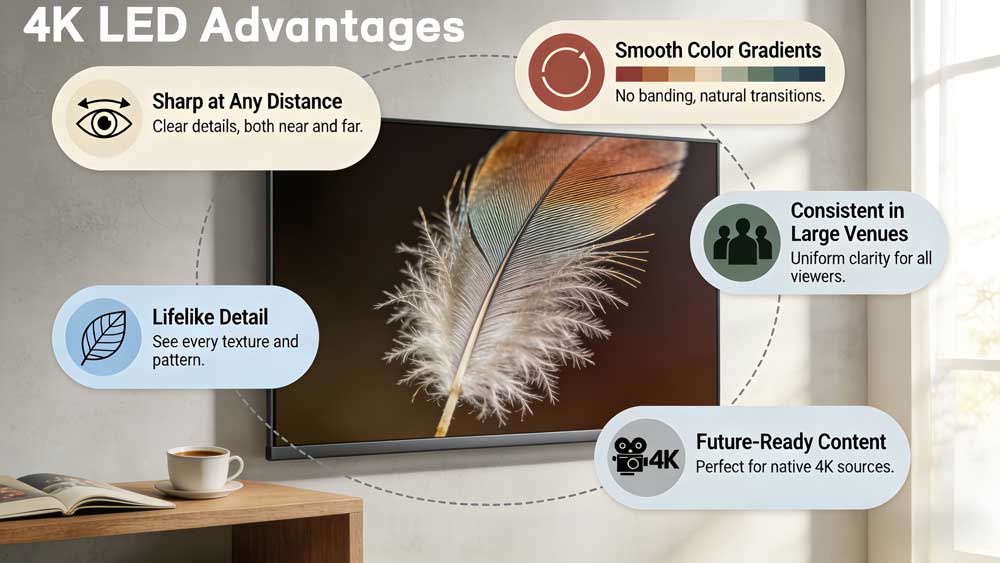
Sharper images at all distances
- More pixels mean that lines, edges, and fine details are displayed accurately.
- Even viewers standing close to a large LED wall can read text and see graphics clearly, without noticing individual pixels.
Smoother color and gradients
- Higher resolution helps create smoother transitions between colors.
- Gradients, shading, and subtle color changes look more natural and less blocky.
Better video and multimedia clarity
- 4K content shows textures, small text, and fine patterns clearly.
- Lower-resolution screens can introduce artifacts when content is scaled up, which 4K reduces.
Consistent viewing experience in large spaces
- In conference rooms, auditoriums, or other large areas, viewers may be at different distances from the screen.
- 4K keeps the image clear and readable for both near and distant viewers.
Compatibility with modern content
- More video and graphics are being produced in 4K or higher.
- Using a 4K LED screen ensures that high-resolution content displays correctly, without losing detail.
Overall, as screens get larger, higher resolution helps maintain image clarity and sharpness across the entire display. A 4K LED screen delivers crisp visuals that make details easier to see and images more natural.
4. Best Use Cases for 4K LED Video Wall
A 4K LED video wall is not designed for every display scenario. It makes sense mainly in environments where screen size is large, viewing distance varies, and image detail needs to remain clear.
Before looking at specific use cases, it helps to understand one simple rule: The more people rely on visual detail to read, analyze, or present information, the more value a 4K LED video wall can offer.
Based on this logic, 4K LED video walls are commonly used in the following scenarios.
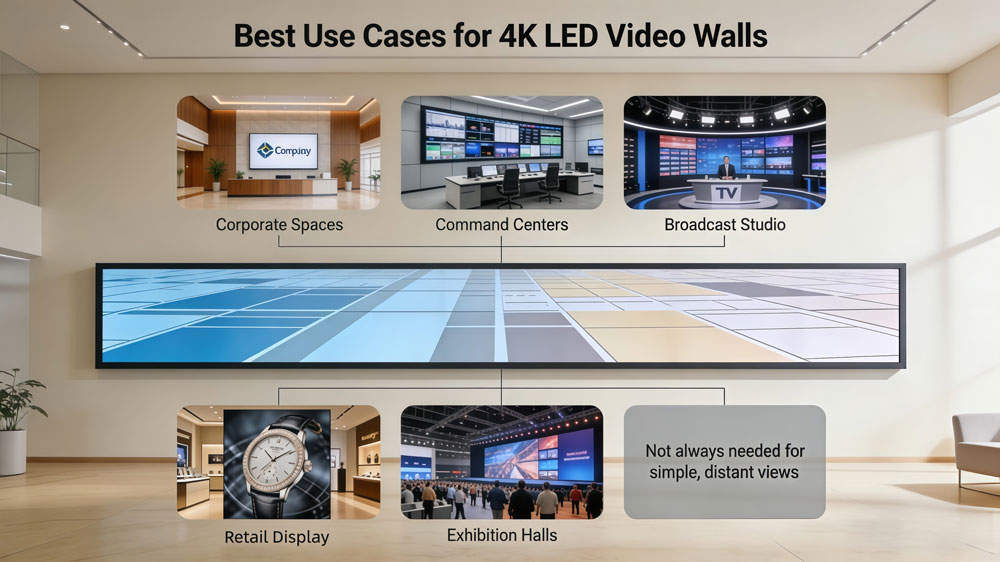
4.1 Corporate Lobbies and Brand Spaces
In corporate lobbies, experience centers, and brand showrooms, large screens are often viewed from short to medium distances.
- Text, logos, and graphics need to look sharp up close
- Visual content often includes high-resolution images and videos
- Screen size is large, but space is limited
A 4K LED video wall allows brands to present detailed visuals without visible pixel structure. This helps maintain a clean and professional appearance, especially in premium environments.
4.2 Conference Rooms and Command Centers
In meeting rooms, control rooms, and monitoring centers, screens are used to display detailed information.
This may include:
- Dashboards
- Data charts
- Live video feeds
- Multiscreen layouts
A 4K LED video wall provides enough resolution to show multiple content sources on one screen without sacrificing clarity. Small text and fine lines remain readable, even when the screen spans several meters.
4.3 Broadcast Studios and Production Environments
Broadcast and studio environments place high demands on image quality.
- Cameras capture fine details
- Content is displayed and recorded simultaneously
- Visual consistency matters
A 4K LED video wall supports high-resolution content workflows and helps maintain image clarity during filming. This makes it suitable for studios, virtual sets, and production spaces where visual precision is required.
4.4 High-End Retail and Commercial Displays
In retail environments, large LED walls are often used as focal points.
- Promotional videos
- Product visuals
- Dynamic brand content
With a 4K LED video wall, products and visuals appear more detailed and realistic. This is especially noticeable when customers stand close to the screen, which is common in indoor retail settings.
4.5 Exhibition and Event Displays
At exhibitions and events, large LED walls are used to attract attention and communicate information quickly.
A 4K LED video wall allows:
- Clear branding from a distance
- Sharp visuals for visitors standing nearby
- Flexible screen sizes for different booth designs
This balance makes 4K LED walls suitable for professional exhibitions where image quality influences first impressions.
4.6 When a 4K LED Video Wall May Not Be Necessary
It is also important to note that not every project benefits from 4K.
In situations where:
- Viewing distance is very long
- Content is simple or low-resolution
- Screen size is limited
A lower resolution LED screen may deliver similar visual results. Understanding the actual use case helps avoid over-specifying the display.
5. HD vs 2K vs 4K vs 8K
For many professional applications today, a 4K LED screen delivers clear visual benefits without pushing system complexity too far. HD and 2K remain practical for long-distance viewing, while 8K is usually chosen for specific, high-end projects.
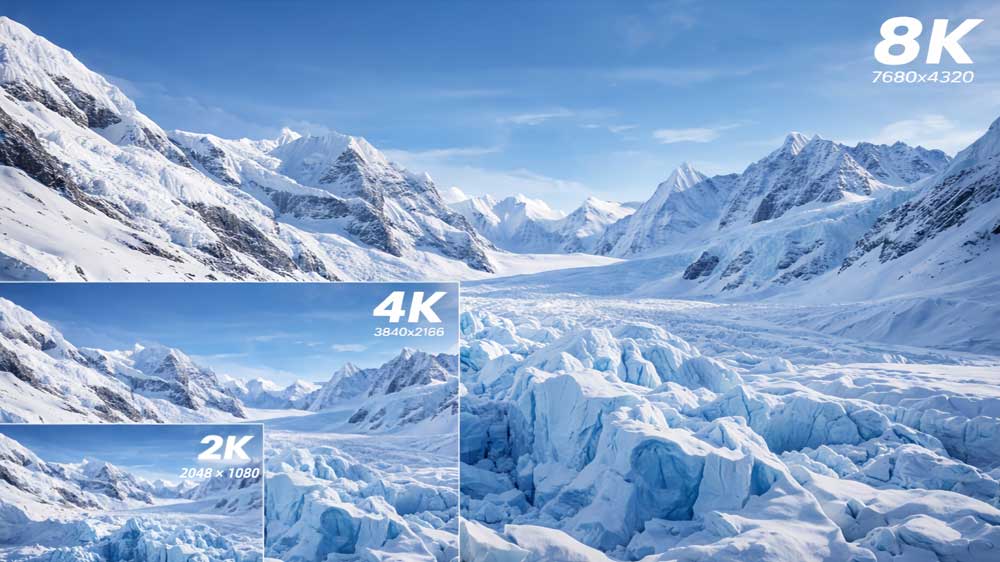
| Comparison Item | HD LED Screen | 2K LED Screen | 4K LED Screen | 8K LED Screen |
| Typical Resolution | 1920 × 1080 | ~2048 × 1080 | 3840 × 2160 | 7680 × 4320 |
| Pixel Density | Low | Medium | High | Very High |
| Image Clarity on Large Screens | Acceptable from distance | Clear at medium distance | Sharp even at close range | Extremely sharp, limited visible gain |
| Text Readability | Limited on large screens | Improved | Excellent | Excellent |
| Suitable Viewing Distance | Long | Medium to long | Short to medium | Short |
| Suitable Screen Size | Small to medium | Medium | Medium to large | Large to very large |
| Content Detail Support | Basic visuals | Standard HD content | High-resolution images & video | Ultra-high-resolution content |
| System & Processing Demand | Low | Moderate | High | Very High |
| Content Availability | Very common | Common | Widely available | Limited |
| Typical Use Scenarios | Outdoor signage, simple ads | Commercial displays, meeting rooms | Control rooms, studios, indoor video walls | Specialized or showcase projects |
| Practical Cost Level | Low | Medium | Medium to high | High |
6. 4K LED Video Wall Price
When searching for a 4K LED display, many users expect to find a fixed price. In reality, 4K LED screens are not sold as standard products with a public price tag.
Most 4K LED displays are configured based on screen size, resolution, and application needs. As a result, prices can vary widely from one project to another.
Because of this, comparing prices without context often leads to confusion.
- A More Practical Way to Check 4K LED Display Prices
Instead of requesting multiple manual quotations, a more efficient approach is to use a self-service pricing system.
Register LedInCloud provides an LED Screen Cloud Platform where users can:
- Select different 4K LED display configurations
- Compare prices across pixel pitches and screen sizes
- View pricing differences instantly
This allows users to understand market pricing and make informed decisions without long back-and-forth communication.
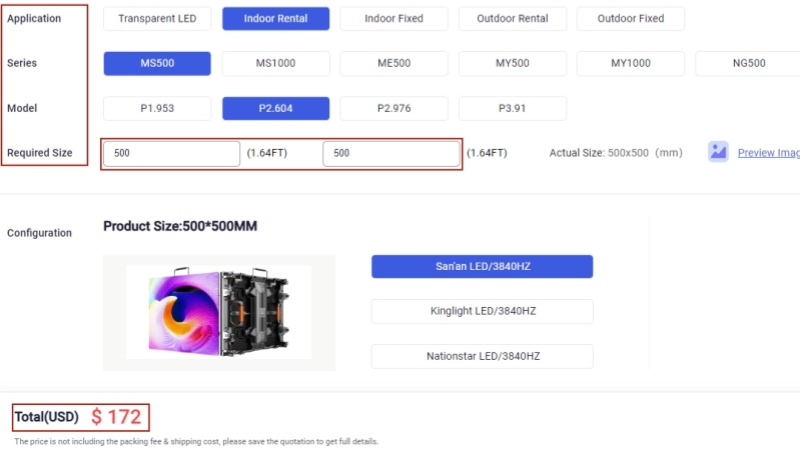
7. LedInCloud 4K LED Display Solution
LedInCloud provides flexible 4K LED display solutions designed to match real project requirements.
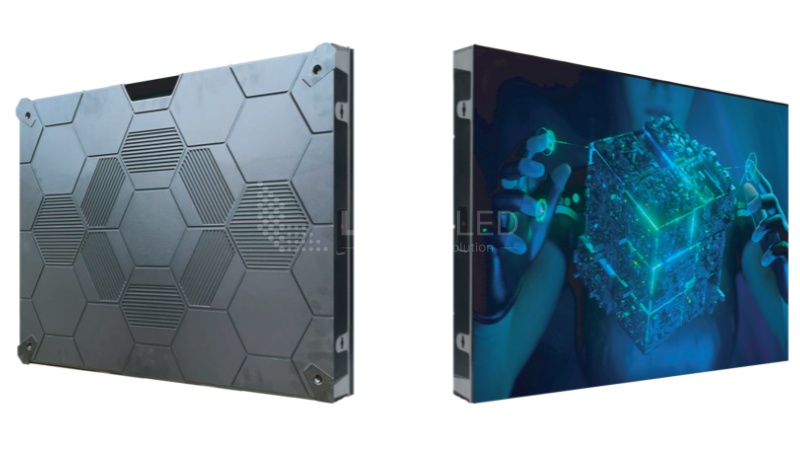
✔ MA640 Series
The MA640 is a 640×480mm frontal service LED display built for permanent indoor use. Its 4:3 cabinet ratio works naturally for both 4:3 and 16:9 large screen layouts, which makes it a practical fit for 4K video wall configurations.
- Cabinet size: 640×480mm, module size 320×160mm
- Refresh rate: 3840Hz for smooth, flicker-free video
- Front service design — modules can be removed from the front in seconds, no rear access needed Seamless splicing with fast-lock mechanism, no visible gaps between cabinets
- Pixel pitch options: P1.25 / P1.53 (COB) / P1.86 (COB) / P2 / P2.5 / P3 / P4
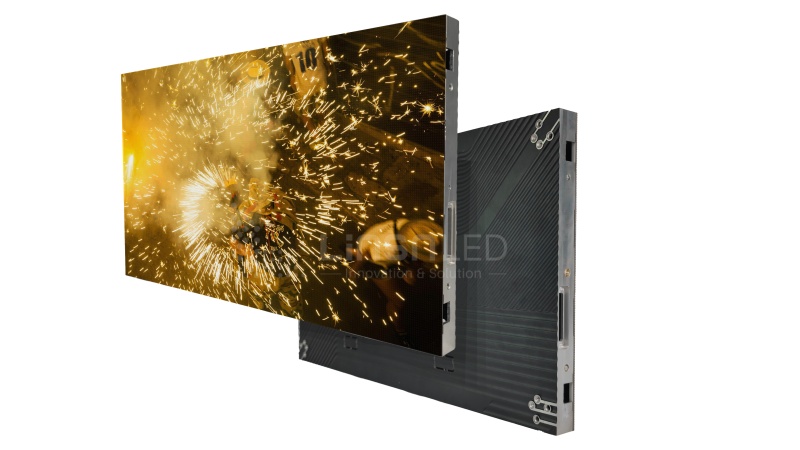
✔ MA600 Series
The MA600 Series uses a 16:9 cabinet format, which aligns well with standard video resolutions, including 4K.
- Cabinet size: 600 × 337.5 mm, matching common 16:9 layouts
- Seamless splicing for uniform large-screen displays
- Lightweight aluminum cabinet for easier installation
- Front maintenance support, suitable for wall-mounted setups
- Wide viewing angle for consistent image quality
8. FAQ
Q1. Is a 4K LED screen the same as a 4K TV?
No. A 4K LED screen is built from individual LED modules and cabinets, while a 4K TV uses a fixed LCD or OLED panel. LED screens can be much larger, support custom sizes, and are designed for commercial or professional use. The viewing distance, installation method, and system architecture are also different.
Q2. How big does an LED screen need to be to reach 4K resolution?
That depends on pixel pitch. With a smaller pixel pitch, a 4K LED screen can be built at a smaller physical size. With a larger pitch, the screen must be larger to reach the same resolution. There is no single standard size for a 4K LED display.
Q3. Is 4K always better than 2K for LED displays?
Not always. The visual benefit of 4K depends on viewing distance and screen size. If viewers are far away, the difference between 2K and 4K may be hard to notice. 4K becomes more meaningful when screens are large and viewed from short to medium distances.
Q4. Can a 4K LED screen display non-4K content?
Yes. A 4K LED screen can display lower-resolution content such as HD or 2K video. The control system scales the content to fit the screen. However, the visual quality will depend on the original content resolution and processing quality.
Q5. Is a 4K LED video wall suitable for outdoor use?
It can be, but outdoor 4K LED video walls usually require larger screen sizes to achieve the necessary resolution. Outdoor environments also demand higher brightness and stronger protection, which affects system design. Many outdoor projects prioritize visibility over ultra-fine resolution.
9. Conclusion
Compared with HD and 2K options, 4K LED screen offers a practical balance for many large applications today. It supports detailed visuals without pushing system complexity beyond what most projects require. For most indoor video walls and professional environments, 4K is a realistic and widely adopted choice.
Contact LedInCloud to discuss your project requirements or get support in selecting a suitable 4K LED screen solution.