
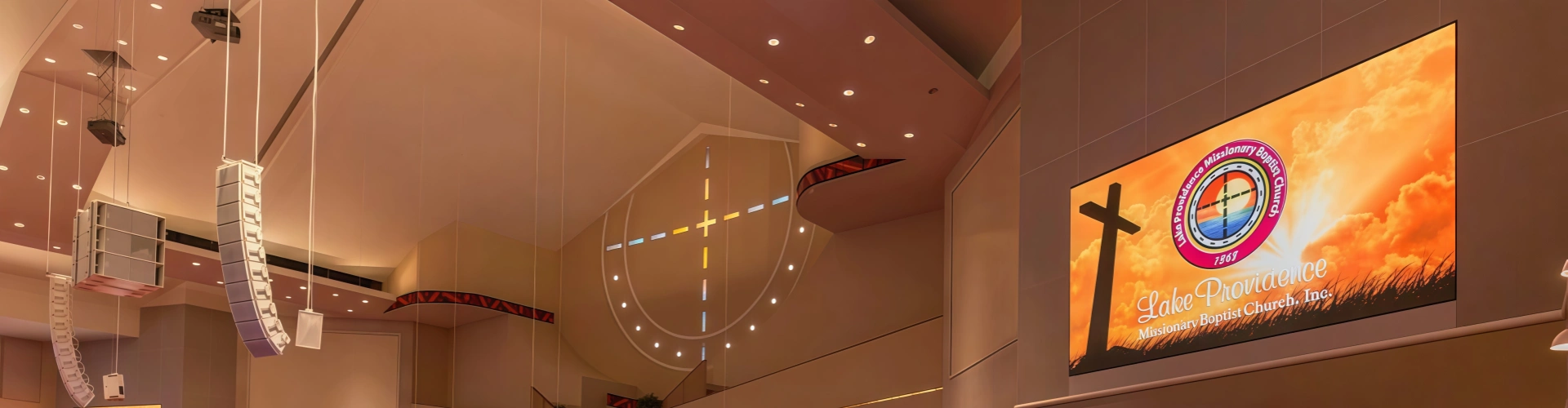
Elevate Worship with a Church LED Wall
From Sunday services to holiday events, a high-quality LED wall for church helps your message reach every corner of the sanctuary—visually clear and emotionally engaging.
Whether you’re leading worship, displaying sermon slides, or hosting weddings, LED video walls offer a flexible and modern solution that replaces outdated projectors.
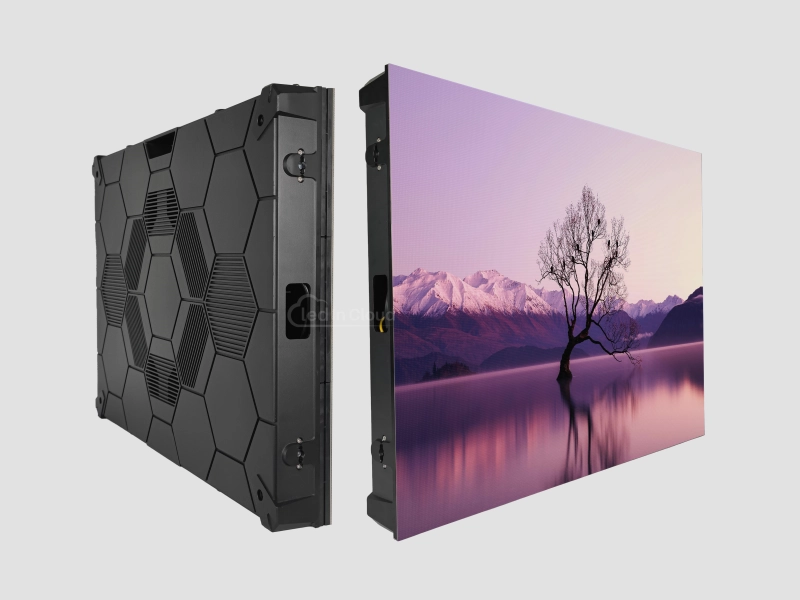
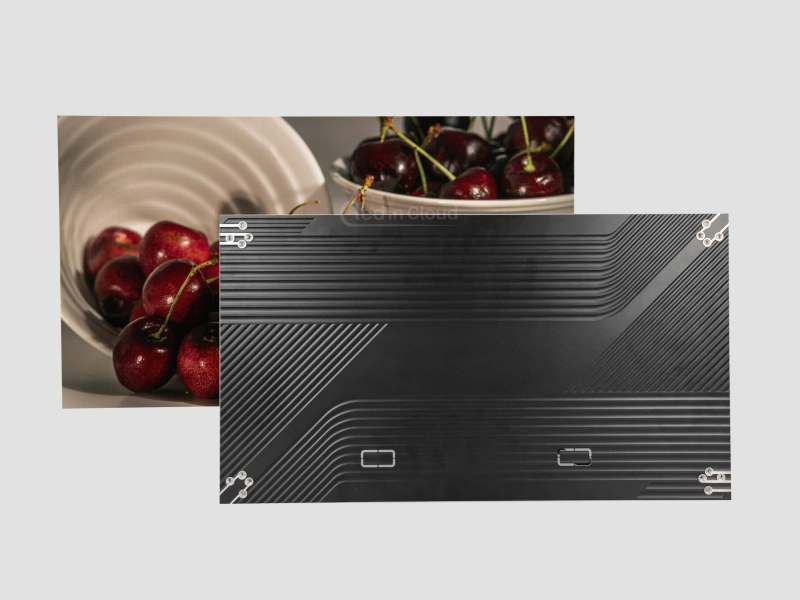
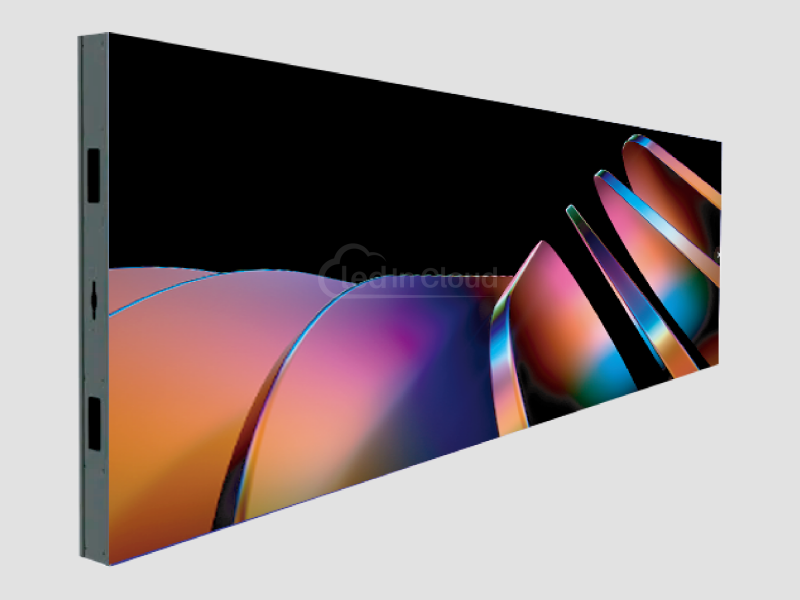
Church LED Wall Product Recommendations
We’ve selected a few popular products that are especially well-suited for church environments—from small chapels to large sanctuaries.
LED Display Price Calculator
Just fill the sizes, and get your LED screen budget right now !
Why Choose an LED Display Screen for Church?
Let’s face it—churches today need more than just a basic screen. Whether you’re leading worship, sharing scripture, or livestreaming services, your visuals need to keep up. That’s where LED display screens come in. They’re not just a tech upgrade—they’re a better experience for your congregation.
Bright and Clear in Any Light
No more dim projections—LED screens stay vivid even in sunlit rooms.
No Shadows, No Blurring
LED walls don’t rely on front projection, so no one blocks the image.
Supports Lyrics, Scripture, Video
Display multiple layers of content—perfect for dynamic worship and hybrid services.
Perfect for Live Streaming
High refresh rate (1920Hz+) prevents flicker on camera.
What Church LED Screens Are Used For?
Once a church LED wall is installed, most congregations find they’re using it for far more than they expected. Here are the main use cases.
- Worship Lyrics and Scripture
LED screens display lyrics and Bible verses clearly, even in sanctuaries with lots of natural light. They replace traditional printed bulletins and offer better contrast than any projector. For reading small scripture text, a P3.91 pixel pitch is ideal because it keeps fine fonts sharp and easy to read from a distance.
- Dynamic Holiday Atmosphere
Changing your stage design for Christmas, Easter, or baptisms takes only a few minutes. Using software like ProPresenter or EasyWorship, you can switch visual environments without physical set construction or manual teardowns.
- Announcements and Overflow Rooms
Before and after the service, screens run rotating loops of upcoming events and community news. Additionally, smaller LED panels in lobbies or overflow rooms carry the main service feed, ensuring everyone on campus stays connected.
- Sermon Notes and Key Points
Displaying sermon outlines and key quotes helps the congregation follow the structure of the message. This visual reinforcement keeps people engaged. Since the display is digital, pastors can update backgrounds or text styles instantly to match the theme of the teaching.
- Live Video Magnification (IMAG)
In large rooms, live camera feeds bring the speaker closer to people sitting in the back rows. This creates a more personal connection. To prevent flickering or “banding” lines on camera, these screens use a 3,840Hz refresh rate or higher, making the image look clean both in the room and on recording.
- Professional Live Streaming
An LED wall serves as a high-quality stage background for online viewers. It adds professional depth to your camera shots and eliminates the “flat” look of dark walls. The same 3,840Hz refresh rate used for IMAG also ensures a flicker-free experience for your home audience.
Choosing the Right Pixel Pitch for Your Church
Pixel pitch is the distance in millimeters between LED pixels. Smaller number = sharper image = higher cost. The right pitch depends on how far your audience sits from the screen.
| Pixel Pitch | Min. Viewing Distance | Best For |
| P2.5 | ~8 ft (2.5m) | Small chapels, close seating, fine text |
| P3.91 | ~13 ft (4m) | Mid-size churches, standard sanctuaries |
| P4.81 | ~16 ft (5m) | Larger auditoriums, budget-conscious builds |
| P5 | ~17 ft (5m+) | Large sanctuaries, rear-wall installs |
Church LED Wall Stage Design Ideas
Screen size and pixel pitch matter. But how you arrange the panels on stage shapes the entire feel of the room. Here are five layouts that churches actually use — and when each one makes sense.
1
Single Center Wall
One large screen, centered behind the stage. Keeps everyone focused on one place — the speaker, the lyrics, the message. Works in almost any sanctuary. The simplest setup to manage. Most churches start here.
2
Multi-Panel Symmetric
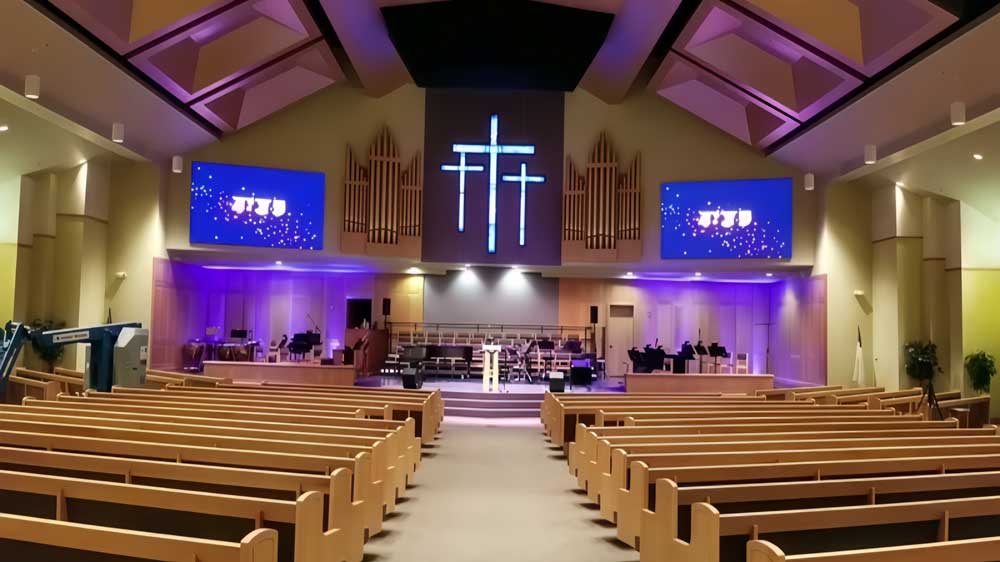
A wide center screen with two narrower panels on either side. Suits stages too wide for a single wall. Use sides for lyrics, center for live camera feed. More flexibility without adding complexity.
3
Curved LED Wall
Panels in a gentle arc that partially wraps around the stage. Draws the eye inward, adds depth. Works well in large sanctuaries where a flat screen feels far away. Confirm bend angle spec before ordering.
4
Layered Depth Setup
Multiple panels at different depths behind the stage. Layered, dimensional background. Needs ceiling rigging and more involved content management. Common in high-production church environments.
5
Multi-Panel Symmetric
A wide, short horizontal panel — ~2 ft tall, 8–12 ft wide — above or below the main screen. Runs lyrics, scripture, or secondary content. Practical second display zone without full side screens.
Why Buy Church LED Panels from LedInCloud?
Factory-direct pricing
We manufacture our own panels in Shenzhen. No distributor between you and the factory. That removes 20–40% in markup that most resellers add.
Ships worldwide
US, UK, Mexico, Canada, Australia, Nigeria, Kenya, South Africa, Indonesia, Philippines, and more. Air freight: 7–15 days. Sea freight for larger orders.
Custom sizes
Standard panels tile to almost any dimension. We don’t work from a fixed size catalog. Your stage drives the configuration.
Remote technical support
Setup guidance, control system config, and troubleshooting via email, WhatsApp, and video call. Spare modules and cables included so you’re never chasing parts.
Certified products
CE, RoHS, and ISO 9001 certification. Covers compliance requirements for Europe, the UK, and most other regulated markets.
Volume orders
Multi-campus churches and AV resellers: we offer volume pricing on bulk orders. Get in touch for a wholesale church LED screen quote.
Custom LED Wall Solutions for Every Church Size
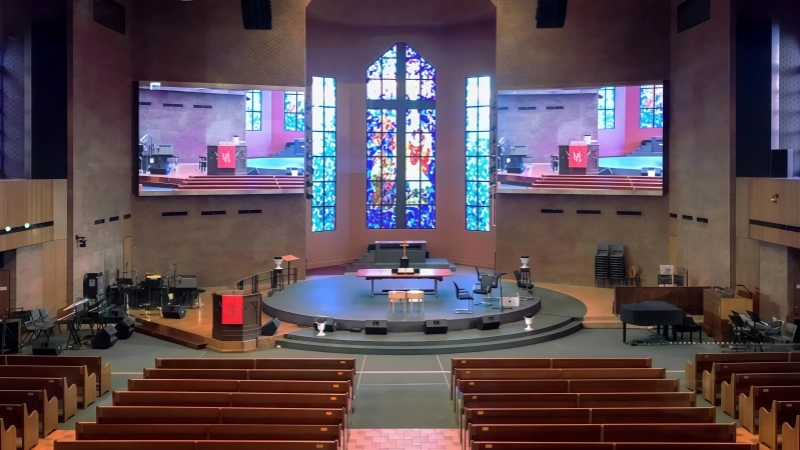
We provide modular LED wall panels for churches, meaning you can build a screen that fits your space—whether it’s a small chapel or a 1000-seat sanctuary.
Most requested configurations:
- 4×2m LED wall for mid-size church stages.
- 6×3m curved LED wall for modern churches.
- Small LED banner displays for entrances or scripture highlights.
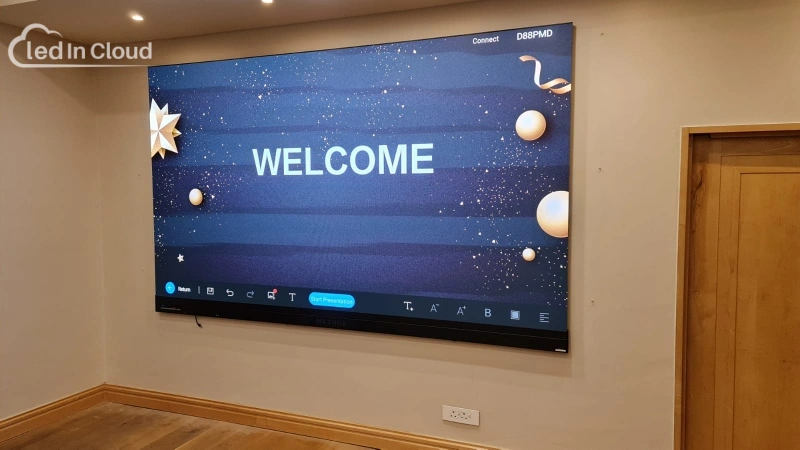
Real Photos from Our Church Installations
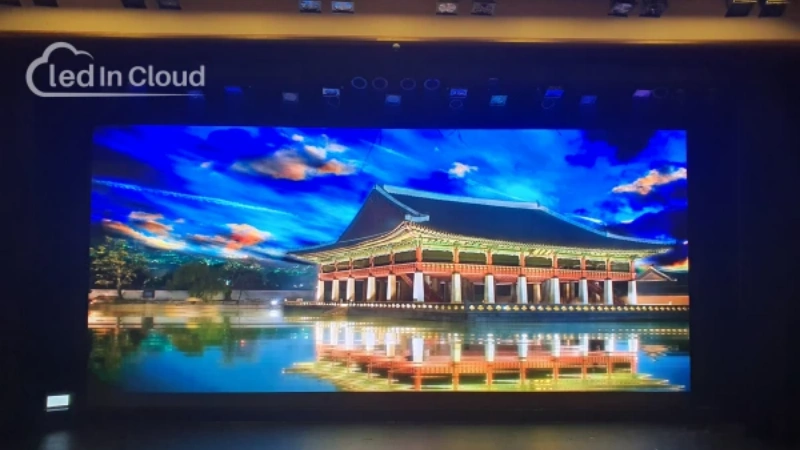
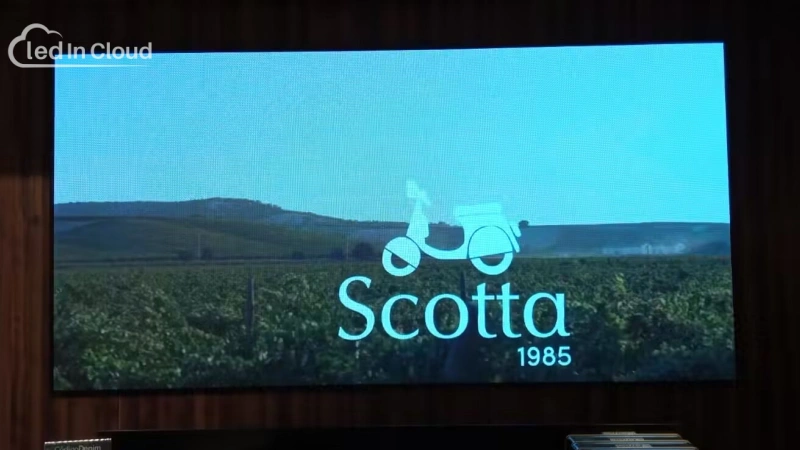
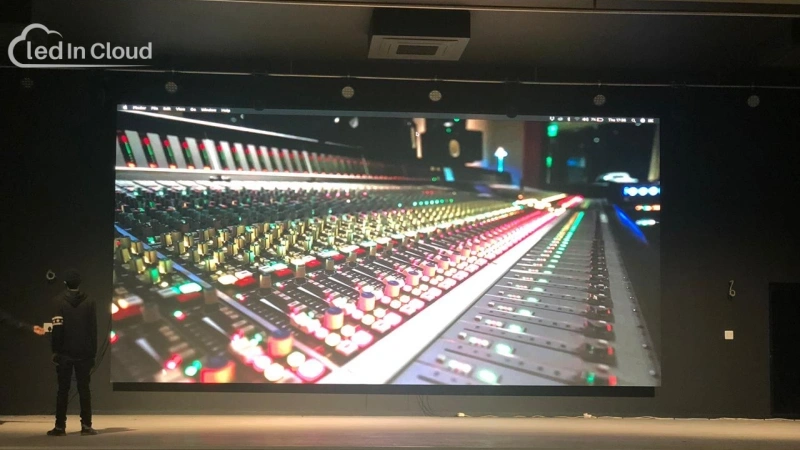
Send Us Message
If you have any LED display projects or technical problems regarding our LED display products. Please send us a message, we will reply to you in 24 hours.
ATTENTION: lf you bought LED Display & LED Module from other suppliers, Please get help from them directly.
Church LED Wall & Screen Solutions for Houses of Worship
Over the past decade, church LED wall have quietly transformed sanctuaries around the world.
If your church still uses a projector, you’ve probably noticed a few things. The image looks washed out when the lights are on. Text isn’t always clear unless you’re sitting up front. And when someone walks in front of the screen—everything disappears.
That’s why more churches, big and small, are moving to LED video walls. They’re bright, sharp, and visible from any seat in the room, even with full daylight. But beyond the visuals, LED screens bring a different kind of energy. Lyrics are easier to follow. Sermons feel more focused. And younger members—used to high-quality visuals everywhere—feel more at home.
Still, switching to an LED wall isn’t a small decision. There are questions about cost, screen size, setup, and whether to buy, rent, or lease. This guide breaks it all down—no fluff, just clear answers based on real church needs.
Table of Contents
1. Why Church LED Video Wall Beat Projector?
If your church still runs a projector, you’ve probably run into the same problems on repeat — washed-out images when the lights are up, blurry text in the back rows, shadows every time someone walks across the stage.
These aren’t fixable with a better projector. They’re just how projection works. That’s why so many churches have switched to LED walls. Here’s what actually changes:
✔ Brightness — LED panels are self-emitting. Every pixel generates its own light. House lights, sunlight through stained glass, skylights — none of it washes out the image.
✔ No shadow interference — with a projector, anyone walking between the lens and screen blocks the image. A church LED screen eliminates that entirely. The display is the wall.
✔ Sharper text — projectors soften fine text at distance. A church LED display renders clean, readable characters from every seat, including the back rows.
✔ Better for livestreaming — a lit LED video wall for church adds depth behind the speaker and significantly improves camera image quality. A projector screen on camera just looks flat.
And the long-term cost math usually favors LED too.

Here’s a quick side-by-side:
| Features | Projector | LED Wall |
| Lifespan | 2,000–5,000 hrs (bulb) | 80,000–100,000 hrs |
| Bulb replacement | Every 1–2 years | None |
| Image in bright room | Washes out | No impact |
| Shadow interference | Yes | No |
| Livestream quality | Poor | Clean, depth-rich |
Upfront, a projector costs less. But over five to ten years of weekly services, bulb replacements and the limitations add up. Most churches find the total cost of ownership favors LED well within five years.
2. Church LED Wall Backgrounds, Graphics & Display Ideas
The hardware gets the screen on the wall. What you put on it shapes how the service feels. This is where a lot of churches underinvest — and where the biggest visual gains come from.

2.1 During worship sets
Lyrics sit over a background — still image or motion graphic. The background sets the tone for the moment. A few practical notes:
- Cool tones (blues, whites) suit reflective, quieter worship moments
- Warm tones (golds, ambers) work well for celebratory or high-energy sets
- Avoid busy or high-contrast backgrounds that compete with the lyric text
2.2 Stage backdrop for sermons
Many churches use the screen as a visual environment behind the speaker — not just for lyrics. Common approaches for church led wall design:
- Abstract motion loops — subtle movement that adds life to the stage without distracting from the speaker
- Nature or atmospheric imagery — landscapes, light, water — often tied to sermon themes
- Branded series graphics — custom artwork that runs consistently across a multi-week teaching series, giving the whole season a cohesive visual identity
2.3 Special services
Christmas, Easter, baptism Sundays, and major events benefit from dedicated visual treatment. Changing the screen to a seasonal design takes a few minutes in your media software. No physical set changes needed.
3. How to Choose the Right Church LED Display?
There’s no single right answer for every church. But five questions cut through most of the uncertainty.
3.1 How far is the back row from the stage?
This determines pixel pitch — the most important spec to get right. The rule of thumb: 1mm of pixel pitch for every 8–10 feet of viewing distance.
| Back Row Distance | Recommended Pitch |
| Within 25 ft | P2.5 or P2.97 |
| 25–40 ft | P3.91 |
| 40–55 ft | P4.81 |
| 55 ft+ | P5 or P6 |
P3.91 is the most common choice for mid-size churches — it covers 150 to 500 seats across a room 40 to 80 feet deep without paying for resolution the back row can’t see. For small church led screen setups with seating very close to the stage, P2.5 reproduces fine scripture text noticeably more cleanly.

3.2 How wide is your stage?
Stage width minus 8 to 10 feet = your LED wall width. A 36-foot stage fits a 26-foot screen comfortably. Then apply 16:9 for height — divide width by 16, multiply by 9. That keeps the screen proportional for standard video content.
For large led screen for church installs — 800+ seats, wide fan-shaped layouts, multi-level balconies — a single wall often isn’t enough. A main center screen paired with side or balcony screens serves the full audience more effectively.

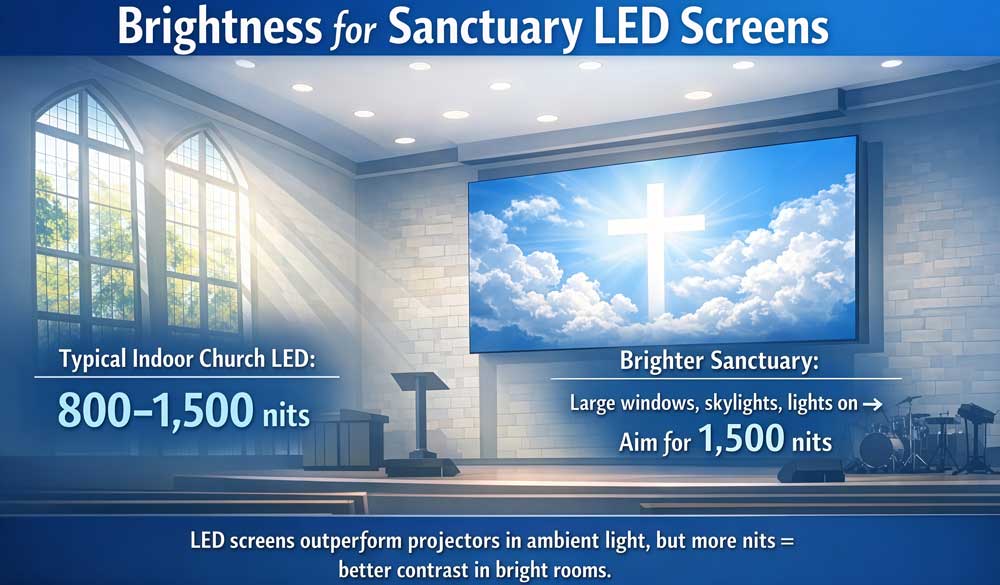
3.3 How bright is your sanctuary?
Indoor church LED panels typically run 800–1,500 nits. If your sanctuary has large windows or stays brightly lit during services, aim for the higher end. Brighter rooms need more nits to maintain contrast.
3.4 How will you use it?
✔ Weekly services, standard lyrics and sermon visuals → P3.91 or P4.81 covers everything
✔ Livestreaming or IMAG camera feeds → look for a refresh rate of 3,840Hz or above to prevent banding in video output
✔ Multi-purpose use across different events → modular ground-support system lets you reconfigure without reinstalling

3.5. What's your budget?
| Budget | Recommended Setup |
| Under $12,000 | Compact P4.81, 10–15 sqm. Good starting point, expandable later. |
| $12,000–$30,000 | P3.91, full sanctuary coverage for a mid-size church. |
| $30,000+ | P2.97 or custom, for large sanctuaries and high-production environments. |
For churches with multiple campuses or AV resellers sourcing wholesale church led screen supply — volume pricing is available. Contact LedInCloud for a bulk quote.
4. Church LED Screen Price
Price is usually the first question. The honest answer: it depends on screen size, pixel pitch, and what’s included. Here’s a clear breakdown so you can plan properly.
4.1 Reference Price by Church Size
| Church Size | Congregation | Screen Size | Pixel Pitch | Panel Cost (USD) |
| Small Chapel | 50–150 people | ~10 ft × 6 ft | P3.91 / P4.81 | $6,000–$12,000 |
| Mid-Size Church | 150–400 people | ~16 ft × 9 ft | P3.91 | $12,000–$22,000 |
| Large Sanctuary | 400–1,000 people | ~20 ft × 11 ft | P2.97 / P3.91 | $22,000–$40,000 |
| Mega Church | 1,000+ people | Custom | P2.5 / P2.97 | $40,000+ |
These figures cover panels only. A working system includes more.
4.2 Full System Cost Breakdown
Most quotes only cover the LED panels. Before you finalize a budget, account for the full picture:
- Control system — manages content playback. Basic: $500–$1,500. Multi-source with live camera input: $2,000–$5,000.
- Support structure — floor stand, wall brackets, or rigging. Budget $800–$3,000 depending on installation method.
- Shipping — varies by destination. Sea freight is cost-effective for large orders. Air freight is faster.
- Installation labor — local AV crew typically costs 10–20% of hardware. Your own team with remote guidance from us: near zero.
- Content software — ProPresenter, EasyWorship, etc. Most church media software runs $100–$500 per year.
4.3 Hidden Costs to Plan For
A few line items that regularly catch churches off guard:
Cabling. Power, signal, and data cables between panels and the controller add up. For a 15–20 sqm setup, budget $200–$500 for a clean cable run.
Spare parts. Keep at least two spare modules and one spare power supply on hand. Including these in your initial order costs less than shipping them individually later.
Annual maintenance. LED panels need very little upkeep — but set aside $300–$500 per year for routine cleaning, module checks, and occasional replacements.
4.4 Projector vs. LED — Long-Term Cost
A projector costs less upfront. But projector bulbs burn out every 2,000–5,000 hours. Over ten years of weekly services, those replacements often exceed the original purchase price. LED panels run 80,000–100,000 hours with no lamp costs. In most cases, total cost of ownership favors LED within three to five years.
4.5 Church LED Screen Price in Nigeria and Kenya
Churches across Africa — particularly in Nigeria, Kenya, South Africa, and Uganda — have become some of the most active buyers of church LED display systems in recent years. The hardware cost is largely the same as other markets. What changes is the total landed cost.
Import duties, local freight forwarding, and installation support can add 20–30% to the panel price depending on the country. As a rough guide, a 10–16 sqm setup at P3.91 shipped to Nigeria or Kenya typically lands between $8,000 and $20,000 USD total — panels and basic support hardware included, before local installation.
For churches asking about led screen for church price — contact LedInCloud – LED Screen Cloud Platform with your screen size and location. We’ll give you a full cost breakdown including shipping to your port.
5. Church LED Wall Installation Methods
Getting the installation right matters as much as choosing the right screen. There are three standard methods, and each one suits a different type of building and use case.

5.1 Ground Support (Floor Stand)
This is the most common setup for church LED walls, and the most flexible. Panels attach to a truss or support frame that sits on the stage floor. No drilling into walls or ceilings. Nothing permanent.
That flexibility is the main appeal. If your stage layout changes, the screen moves with it. If your church rents the building, or uses the space for multiple types of events, ground support keeps your options open. It’s also the easiest method for a church’s own team to install and adjust.
The trade-off is floor space. The support structure sits on the stage, which can feel tight on smaller stages. Cable management also needs more attention with a freestanding system.
5.2 Wall Mount
Panels are bolted directly to the wall behind the stage. The result is a clean, permanent installation with no hardware visible on the stage floor. For churches that livestream, this is often the preferred look — no support structures cluttering the background shot.
Before committing to this method, check the wall. A fully assembled led wall panels for church setup can weigh several hundred kilograms.
Concrete and masonry walls handle that load reliably. Standard drywall usually needs reinforcement for anything larger than a small screen.
One important consideration: once it’s mounted, relocating the screen is a significant job. Make sure the position is right before installation begins.
5.3 Hanging (Fly Rig)
The screen is suspended from overhead — typically from a ceiling truss or purpose-built grid. The stage floor stays completely clear, which works well for larger auditoriums where production space is limited and a clean stage look matters.
The requirements here are strict. The ceiling structure needs to be rated for the full suspended weight of the panels — often 300–500 kg for a large LED screen for church — plus an appropriate safety margin. A structural assessment is necessary before this method goes ahead. If overhead rigging points don’t already exist, installation cost increases significantly.
5.4 Quick Guide
- Multi-purpose space or rented building → ground support
- Permanent sanctuary with solid walls → wall mount
- Large auditorium with existing ceiling rigging → fly rig
Not sure which works for your building? Send a photo of your stage. We can usually give a clear recommendation from there.
6. FAQs
What is the best pixel pitch for a church LED screen?
For most mid-size churches with seating 30–60 feet from the stage, P3.91 is the most practical choice. It delivers sharp lyrics and scripture text from across a standard sanctuary without the higher cost of fine-pitch panels. Smaller spaces with close seating benefit from P2.5 or P2.97. Larger rooms with deeper seating can use P4.81 or P5 at lower cost.
How long does a church LED screen last?
LED panels are rated for 80,000–100,000 hours of operation. At 8 hours per day, that's over 27 years before panels reach half brightness. Maintenance is minimal — individual modules can be swapped from the front without dismantling the whole screen.
What refresh rate do I need for livestreaming?
Look for 3,840Hz or above. At that refresh rate, cameras don't pick up banding or flickering in the image. Most modern church LED panels for sale meet this spec, but confirm before ordering if livestreaming is a priority.
Do you ship church LED screens to Nigeria, Kenya, and other African countries?
Yes. We regularly ship to Nigeria, Kenya, South Africa, Uganda, Ghana, and other African markets via sea freight (30–40 days) or air freight (7–15 days). We handle export documentation and advise on local customs requirements.
Can I buy LED screen panels for church in bulk?
Yes. We offer volume pricing for multi-campus churches and AV resellers sourcing wholesale church LED screen supply. Get in touch directly with your total screen area and required quantity for a bulk quote.
7. Conclusion
A church LED wall is a long-term infrastructure decision — not just a tech upgrade. Get the size, pixel pitch, and installation method right, and it serves your congregation for decades with minimal maintenance.
LedInCloud manufactures and ships church LED walls directly from our factory in Shenzhen. No distributor markup. Custom sizes. Full remote support through installation. CE, RoHS, and ISO 9001 certified.
Send us your stage dimensions and we’ll put together a specific quote within 24 hours.
More Solutions

3D LED Screen
Naked-eye 3D visuals that grab attention — no glasses required.

Museum LED Screen
Immersive displays built for galleries, exhibits, and cultural spaces.

Conference LED Screen
Seamless, bezel-free displays for boardrooms and meeting spaces.
Education LED Screen
High-clarity screens for classrooms, auditoriums, and campuses.