

Extending LED Display Lifespan: A Practical Guide
LED display lifespan is often the first concern when choosing an LED screen. Buyers want to know how long the display will last and what affects long-term performance. But lifespan is not just a fixed number.
Many manufacturers mention figures like 100,000 hours. In real projects, however, lifespan depends on installation, environment, operating habits, and component quality. Two displays with similar specs may age very differently.
In this guide, we will look at the real meaning of LED display lifespan, the differences between indoor and outdoor usage, and the key factors that influence service life. More importantly, we will explore practical ways to extend LED display lifespan through proper installation, daily operation, and regular maintenance.
Table of Contents
1. What Is LED Display Lifespan?
In everyday use, LED display lifespan does not mean the day the screen suddenly stops working. Most LED displays do not fail all at once. Instead, they change slowly over time. The screen becomes less bright, colors may look less even, and small issues like dead pixels start to appear.
In the industry, lifespan is usually described by brightness decay. A common way to measure it is when brightness drops to about 50% or 70% of its original level. This is often called L50 or L70. Under ideal conditions, LED chips can run for a very long time. However, those conditions assume stable temperature, clean power, and good heat control, which are hard to maintain in real installations.
So when people talk about led screen lifespan, they are really asking how long the display can stay bright enough, look even, and operate reliably. That practical understanding matters much more than any theoretical hour rating.
2. Indoor vs Outdoor Lifespan
Indoor and outdoor LED displays age differently because they operate in very different environments. Indoor screens work in controlled conditions, while outdoor LED screen faces weather, heat, and higher brightness demands.
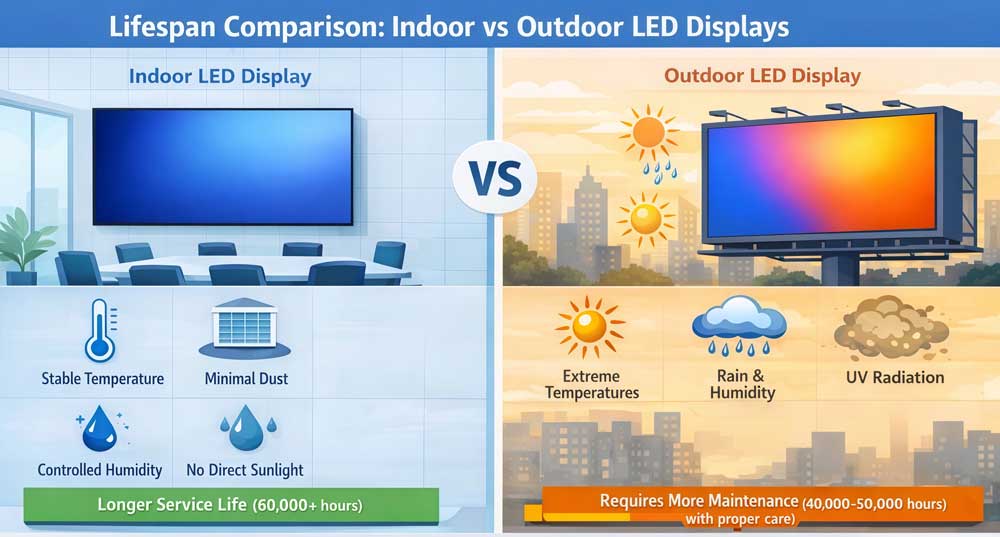
- Here is a simple comparison:
| Factor | Indoor LED Display | Outdoor LED Display |
| Environment | Stable temperature and humidity | Exposed to sun, rain, dust, and temperature changes |
| Brightness Level | Lower brightness required | High brightness needed for sunlight visibility |
| Thermal Stress | Usually lower | Higher due to strong brightness and environment |
| Maintenance Frequency | Less frequent | More regular inspection required |
| Protection Level | Basic protection is enough | Needs waterproof and dustproof design (IP rating) |
| Typical Lifespan Trend | Often longer under normal use | Depends heavily on installation and cooling |
Indoor LED screen usually experiences slower aging because conditions are predictable. Outdoor screens, on the other hand, must handle more stress. However, good cabinet design, proper ventilation, and regular maintenance can significantly extend outdoor LED display lifespan.
3. Key Factors Affecting LED Screen Lifespan
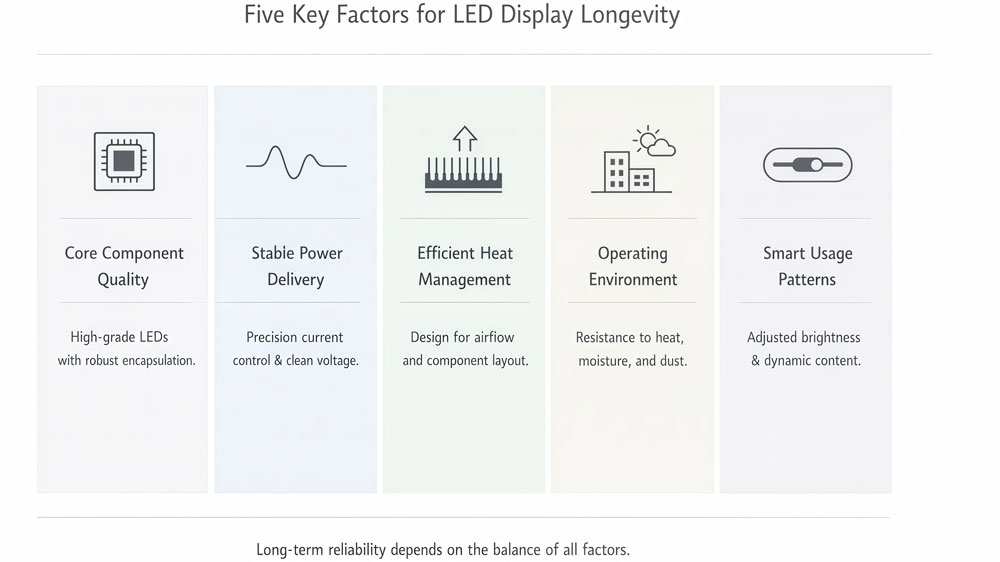
When we talk about led display lifespan, most people first think about the LED itself. That makes sense, but in real projects, lifespan is never decided by one single part. It is the result of several factors working together over time. If any one of them is handled poorly, the overall lifespan will shorten faster than expected.
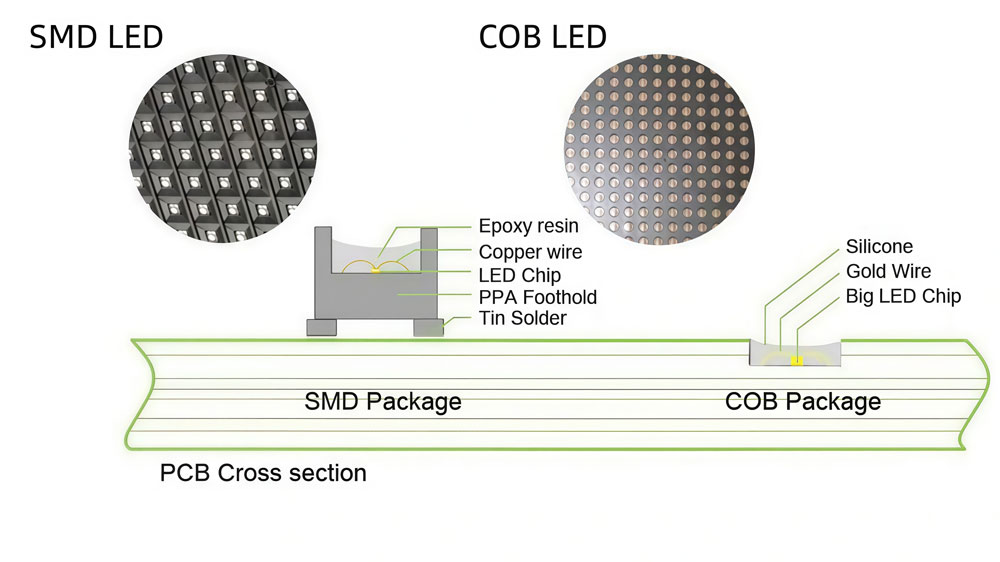
LED Chip Quality and Packaging
The LED chip is the part that actually produces light, so its quality directly affects how long the screen can stay bright and stable. High-quality LED chips usually show slower brightness decay and better consistency over time. Lower-grade chips may look fine at the beginning, but after a few thousand hours, brightness drops faster and color differences become more visible.
Packaging also plays a big role. A good package protects the chip from moisture, dust, and heat. If the packaging material ages too fast or cracks under heat, moisture can reach the chip and cause early failure. This is why many outdoor projects prefer COB or GOB packaging. These structures offer better protection and reduce the risk of dead pixels, especially in humid or dusty environments.
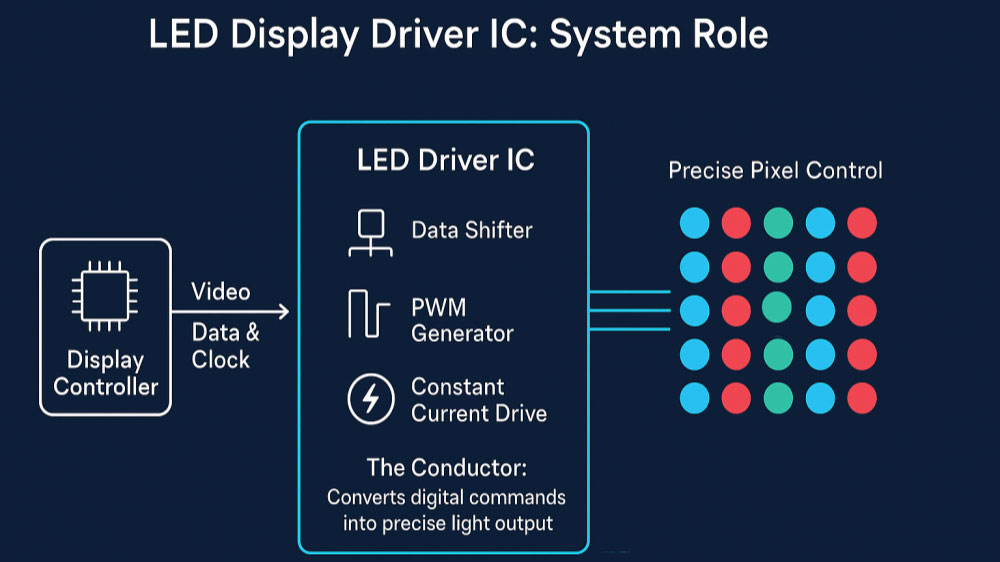
Driver IC and Power Supply Stability
LEDs do not work alone. They rely on driver ICs to control current and power supplies to deliver stable voltage. If current control is not precise, LEDs may run slightly above their normal working range. This may not cause immediate damage, but over time it accelerates aging and shortens led screen lifespan.
Power supply quality is often underestimated. A power supply with unstable output or poor protection design exposes the system to voltage fluctuations and surge stress. In long-term operation, this constant stress affects not only the LEDs, but also driver ICs and other components. Many early failures in LED displays can be traced back to power-related issues rather than LED chips themselves.
Circuit Design and Heat Dissipation
Heat management is one of the most important factors affecting LED screen lifespan. LEDs generate heat during operation, and that heat must be released efficiently. If heat stays inside the cabinet, internal temperature rises, and all electronic components age faster.
Poor circuit design can make this problem worse. Thin power traces, uneven current distribution, or crowded layouts increase resistance and heat buildup. In outdoor displays, insufficient ventilation or blocked airflow can quickly push internal temperatures beyond safe levels. Even a temperature increase of 10°C can significantly reduce component lifespan, especially for LEDs and power supplies.
Operating Environment
The environment where the LED display is installed has a long-term impact on lifespan. Indoor environments are usually more stable, which is why indoor displays tend to last longer. Outdoor displays, however, must deal with heat, rain, humidity, dust, and sometimes salt fog or industrial pollution.
High humidity can cause corrosion on circuit boards and connectors. Dust can block cooling paths and reduce heat dissipation efficiency. In coastal areas, salt fog accelerates metal corrosion if protection is insufficient. All these factors slowly damage the system, even if the display appears to work normally at first.
LedInCloud P4 Outdoor LED Screen Waterproof Test
LedInCloud MA960 Series Test
Usage Habits and Operating Patterns
How a display is used every day matters just as much as how it is built. Running at very high brightness for long periods increases current and heat, which speeds up LED aging. This is especially common in projects where brightness is set once and never adjusted.
Content also affects lifespan. Long-term display of full white or other high-power static images keeps certain LEDs under constant stress. Over time, this causes uneven aging and visible brightness differences. In addition, frequent power on and off cycles create current surges that stress power supplies and driver ICs. Displays with unstable operating schedules tend to show problems earlier.
Overall, led display lifespan is shaped by component quality, system design, environment, and daily usage habits. Focusing on only one factor is not enough. In real projects, it is the balance between all these elements that determines how long an LED display can perform reliably.
From long-term project experience, LedInCloud – a global leading LED Screen Cloud Platform, focuses on stable component selection and thermal design, which usually sees more consistent LED screen lifespan results.
4. How to Extend LED Display Lifespan?
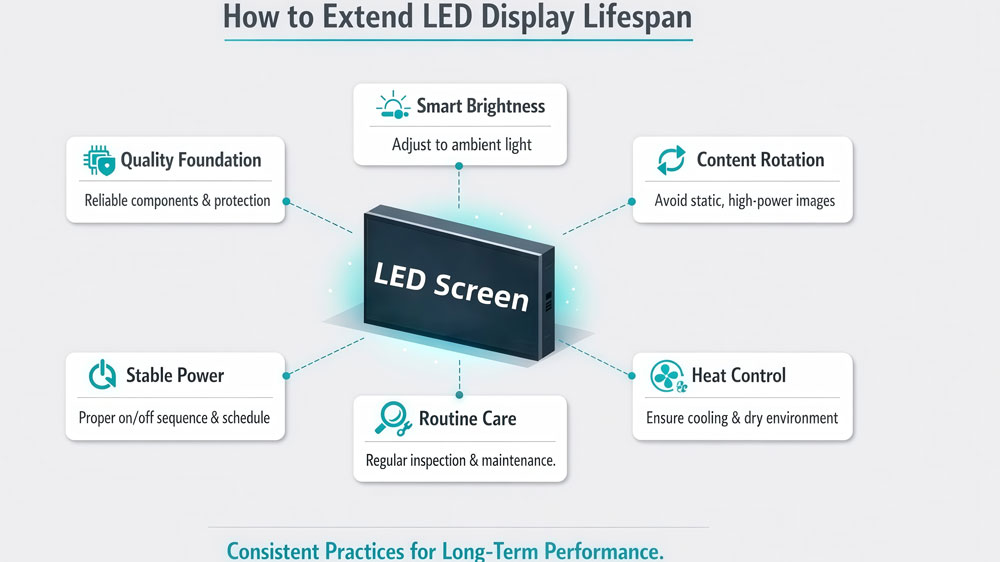
Extending led display lifespan is not about one special setting or a single upgrade. In real projects, it comes from many small decisions made over time. When these decisions are consistent, the display ages more slowly and stays stable for longer. When they are ignored, even a good-quality screen can show problems much earlier than expected.
4.1 Start with the Right Product and Configuration
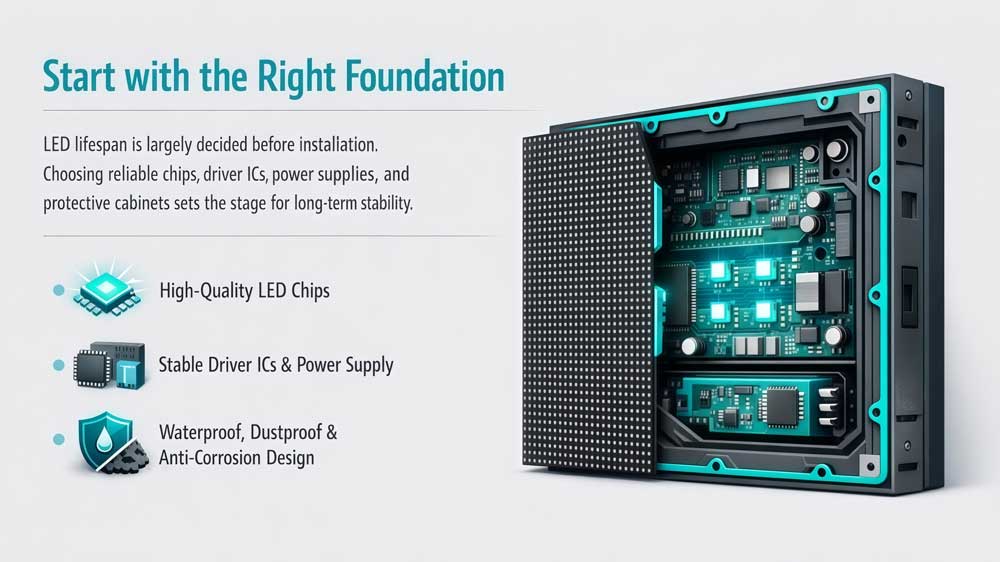
Lifespan is largely decided before the screen is even installed. Choosing reliable LED chips, stable driver ICs, and high-quality power supplies sets a solid foundation. These components handle current, heat, and voltage stress every day. If they are under-designed or mismatched, aging accelerates from the first day of operation.
For outdoor projects, protection level also matters. Cabinets with proper waterproof and dustproof design reduce moisture and dust intrusion. In coastal or industrial areas, corrosion resistance becomes especially important. These are not optional upgrades. They directly affect how long the display can operate without internal damage.
4.2 Control Brightness Based on Real Conditions
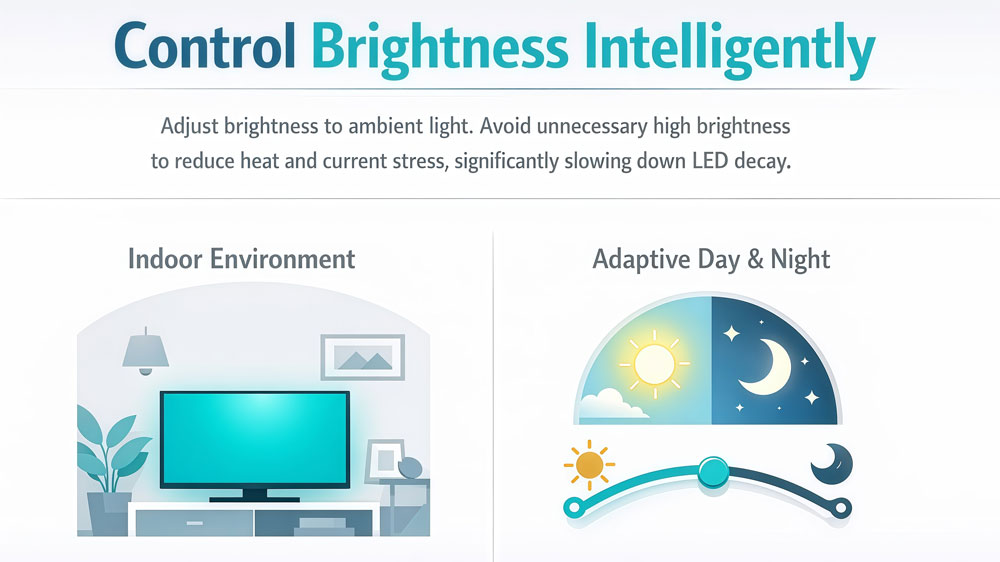
Brightness has a direct relationship with LED aging. Higher brightness means higher current and more heat. In many installations, especially indoors, screens are simply set too bright for the environment. This does not improve visibility, but it does shorten led screen lifespan.
A more practical approach is to adjust brightness according to ambient light. Indoor displays can run at moderate levels without any loss of viewing quality. Outdoor displays should lower brightness at night and in cloudy conditions. Reducing brightness even slightly can significantly slow down brightness decay over time.
4.3 Manage Display Content Wisely
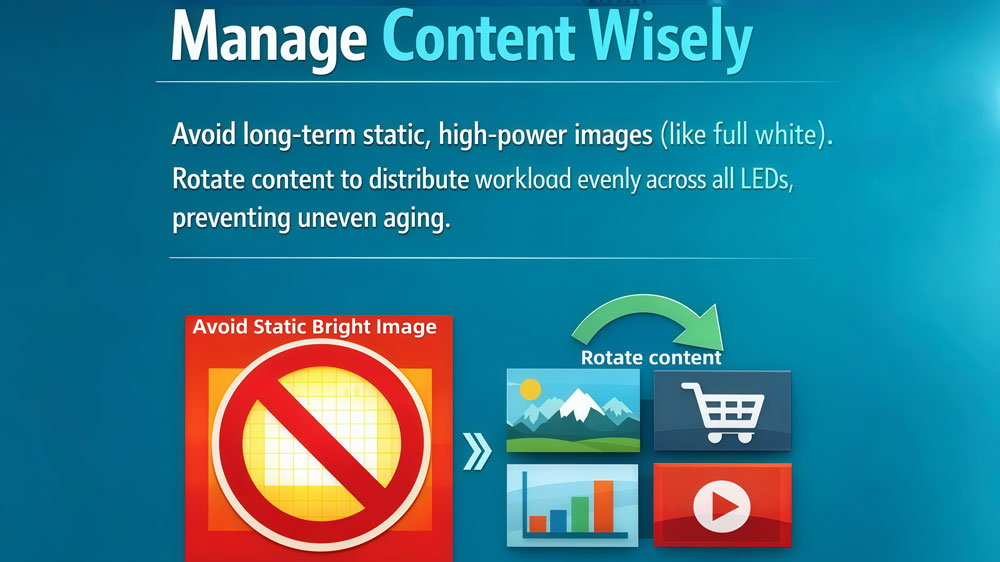
Content management is often overlooked, but it has a real impact on lifespan. Long-term display of full white, full green, or other high-power static images puts continuous stress on the same LEDs. Over time, this leads to uneven aging and visible differences across the screen.
Rotating content regularly helps distribute the load more evenly. Using dynamic images instead of static ones allows different areas of the screen to rest. In long-running projects, this simple habit can reduce early brightness imbalance and extend usable years.
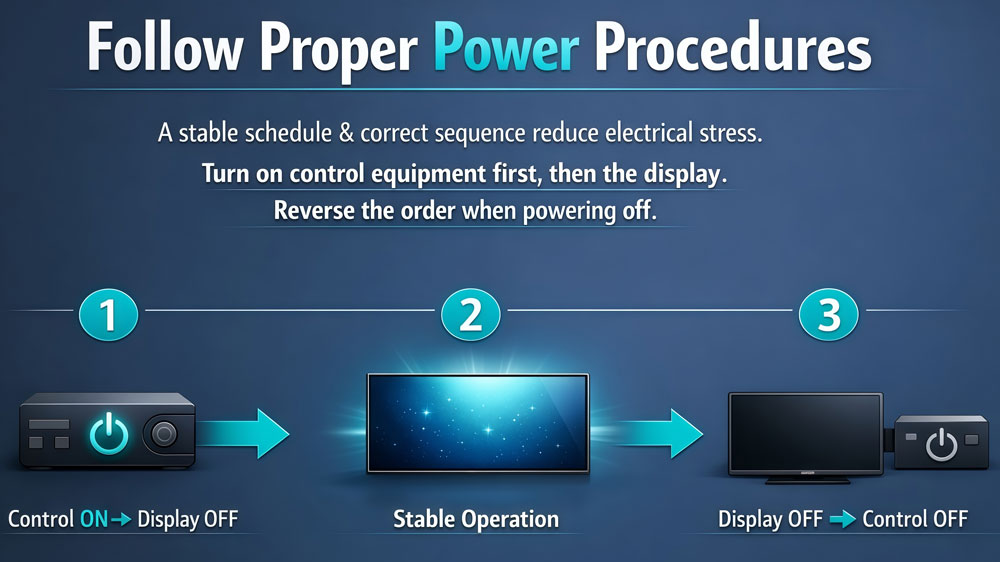
4.4 Use Proper Power On and Off Procedures
Power cycling creates electrical stress. Every time the screen powers on, a surge current passes through the system. Frequent or improper power switching increases wear on power supplies and driver ICs.
A stable operating schedule is better than frequent on-off cycles. When powering the system, control equipment should be turned on before the LED display, and shut down after the display. This sequence helps avoid abnormal current conditions and reduces unnecessary stress on electronic components.
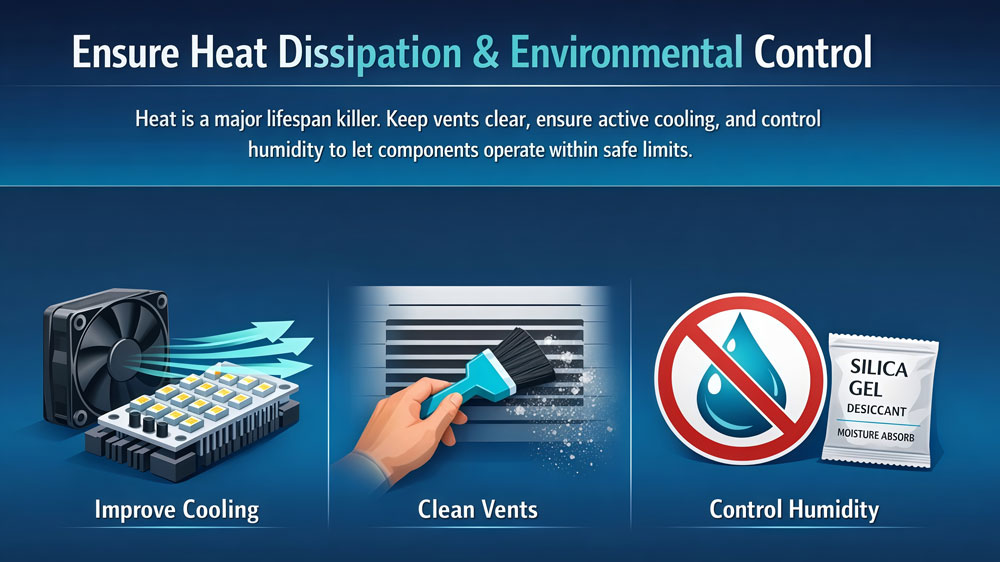
4.5 Maintain Good Heat Dissipation and Environment Control
Heat is one of the biggest factors shortening LED lifespan. Good heat dissipation allows LEDs and power components to operate within safe temperature ranges. Blocked airflow, dust buildup, or failed cooling fans quickly raise internal temperature.
Regular cleaning keeps ventilation paths clear. In high-temperature environments, additional cooling such as fans or air conditioning may be necessary. In humid regions, moisture control is equally important. Keeping internal conditions stable slows down aging across all components.
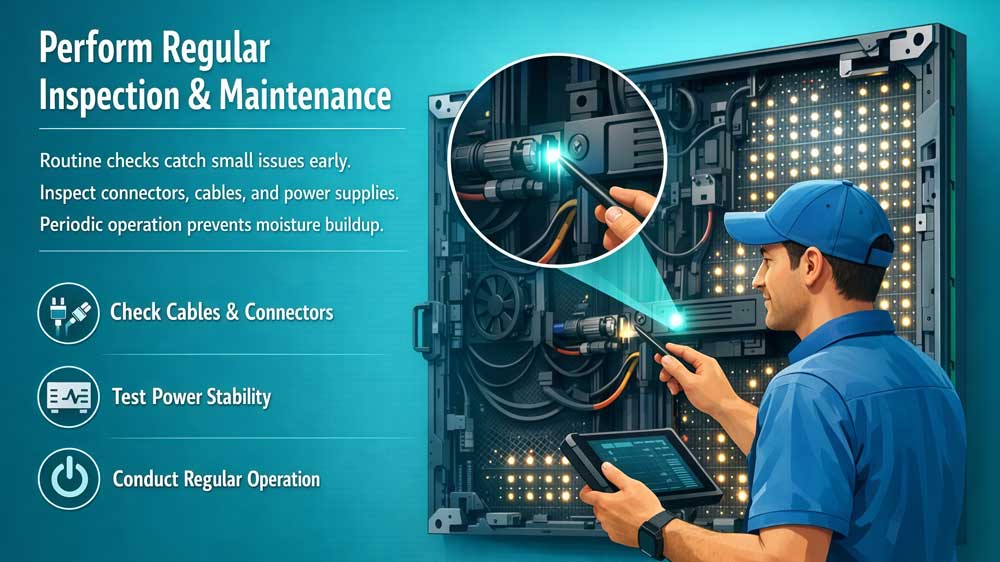
4.6 Perform Regular Inspection and Maintenance
LED displays are long-term systems. They benefit from routine checks. Loose connectors, aging cables, or unstable power supplies often show early warning signs before serious failure occurs.
Periodic inspection allows small issues to be fixed early, instead of causing chain failures. For displays that are not used continuously, periodic power-on operation helps prevent moisture buildup inside the cabinet. These maintenance habits do not add complexity, but they make a clear difference in long-term performance.
In practice, extending led display lifespan is about steady, sensible operation rather than extreme measures. When component quality, brightness control, content management, power handling, and maintenance work together, the display can deliver stable performance for many years beyond basic expectations.
5. Recommended LED Displays for Long Lifespan
Choosing the right LED display from the beginning has a direct impact on LED display lifespan. Structural design, component quality, and thermal management all influence how long a screen performs in real-world projects.
At LedInCloud, product development focuses on long-term stability, efficient heat dissipation, and reliable power architecture. Below are recommended solutions for different application environments.
✔ LedInCloud Outdoor LED Displays — Built for Harsh Conditions
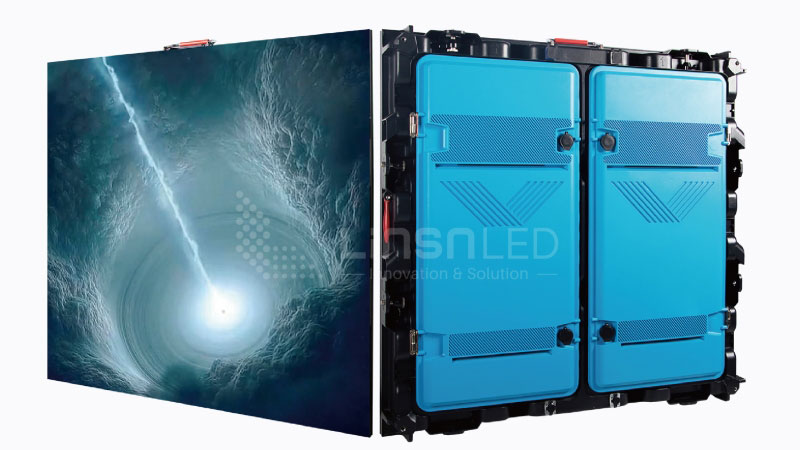
Outdoor screens must handle sunlight, rain, wind, and dust without breaking down. LedInCloud outdoor series focus on protection, thermal design, and consistent brightness output—factors that reduce stress on components and help extend LED display lifespan.
- Strong environmental protection — Cabinets are designed to resist dust, rain, and humidity, which reduces corrosion and protects internal components.
- High brightness with stable output — Outdoor screens often run at higher luminance for visibility under sunlight. A stable output design reduces thermal stress and slows LED aging.
- Efficient heat dissipation — Thoughtful airflow and structural cooling help maintain a consistent operating temperature, which is critical for prolonging LED display lifespan.
- Power stability and surge protection — Outdoor installations are prone to voltage fluctuations. High-quality power modules and protective circuitry help avoid electrical stress on driver ICs and LEDs.
EV960 Series Waterproof Test
OF1000 Series Waterproof Test
✔ LedInCloud Indoor LED Displays — Designed for Controlled Environments
Indoor LED displays typically run in controlled environments with lower brightness requirements. LedInCloud indoor series focuses on uniform light output, easy maintenance, and efficient heat control to help keep screens performing smoothly for many years.
- Lower operational stress — Indoor units typically run at moderate brightness, which reduces heat generation and slows brightness decay.
- Consistent color and brightness — Fine pixel pitch and uniform LED modules ensure high visual quality over time, without hotspots or uneven aging.
- Efficient internal airflow — Even in indoor settings, heat needs to escape. A well-ventilated cabinet design supports long-term stability.
- Easy maintenance access — Modular panel design and front/rear serviceability make it easier to inspect and replace parts, reducing downtime and preventing small issues from becoming major failures.
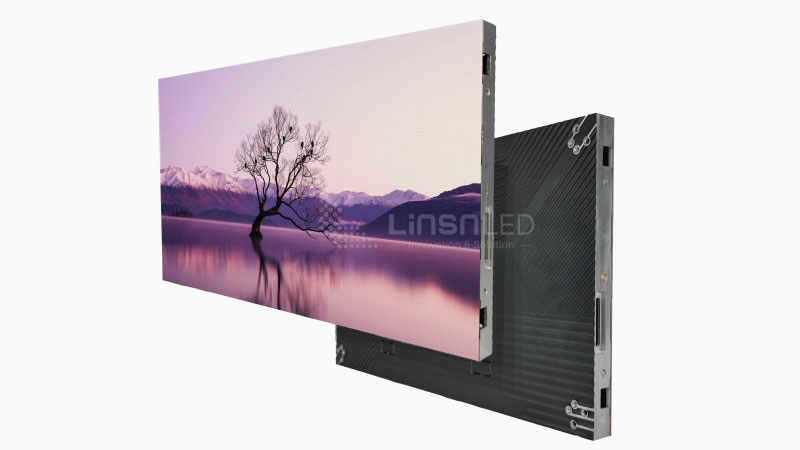
6. FAQ
Q1. How long does an LED display really last?
Most LED displays are rated around 100,000 hours under standard lab conditions. In real projects, the effective lifespan depends on usage environment, brightness settings, heat control, and maintenance. Many outdoor LED screens work reliably for 5–10 years or longer if operated properly.
Q2. Does pixel pitch affect LED screen lifespan?
Pixel pitch itself does not directly decide lifespan. However, fine pixel pitch LED displays usually run at lower brightness and are used indoors, so thermal stress is lower. Outdoor large-pitch LED billboards often run at high brightness, which may accelerate aging if not managed well.
Q3. Will running at maximum brightness damage the LED display?
High brightness does not instantly damage the screen, but long-term full-brightness operation increases heat and electrical stress. Over time, this speeds up LED degradation and color shift. Using auto brightness adjustment or scheduled brightness levels is a better practice.
Q4. How often should an LED display be maintained?
Basic inspection is usually recommended every 3–6 months depending on environment. Outdoor LED billboards or dusty installations may need more frequent checks. Regular cleaning, firmware updates, and checking cooling systems help maintain stable performance.
Q5. Can individual LED modules be replaced without changing the whole screen?
Yes. Modern modular LED display design allows front or rear service replacement. Damaged modules, power supplies, or receiving cards can typically be replaced individually, which reduces downtime and maintenance cost.
Q6. Does turning the LED screen off extend its lifespan?
Powering off during long idle periods can reduce operating hours and heat exposure, which may slow aging. However, frequent on/off cycles should be avoided. A balanced usage schedule works best.
7. Conclusion
LED display lifespan is not a fixed number written in a specification sheet. It is the result of design choices, environment, daily operation, and long-term care. Two screens with similar parameters can age very differently once they are installed.
For buyers and project owners, the key is not chasing the highest theoretical lifespan. Instead, focus on real usage conditions and practical operation habits. A well-managed LED display often lasts longer and performs better than expected.