
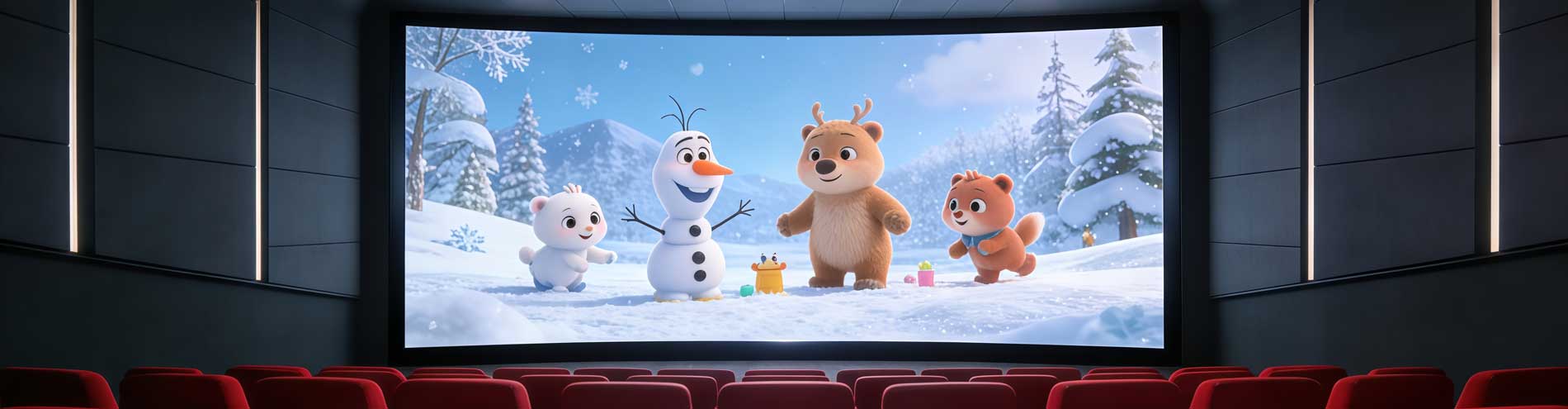
Cinema LED Screen
A cinema LED screen is a modern display solution designed for movie theaters and premium screening spaces. Unlike traditional projection systems, LED cinema screens deliver higher brightness, stable image quality, and consistent performance without lamps or projection distance limits. They are increasingly used in both commercial cinemas and high-end private theaters.
✓ High Brightness & Contrast — Clear images even in large cinema halls
✓ Stable Image Quality — No lamp decay or focus issues over time
✓ Wide Viewing Angle — Consistent visuals for audiences in different seats
✓ Long Service Life — Reduced maintenance compared with projectors
✓ Modern Cinema Experience — Suitable for next-generation theater upgrades
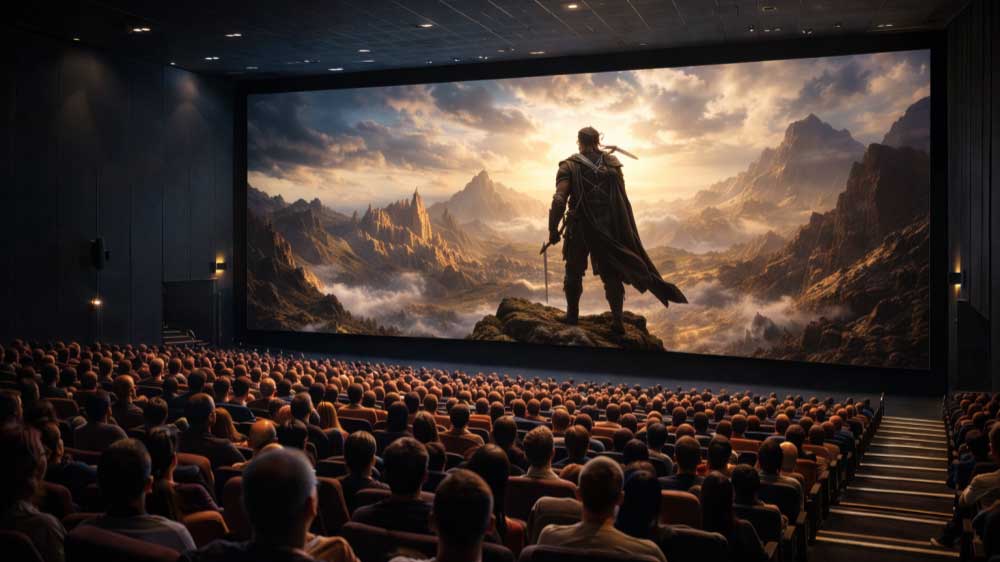
LED Display Solutions for Cinema
From main screening halls to lobbies and commercial areas, the following LED display solutions are commonly used in cinema environments.
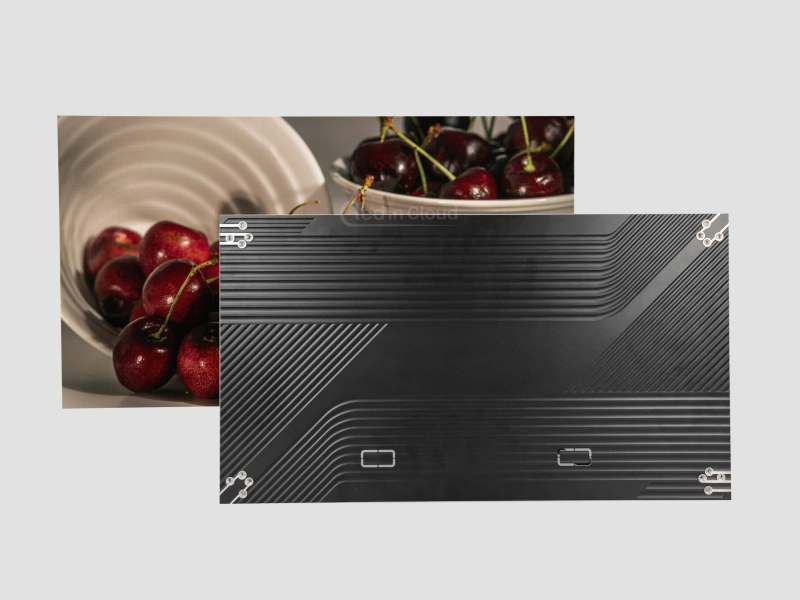
- Native 16:9 widescreen format
- Lightweight and easy to install
- Smooth motion for fast scenes
- Consistent image across wide seating areas
- Flexible layouts and screen sizes
- Clear viewing from most seats
- Uniform brightness and color
- Suitable for mid-to-large auditoriums
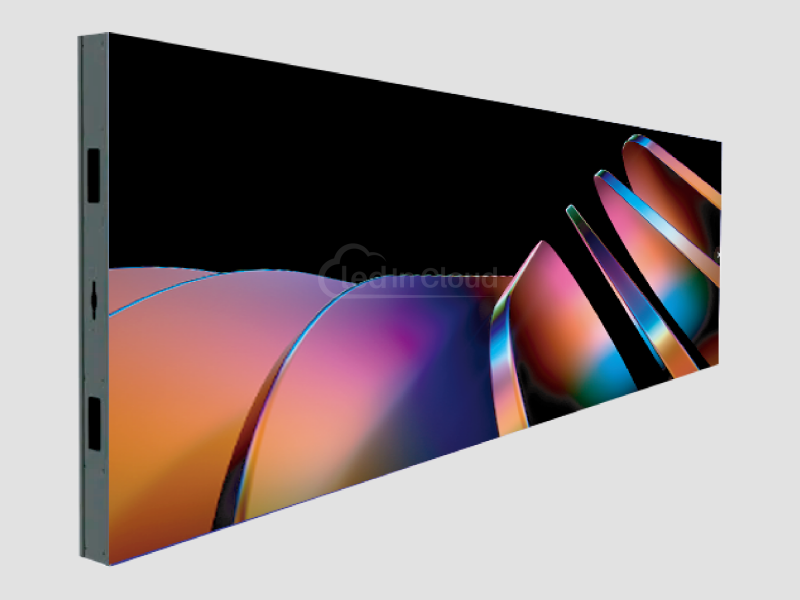
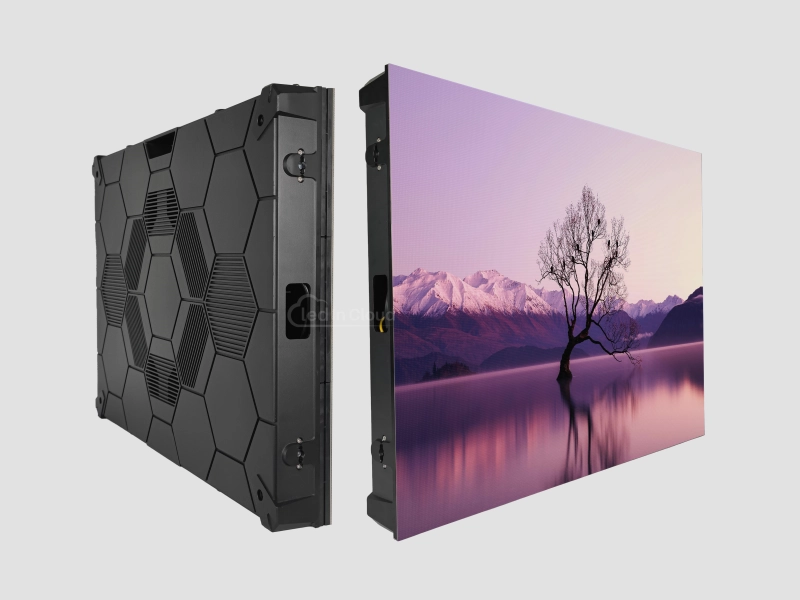
- Ultra-thin at 33mm
- Lightweight from 3.0kg per cabinet
- Front-access maintenance design
- 160° wide viewing angle
LED Display Price Calculator
Just fill the sizes, and get your LED screen budget right now !
Key Features of Cinema LED Displays
Cinema LED displays are designed around the real conditions of movie theaters. Their features focus on image stability, viewing comfort, and long-term operation in large screening spaces.
1
High Brightness
Cinema halls require consistent brightness across large screen areas. LED displays maintain clear visibility and image depth even on wide screens and in controlled lighting environments.
2
Wide Viewing Angles
Audiences sit at different angles throughout the auditorium. LED displays provide wide horizontal and vertical viewing angles, keeping colors consistent from most seating positions.
3
Stable Color and Contrast
Unlike systems that rely on projection distance and lamp output, LED displays maintain stable color and contrast over time. This reduces image variation during long daily operation.
4
Smooth Motion
Movie content includes fast action and detailed motion. High refresh performance helps reduce flicker and motion blur, resulting in smoother playback.
5
Modular Structure
Cinema LED screens are built from modular cabinets and panels. This structure allows large screen construction while making adjustment more manageable.
6
Continuous Operation
Cinema environments require long daily operating hours. LED displays are built for stable performance, which supports consistent presentation.
Cinema LED Display Types
Cinema LED displays are available in different forms to match the layout and purpose of various theater spaces. Choosing the right type helps ensure the best viewing experience and installation fit.
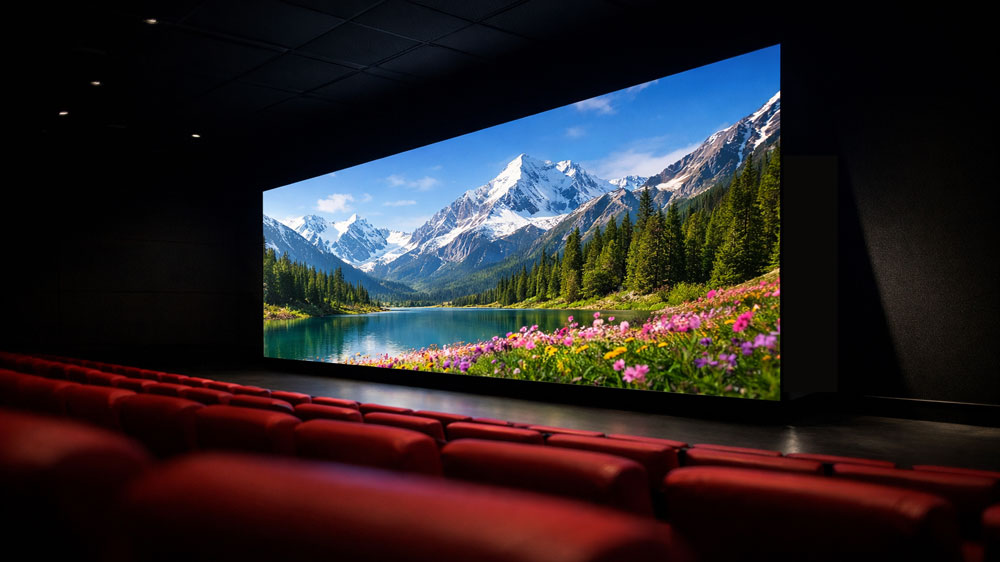
Flat LED Displays
Flat LED displays are the most common and widely used type of cinema screen. They feature a flat, seamless surface that provides uniform brightness and clarity across the entire screen. These displays are perfect for traditional movie theaters, delivering consistent image quality without distortion.
Key Features:
- Seamless and smooth surface for even image presentation.
- Wide viewing angles with consistent brightness.
- High resolution for detailed, clear images.
- Durable and low-maintenance design, ideal for long-term use.
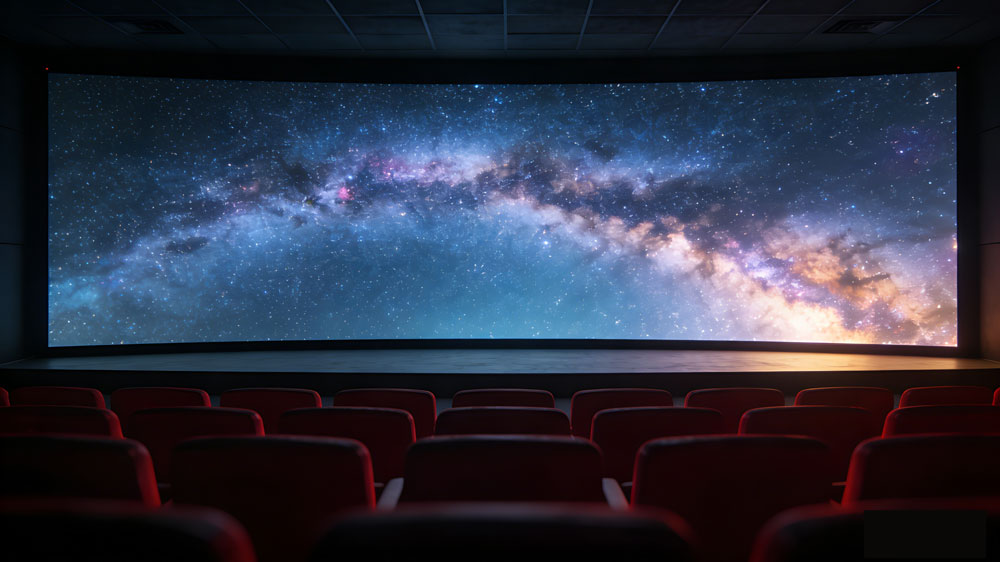
Curved LED Displays
Curved LED displays offer an immersive viewing experience by curving the screen slightly to match the audience’s natural line of sight. This configuration helps to reduce distortion and enhances the depth of the image, making it ideal for specialized theaters like IMAX or those offering panoramic viewing.
Key Features:
- Curved design that enhances depth and creates an immersive experience.
- Improved image consistency from different seating positions.
- Wide field of view, ensuring a more engaging visual experience.
- High resolution and contrast, perfect for large-format screenings.
When a Cinema LED Screen Makes Sense?
A cinema LED screen is not for every theater. Understanding where it fits helps avoid wrong expectations.
LED cinema screens are usually considered when:
- The auditorium is designed for premium viewing
- Space limits make projection difficult
- Image consistency is a priority
They may not be the best option when:
- Budgets are extremely limited
- The screen is only used occasionally
- Traditional projection already meets the theater’s goals
How Cinema LED Screens Are Usually Selected?
In real cinema projects, LED screen selection rarely starts with a product. It starts with understanding the space.
Step 1: Confirm Auditorium Size and Seating Layout
They define how close or far the audience sits from the screen and how the image will be perceived from different rows.
Step 2: Define Viewing Distance and Screen Dimensions
This helps determine the right screen size and aspect ratio for comfortable long-term viewing.
Step 3: Match Pixel Pitch and Brightness Levels
Shorter viewing distances require finer pixel pitch. Larger auditoriums allow more flexibility, but brightness must stay balanced for cinema use.
Step 4: Evaluate Installation Conditions
Wall structure, service access, and cable routing can affect cabinet choice and maintenance design.
Step 5: Review Compliance and System Compatibility
The screen must work with cinema playback systems and meet professional cinema requirements.
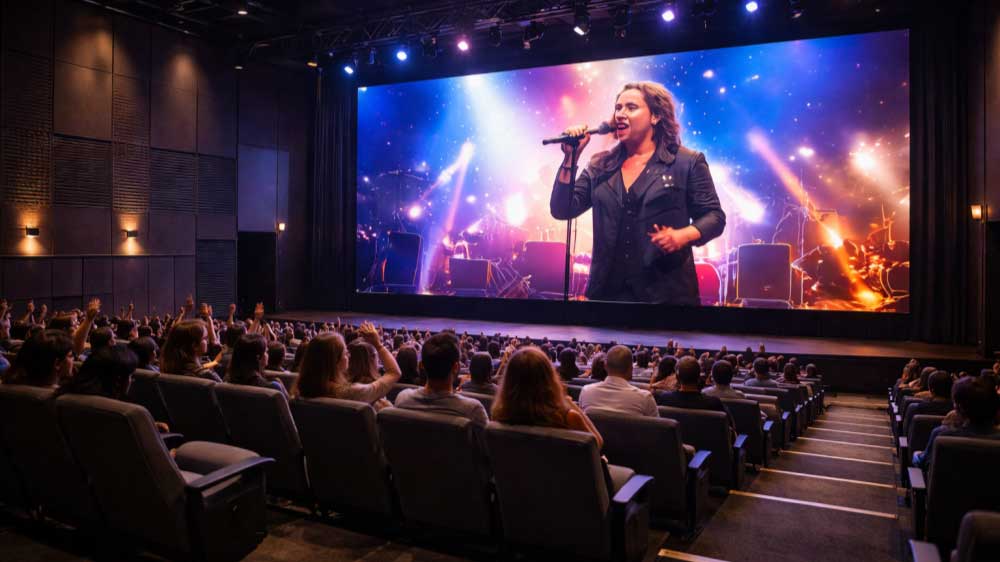
How Cinema Size Influences LED Screen Selection
The viewing distance determines how fine the image needs to be and how the screen should perform across the room.
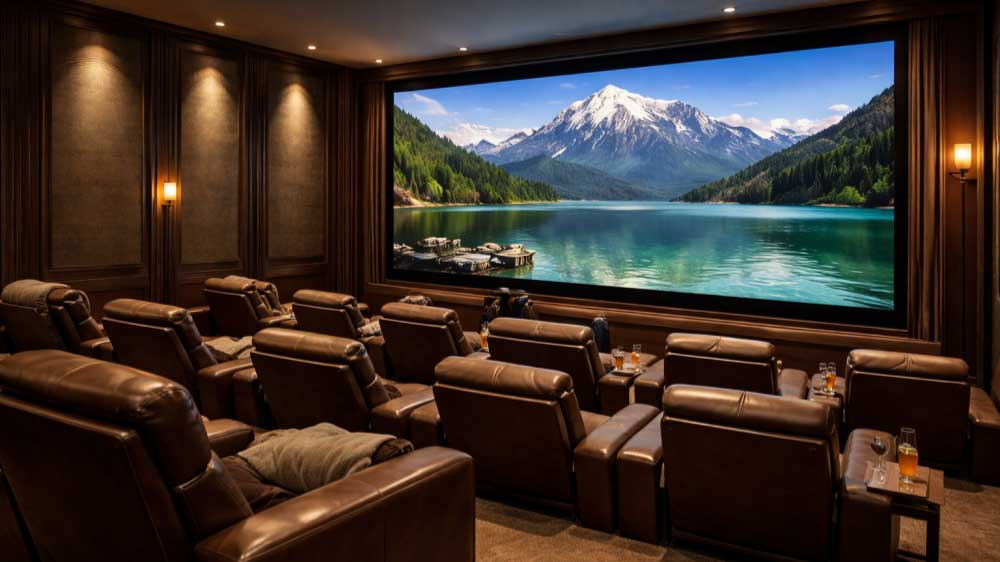
Small Auditoriums
In smaller cinemas, the audience sits closer to the screen. Details are easier to notice, including individual pixels.
Because of this:
- A finer pixel pitch is usually required
- Image sharpness matters more than raw brightness
- Screen size is often limited by wall width and seating layout
If the pixel pitch is too large, viewers in the front rows may see pixel structure. This can affect immersion, especially during slow or dark scenes.
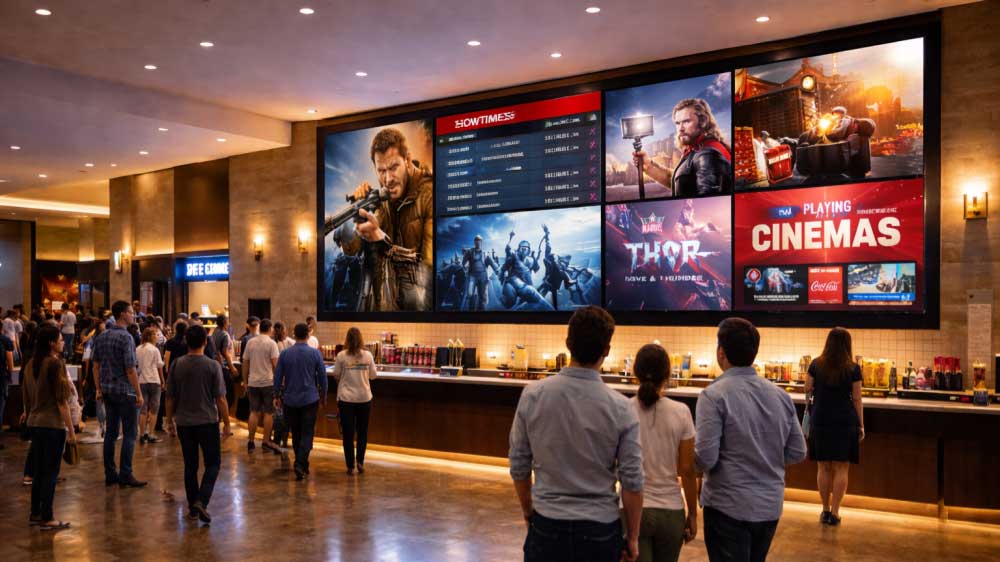
Medium to Large Auditoriums
Larger auditoriums have longer viewing distances. Individual pixels are less noticeable from most seats.
In these spaces:
- Pixel pitch selection is more flexible
- Screen size becomes a bigger factor
- Brightness uniformity across the entire screen is critical
The image must remain consistent from the center to the edges. Uneven brightness or color shifts are more noticeable on large screens.
Simplified Installation and Maintenance
LED cinema screens are designed with simplicity and efficiency in mind, ensuring that installation and maintenance are quick and hassle-free.
Flexible Quick Assembly
LED cinema screens use a modular design, where individual panels can be quickly connected to form a large display. This allows for easy customization of the screen size and enables faster assembly.
Lightweight and Easy to Handle
LED cinema screens are lightweight and designed for easy transportation and installation. This makes them suitable for both permanent installations and adaptable setups.
Tool-Free Assembly
Modern LED cinema screens are built for tool-free assembly, meaning no special tools or complex equipment are required for installation. This makes the setup process easy for anyone.
Easy Maintenance
LED cinema screens are designed for easy maintenance. If a part of the screen needs repair, only the affected module is replaced, minimizing the impact on the overall display.
Long-Term Durability
Cinema LED screens are built to last, offering high performance over time. They are designed to withstand the rigors of daily cinema operations, providing consistent image quality for years.
Remote Monitoring
Many LED cinema screens come with remote monitoring capabilities, allowing operators to track the screen's performance and health from anywhere. This helps detect potential issues early.
Why Choose Us?
LedInCloud delivers not just hardware, but a full-service, curated experience tailored for cultural and educational environments.
Professional Expertise
With 15+ years in LED display manufacturing, we bring deep technical knowledge and hands-on project experience.
Advanced Quality Control
Every display goes through strict aging tests, color calibration, and vibration checks.
Full-Service Support
LedInCloud provides end-to-end assistance: layout planning, structural integration, controller setup, calibration, and installation guidance.
Trusted by Worldwide
With extensive experience in exhibition-grade LED solutions, LedInCloud is the partner of choice for institutions.
Send Us Message
If you have any LED display projects or technical problems regarding our LED display products. Please send us a message, we will reply to you in 24 hours.
ATTENTION: lf you bought LED Display & LED Module from other suppliers, Please get help from them directly.
Cinema LED Screen in Movie Theaters: What You Need to Know
Cinema LED screen is becoming more visible in modern movie theaters. As cinemas upgrade their viewing experience, LED screens are now being discussed alongside traditional projection systems.
For many years, projection has been the standard way to display movies. It still works well in many theaters. However, it also has clear limits in brightness, contrast, and long-term consistency. At the same time, LED display technology has continued to improve in professional applications, which has led some cinemas to reconsider how movies can be presented on screen.
Table of Contents
1. What Is a Cinema LED Screen?
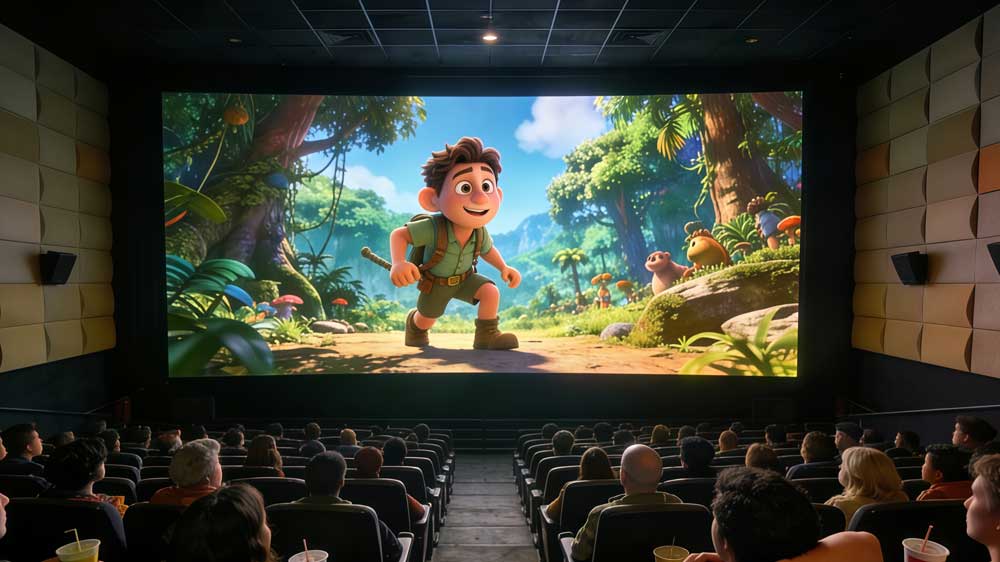
A cinema LED screen is a direct-view LED display system designed for movie theaters.
Instead of projecting light onto a surface, the image is produced directly by LED pixels.
1.1 How a Cinema LED Screen Is Built
A cinema LED screen is assembled from multiple fine-pitch LED modules. These modules are combined to form one seamless display wall.
Each module contains:
- Red, green, and blue LEDs
- Precisely aligned pixels for close viewing distances
When properly installed and calibrated, the screen appears as a single continuous image, even at large sizes.
1.2 Impact on Cinema Layout and Operation
From a physical layout perspective, a cinema LED screen replaces:
- The projector
- The projection screen
- The projection booth
This brings several practical changes:
- No projection distance to manage
- More flexibility in room design
- Different maintenance routines compared to projectors
Because of this, cinema LED screens are usually planned as part of an integrated theater design, rather than a simple equipment replacement.
2. Why Cinemas Are Choosing LED Screens
More cinemas are exploring LED screens for one simple reason: projection is no longer the only way to deliver a high-quality movie image.
This does not mean projectors have suddenly become obsolete. Many theaters still rely on them and will continue to do so. However, LED screens offer a different set of advantages that appeal to certain cinema operators, especially those focused on premium viewing experiences.
Below are the main reasons why LED screens are gaining attention in cinema environments.

2.1 High Contrast and Deep Black Levels
One of the most noticeable characteristics of a cinema LED screen is contrast.
Because each pixel emits its own light:
- Dark scenes retain more detail
- Black areas appear deeper and more uniform
- Bright highlights stand out more clearly
This visual performance is especially important for modern films, where shadow detail and dynamic range play a large role in storytelling.
2.2 Stable Brightness Across the Entire Screen
Cinema LED screens provide consistent brightness across the whole display surface.
This means:
- No visible brightness fall-off from center to edge
- Uniform image performance during long screenings
- Less variation between early and late showtimes
For cinema operators, this stability translates into a more predictable viewing experience for audiences.
2.3 Clear Image Without Projection Constraints
An LED cinema screen produces images directly, without relying on reflected light.
As a result:
- The image remains sharp and clear
- Fine details and subtitles are easier to read
- Visual quality is less affected by room conditions
This direct-view characteristic is one of the reasons LED screens are considered for premium viewing environments.
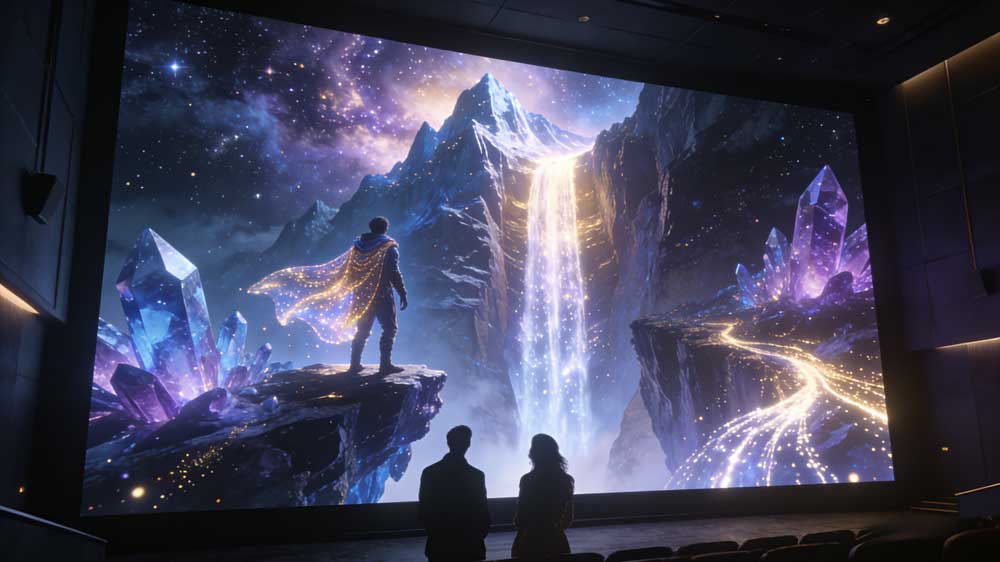
2.4 Strong Performance for Multiple Content Types
Many cinemas today show more than feature films.
LED cinema screens handle:
- Movie playback
- Live broadcasts
- Alternative and event-based content
Text, motion graphics, and high-frame-rate visuals remain clear and stable, making the screen suitable for diversified cinema use.
2.5 Reduced Image Degradation Over Time
Cinema LED screens do not rely on consumable light sources.
From an operational perspective, this means:
- Image quality remains more consistent
- Fewer variables affecting color and brightness
- Predictable long-term performance with proper maintenance
This advantage is often evaluated during long-term investment planning.
2.6 Alignment With Premium Cinema Positioning
LED screens are commonly chosen for cinemas that focus on:
- High-end presentation
- Modern visual standards
- Differentiated audience experiences
In these cases, the LED screen becomes part of the cinema’s overall value proposition rather than just a display component.
3. Key Specifications for LED Cinema Display
A cinema LED display is not evaluated the same way as an advertising screen.
In a movie theater, technical specifications directly affect how films are perceived by the audience, especially during long viewing sessions.
Below are the key specifications cinemas focus on when assessing an LED cinema display.
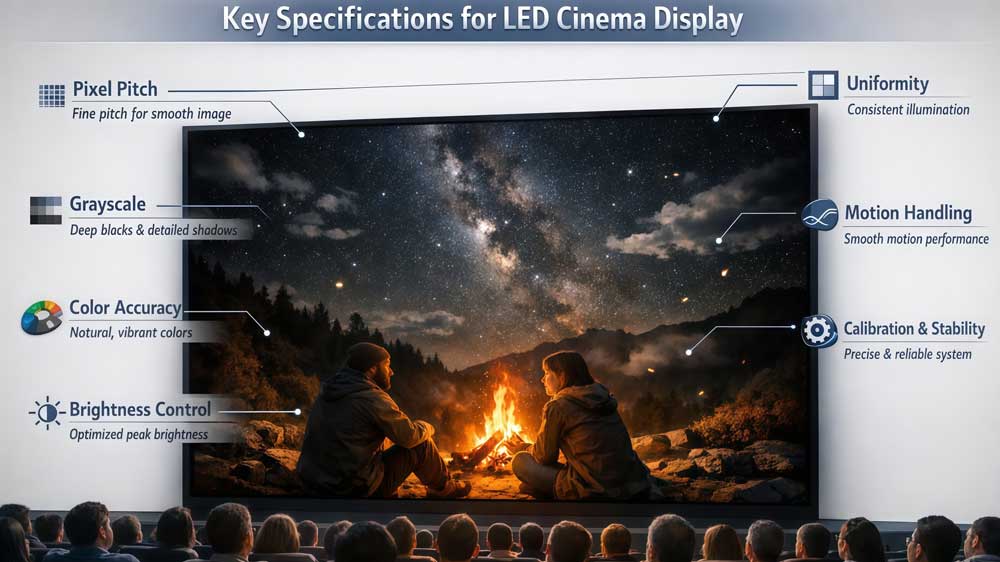
- Pixel Pitch and Viewing Distance
Pixel pitch defines the distance between LED pixels. In cinemas, this value is closely linked to seating distance.
Why it matters:
- Viewers sit relatively close to large screens
- Fine pitch reduces visible pixel structure
- The image looks smoother on wide shots and slow scenes
A suitable pixel pitch allows the audience to focus on the film, not the screen itself. For large cinema halls, mid-range pixel pitch options are commonly evaluated as a practical balance between visual clarity and system efficiency.
- Grayscale Performance
Grayscale performance determines how smoothly a screen transitions between dark and bright areas.
In cinema content:
- Many scenes rely on subtle shadow details
- Dark scenes often contain layered textures
- Poor grayscale leads to banding or crushed blacks
A cinema LED display must handle low-brightness levels accurately to preserve the director’s intent.
- Color Accuracy and Color Gamut
Movies are produced under strict color standards.
For LED cinema displays, this means:
- Accurate color reproduction matters more than oversaturated visuals
- Skin tones must appear natural
- Color consistency must be maintained across the entire screen
This is why cinema LED screens are calibrated differently from commercial LED displays used for advertising or signage.
- Brightness Control
While LED screens are capable of high brightness, cinema use does not rely on peak output.
What matters instead:
- Stable brightness during long screenings
- Precise brightness adjustment for different content
- Comfortable viewing for the audience
Proper brightness control supports both visual quality and long-term operation.
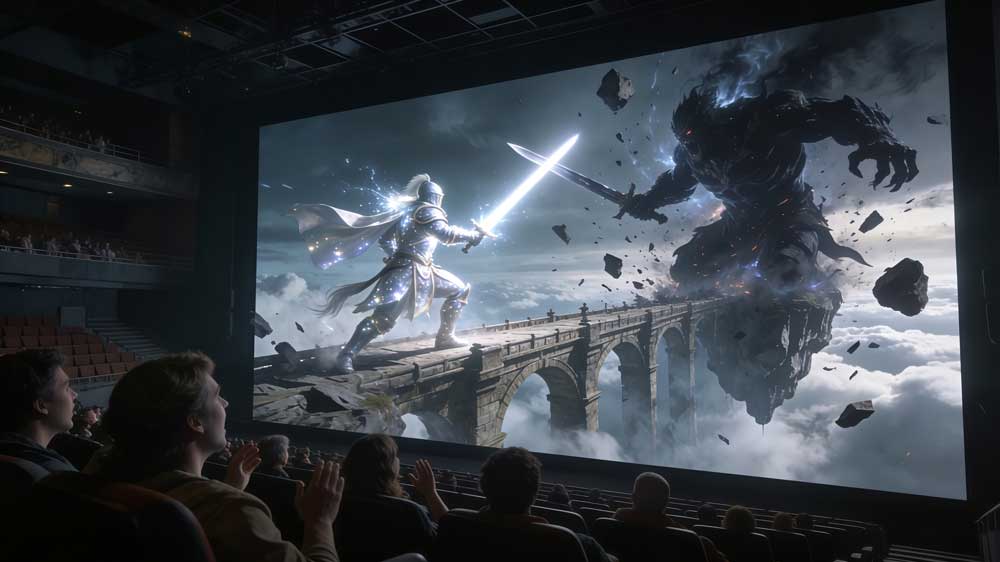
- Screen Uniformity
Uniformity refers to how evenly brightness and color appear across the display.
In a cinema environment:
- Even small variations can become noticeable
- Large single-color scenes reveal inconsistencies quickly
High uniformity helps maintain immersion and avoids drawing attention away from the film.
- Refresh Rate and Motion Handling
Motion performance plays an important role in cinema presentation.
A suitable LED cinema display supports:
- Smooth motion in fast-action scenes
- Stable playback for different frame rates
- Reduced visual artifacts during movement
This contributes to a natural viewing experience, especially for large-format screens.
- System Stability and Calibration Capability
Cinema LED screens are long-term installations.
From an operational perspective, cinemas look for:
- Stable system architecture
- Reliable calibration tools
- Consistent performance across showtimes
These factors affect daily operation as much as image quality itself.
- Typical Specification Ranges for LED movie screen
For reference only. Actual specifications depend on project design and certification requirements.
| Specification | Typical Range | Why It Matters in Cinemas |
| Pixel Pitch | ~1.9 mm – 3.3 mm | Matches common cinema viewing distances and screen sizes |
| Screen Brightness | ~300 – 500 nits | Supports cinematic presentation without causing visual fatigue |
| Grayscale Depth | 16-bit processing (or equivalent) | Preserves detail in dark scenes and smooth transitions |
| Color Gamut | DCI-P3 coverage (or cinema-aligned gamut) | Matches film production color standards |
| Brightness Uniformity | ≥ 95% (typical target) | Keeps the image consistent across the entire screen |
| Refresh Rate | ≥ 3,840 Hz (commonly used) | Reduces flicker and motion artifacts |
| Viewing Angle | ≥ 160° (horizontal & vertical) | Maintains image quality across seating areas |
| Calibration Support | Factory + on-site calibration | Required for long-term color and brightness consistency |
4. Where Cinema LED Screens Can Be Used
Cinema LED screens are not limited to a single role inside a movie theater. Depending on the function of each space, LED displays are used in different areas of a cinema, serving different operational and visual purposes.
Below are the most common applications.
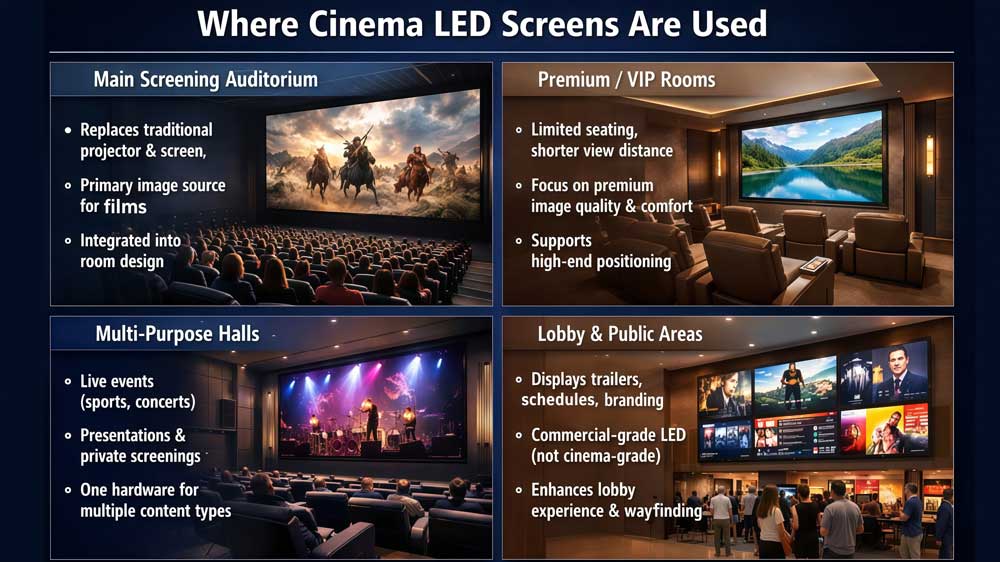
4.1 Main Screening Auditorium (Primary Movie Screen)
This is the most discussed use of cinema LED screens.
In this setup:
- The LED screen replaces the traditional projection system
- The screen becomes the main image source for movie playback
This application is usually planned during new construction or full auditorium renovation, as it affects room layout, sound system integration, and seating design.
4.2 Premium and VIP Screening Rooms
Smaller premium auditoriums often adopt LED screens to support high-end viewing experiences.
Common characteristics include:
- Limited seating capacity
- Shorter viewing distances
- Focus on image quality and comfort
In these rooms, LED cinema displays are used to deliver a visually refined presentation aligned with premium positioning.
4.3 Multi-Purpose Cinema Halls
Some cinema halls are designed to host more than traditional film screenings.
These halls may be used for:
- Live sports broadcasts
- Concerts or special events
- Presentations and private screenings
LED screens allow cinemas to switch between different content types without changing display hardware, making them suitable for multi-purpose use.
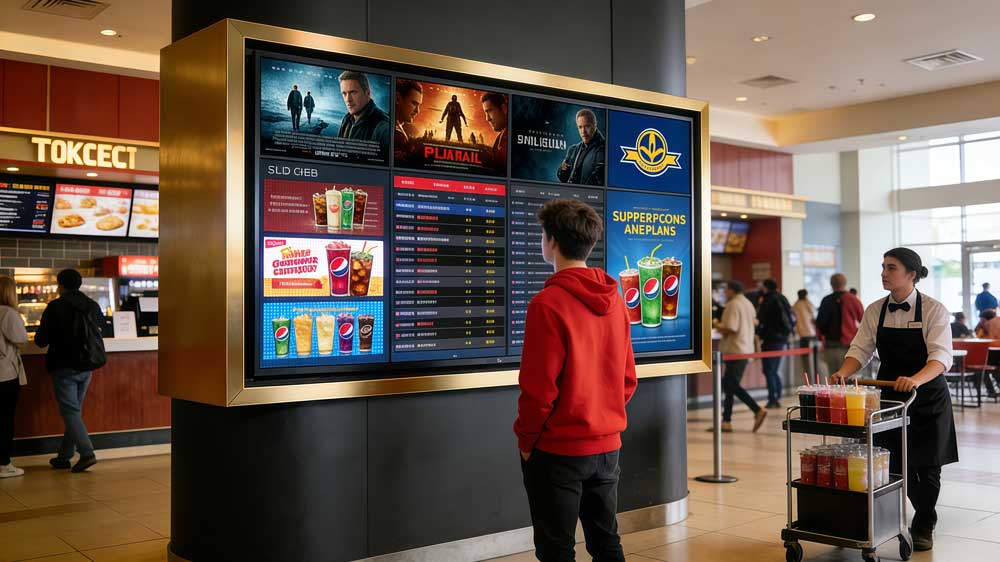
4.4 Cinema Lobby and Public Areas
Outside screening rooms, LED displays are commonly used in:
- Cinema lobbies
- Entrance halls
- Ticketing and waiting areas
These screens typically display:
- Trailers and promotions
- Show schedules
- Branding or wayfinding content
It is important to note that these are usually commercial LED displays, not cinema-grade main screens.
5. Cinema LED Display vs Projector
Cinema LED displays and traditional projectors are built on two completely different imaging principles. Understanding these differences helps cinema operators decide which solution fits a specific project.
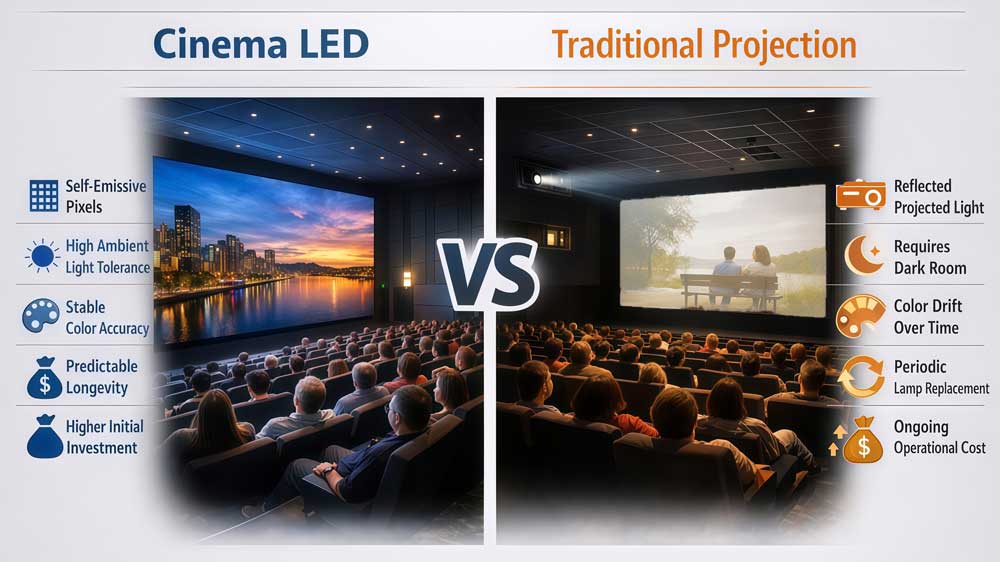
5.1 Image Generation Method
- Cinema LED Display
- Direct-view technology
- Each pixel emits its own light
- No reflected image
- Cinema Projector
- Projects light onto a screen surface
- Image quality depends on reflection and alignment
5.2 Brightness and Contrast Behavior
- Cinema LED Display
- Brightness is stable across the screen
- High contrast is achieved at the pixel level
- Dark scenes retain more visible detail
- Cinema Projector
- Brightness depends on lamp or laser output
- Contrast is influenced by screen material and room darkness
5.3 Color Performance
- Cinema LED Display
- Uses calibrated LED color output
- Designed to align with cinema color standards
- Requires precise calibration and control
- Cinema Projector
- Color is influenced by light source and optical path
- Long-term consistency depends on maintenance and recalibration
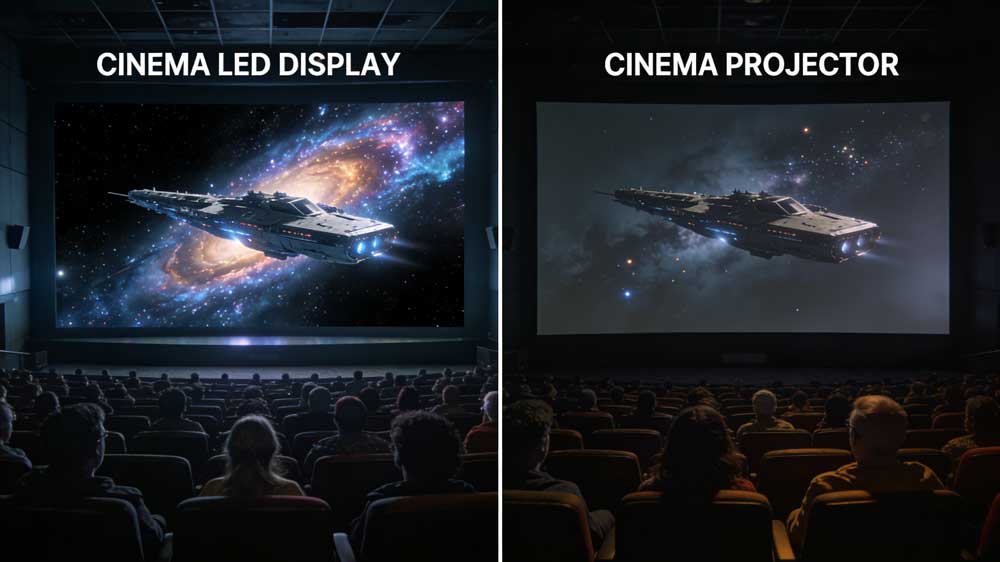
5.4 Viewing Environment Requirements
- Cinema LED Display
- Less dependent on a fully dark environment
- Handles subtle ambient light more effectively
- Cinema Projector
- Performs best in strictly controlled dark rooms
- Sensitive to stray light and reflections
5.5 Installation and Space Considerations
- Cinema LED Display
- Replaces both screen and projector
- No projection booth required
- Affects front-wall structure and load capacity
- Cinema Projector
- Requires projection distance and alignment
- Needs a dedicated projection booth or mounting position
5.6 Maintenance and Operation
- Cinema LED Display
- No consumable light source
- Maintenance focuses on modules and calibration
- Image performance is generally predictable over time
- Cinema Projector
- Requires periodic lamp replacement or laser system checks
- Optical components need regular inspection
5.7 Cost Structure
- Cinema LED Display
- Higher initial investment
- Costs concentrated upfront
- Cinema Projector
- Lower initial equipment cost
- Ongoing operational and replacement costs over time
5.8 Scalability and Adoption
- Cinema LED Display
- Typically used in selected halls
- More common in premium or flagship projects
- Cinema Projector
- Widely used across all cinema types
- Remains the mainstream solution worldwide
Cinema LED displays and projectors are not competing for the same role in every project. Many cinemas continue to rely on projection, while LED screens are introduced where their characteristics align with specific goals.
5.9 Key Differences at a Glance
| Aspect | Cinema LED Display | Traditional Projector |
| Image source | Self-emissive LED pixels | Reflected light from projection |
| Brightness consistency | Stable across the entire screen | Can vary due to lamp aging |
| Contrast | Naturally high due to true black capability | Limited by ambient light and projection surface |
| Screen size flexibility | Modular, size defined by cabinet layout | Fixed by projection distance and lens |
| Viewing angle | Wide viewing angles | Best performance from central seating |
| Maintenance | Module-level service, front access possible | Lamp replacement and optical maintenance |
| Installation | Wall-mounted system installation | Projector alignment and throw distance required |
| Space requirement | No projection booth needed | Requires projection room or rear space |
6. How Much Does a Cinema LED Screen Cost?
The cost of a cinema LED screen depends on several project-specific factors.
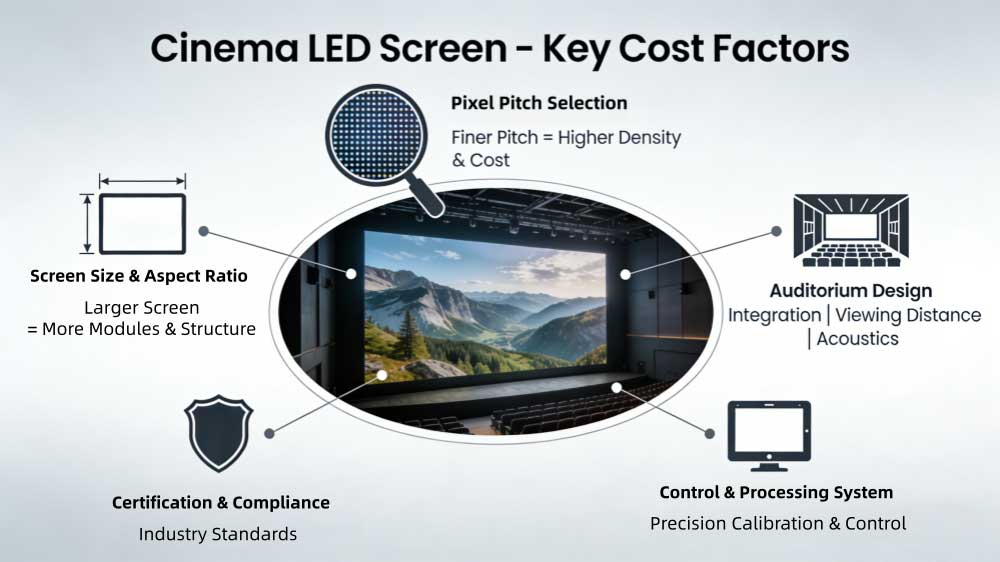
Cinema LED screen projects are usually custom-configured. The final cost is influenced by:
✓ Screen size and aspect ratio: Larger screens require more LED modules and supporting structure.
✓ Pixel pitch selection: Finer pixel pitch increases pixel density and system complexity.
✓ Auditorium design: Wall structure, viewing distance, and sound integration all affect installation.
✓ Control and processing system: Cinema-grade processing and calibration systems are required.
✓ Certification and compliance requirements: Cinema projects often follow specific industry standards.
Each of these factors can change the overall project scope.
- Check Pricing Based on Your Own Cinema Project
Because every cinema is different, the most accurate pricing comes from project-based evaluation.
On the LedInCloud – LED Screen Cloud Platform, cinema operators can:
- Register LedInCloud account
- Select screen size and key parameters
- View estimated pricing ranges
- Get Quotation based on real configurations
This approach allows you to explore options at your own pace, without committing to a one-size-fits-all quote.
7. Cinema LED Screen Solutions by LedInCloud
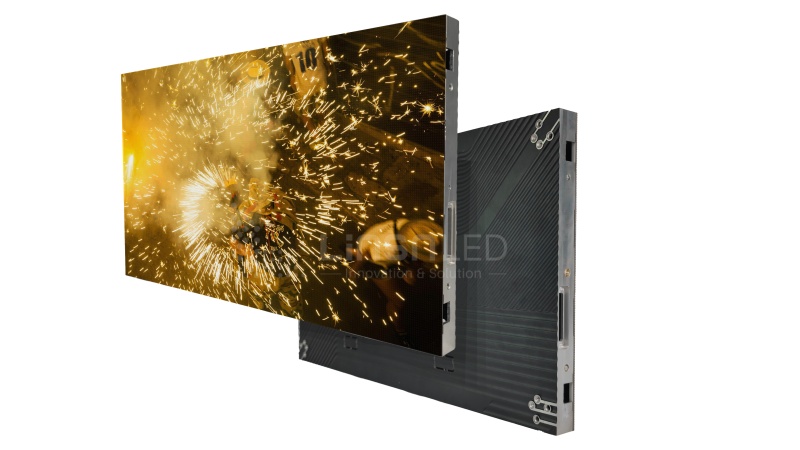
LedInCloud MA250 Series and MA600 Series are two options commonly used in cinema-related projects.
👉 MA250 Series: Lightweight & Thin Indoor LED Display
The MA250 Series is designed for indoor fixed installation, with a focus on thin profile, lightweight structure, and easy front-access maintenance.
Key characteristics:
- Ultra-thin cabinet at 33mm depth
- Lightweight from 3.0kg per cabinet
- Front-access maintenance for wall-mounted installations
- 160° wide viewing angle (H/V)
- High refresh rate IC for smooth video playback
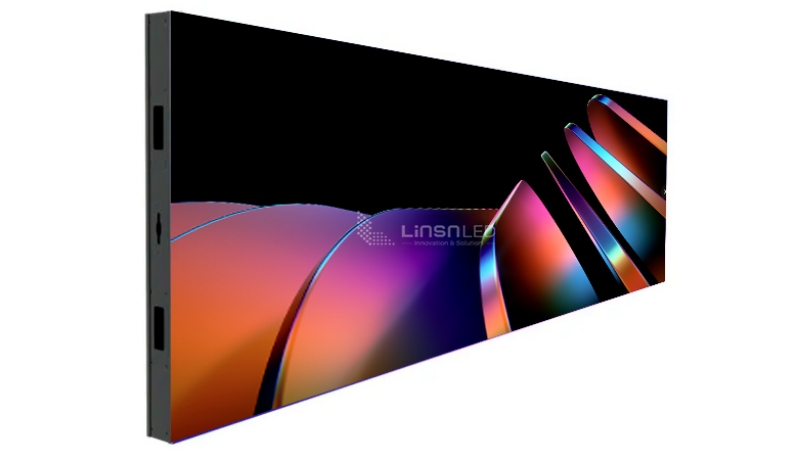
👉 MA600 Series: 16:9 LED Display for Widescreen Content
The MA600 Series is built around a 16:9 cabinet ratio, which aligns more naturally with widescreen video content.
Key characteristics:
- 600×337.5 mm cabinet with 16:9 aspect ratio
- High refresh rate for smooth motion
- Multiple fine pixel pitch options
- Lightweight structure
- Front maintenance design
👉 How They Fit Cinema Projects
The MA250 Series is often considered when:
- Wall space is limited and a thin profile matters
- Front maintenance access is required
- The cinema needs fine pixel pitch for closer viewing distances
- Hanging or wall-mount installation is preferred
The MA600 Series is often chosen when:
- Screen proportions matter for content presentation
- The cinema prefers a cleaner 16:9 layout
- High-resolution playback is required at closer viewing distances
Using a 16:9 cabinet can reduce layout calculations and simplify signal processing when displaying standard video formats.
8. FAQs
Q1. Is a cinema LED screen suitable for all movie theaters?
Not necessarily.
Cinema LED screens are usually planned for:
- Newly built theaters
- Renovated auditoriums
- Premium or special-purpose halls
For existing theaters with limited space or fixed layouts, feasibility depends on the room structure and viewing distance.
Q2. Can a cinema LED screen fully replace a projector?
In certain auditoriums, yes.
In practice:
- Some cinemas use LED screens in selected halls
- Projectors continue to operate in standard rooms
The choice depends on screen size, content type, and operational goals rather than a single technical factor.
Q3. Is brightness an issue in a dark cinema environment?
Brightness is adjustable.
- Cinema LED screens are designed to:
- Operate at lower brightness levels for dark environments
- Maintain contrast and color consistency
Proper calibration is more important than raw brightness output.
Q4. How complex is installation compared to a projector?
Installation is different, not necessarily harder.
Cinema LED screens involve:
- Wall structure planning
- Power and signal layout
- Module alignment and calibration
Because of this, most LED cinema projects are handled as system installations rather than simple equipment replacement.
Q5. How long does a cinema LED screen last?
Service life depends on:
- Usage patterns
- Operating conditions
- Maintenance quality
LED screens are designed for long-term indoor operation when properly maintained.
9. Summary
Cinema LED screens are being used in more cinema projects, but they are not a one-size-fits-all solution.
Whether an LED screen makes sense depends on the auditorium size, viewing distance, and how the space is used. That is why most cinema LED projects are planned case by case, not selected from a fixed price list.
If you are considering a cinema LED screen, the next step is not choosing a model, but understanding what configuration fits your cinema. Screen size, pixel pitch, and layout will directly affect both performance and cost.
You can explore different configurations and pricing ranges by register on the LedInCloud or contact LedInCloud directly.
More Solutions

Museum LED Screen
Turn any museum or gallery into an immersive visual experience. Our LED screens allow art and exhibits to come alive for every visitor.
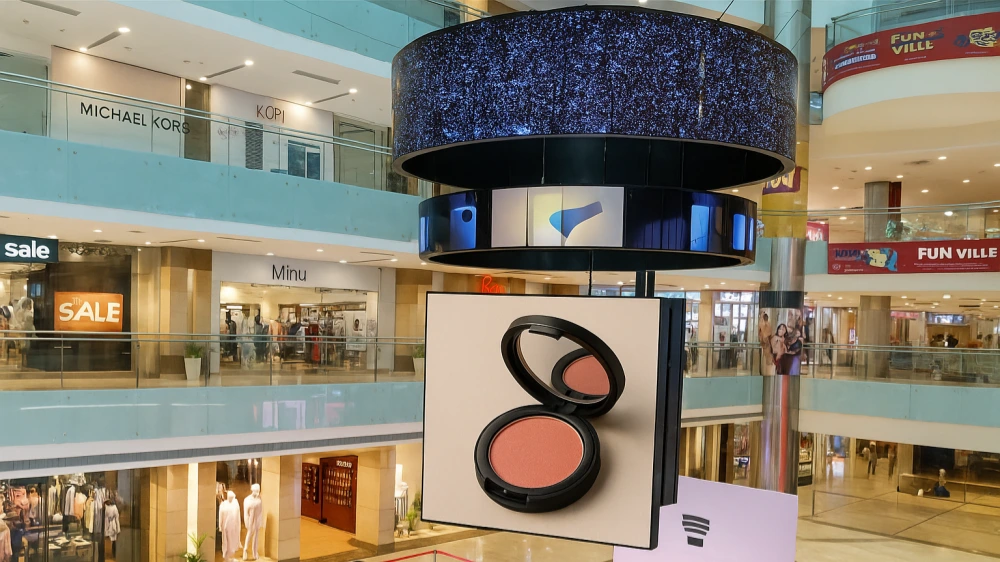
Shopping Mall LED Screen
Enhance retail spaces with eye-catching digital displays. These LED screens attract shoppers with stunning, high-resolution visuals.
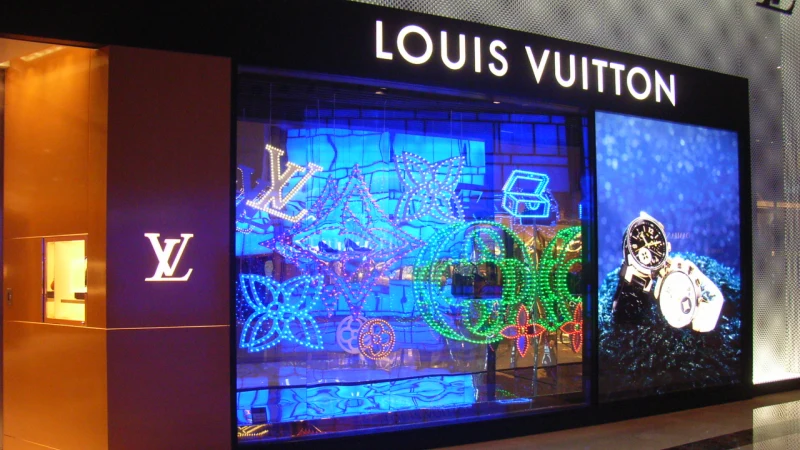
Retail LED Screen
Vibrant digital signage for stores and restaurants to showcase products, menus, and promotions effectively.
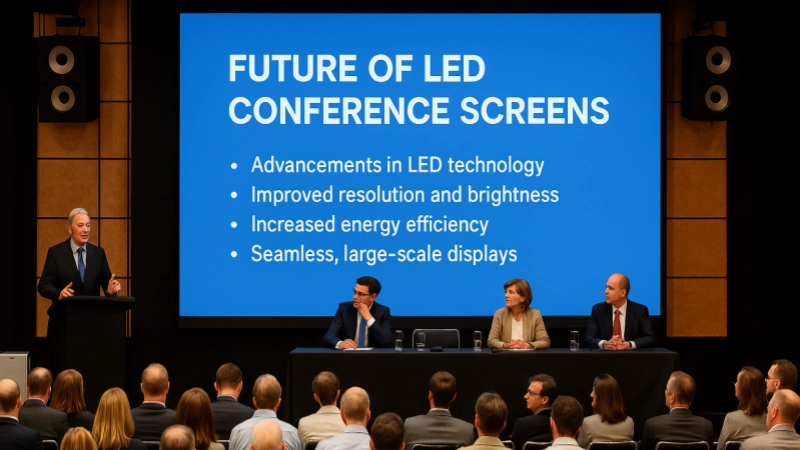
Conference LED Screen
High-resolution display for meetings, events, and presentations with clear visuals and easy setup.