
LED Screen Cabinet Materials: Which One Should You Choose?
LED screen cabinet material affects everything — weight, heat dissipation, weather resistance, installation difficulty, and maintenance cost. Choose the right material and the screen performs well for years. Choose the wrong one and problems show up fast.
There are six main materials on the market today: iron, die-cast aluminum, aluminum profile, magnesium alloy, nano-polymer, and carbon fiber. This guide covers all six, with real specs and practical advice on how to choose.
Table of Contents
1. What Is an LED Screen Cabinet?
An LED screen cabinet is the frame that holds an LED display together. Inside each cabinet you’ll find the LED modules, power supply, signal receiving card, and internal wiring. Multiple cabinets are assembled side by side to form a complete video wall.
The cabinet pulls heat away from the electronics, protects internal components from dust and moisture, and determines how precisely panels align when joined. Any gap or misalignment between cabinets shows up directly on the screen.
Cabinets come in front-access and rear-access designs. Front-access is useful when the back of the screen is against a wall. Rear-access works better when there’s open space behind the display.
Common sizes include 500×500mm and 960×960mm for rental screens, with larger formats used for fixed outdoor installations.
2. LED Screen Cabinet Materials: Iron, Alloy, and New Options
LED screen cabinet material falls into three broad categories: iron, alloy, and new materials. Here’s how each one breaks down.
2.1 Iron LED Cabinets
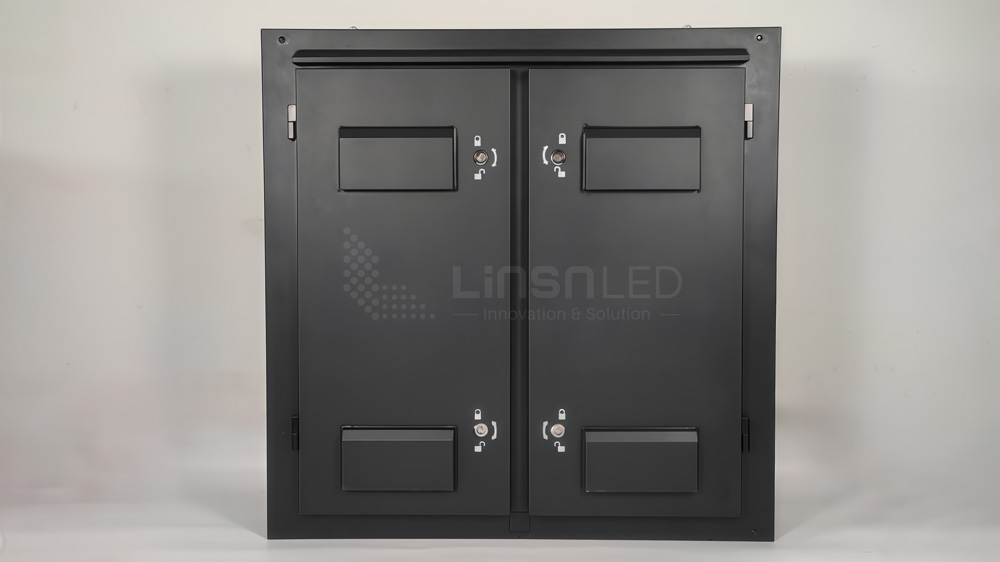
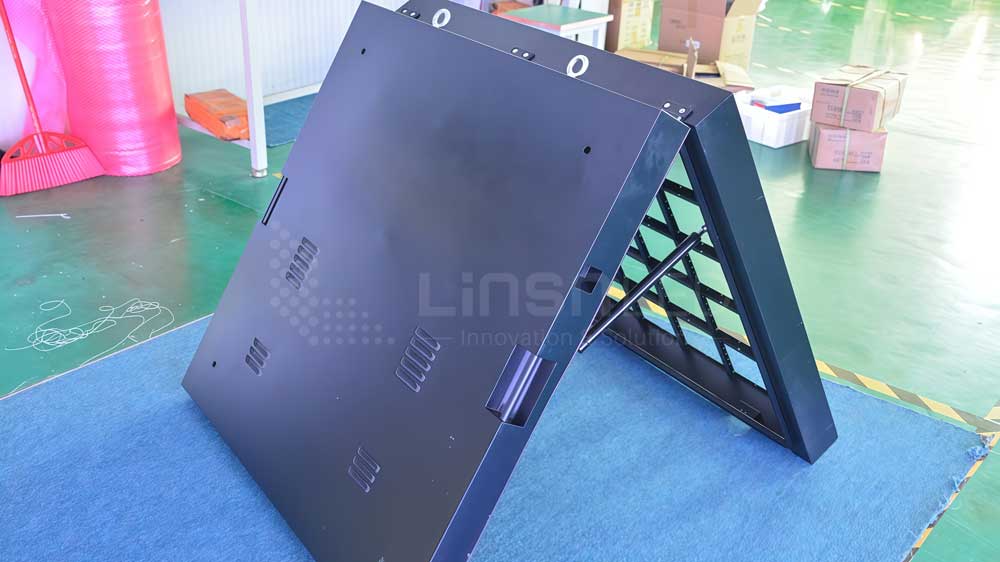
Iron was the first material widely used for LED panel cabinets, and it’s been around since the early days of the industry. It comes in two versions — sealed and non-sealed.
Sealed cabinets are fully enclosed on all sides, so they keep out dust and moisture more effectively. Non-sealed versions have a simpler, more open structure — lighter and cheaper, but with less protection. Between the two, sealed iron cabinets always cost more and weigh more at the same size.
Iron isn’t a bad material, but it hasn’t kept pace with what modern LED displays need. You’ll still find it in some lower-budget outdoor projects, but most of the market has moved on.
✔ Advantages
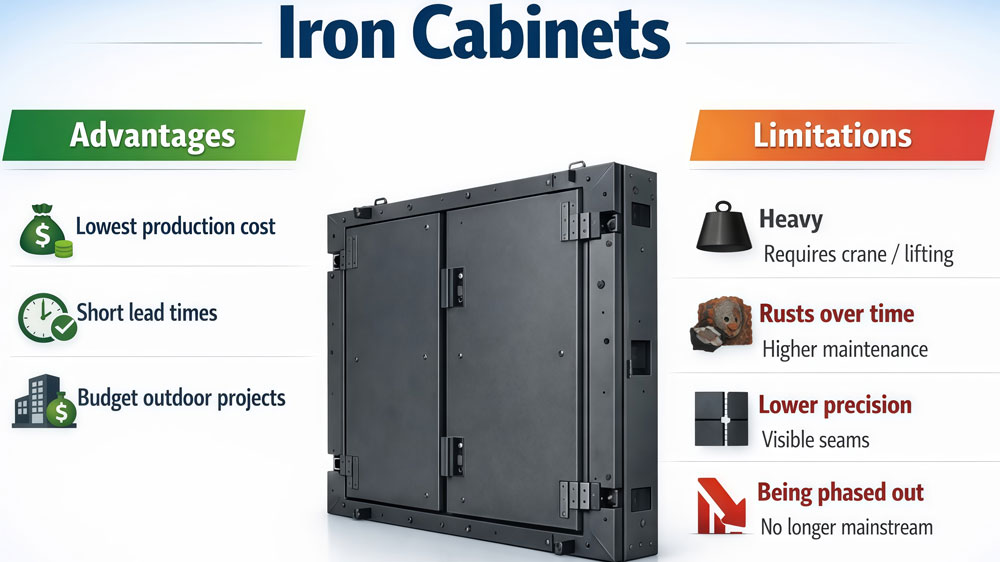
- Iron cabinets have the lowest production cost of any cabinet material on the market.
- They have short lead times and are easy to source from most manufacturers.
- For basic fixed outdoor installations on tighter budgets, iron can still get the job done.
✘ Limitations
- Iron is heavy — installation usually requires cranes or lifting equipment, which adds to project costs.
- The material oxidizes and rusts over time, which raises maintenance costs and reduces the display's lifespan.
- Dimensional precision is lower than aluminum, which can cause visible gaps between panels on the finished screen.
- Iron cabinets are being phased out of most markets and are no longer a mainstream choice.
2.2 Die-Cast Aluminum LED Cabinets
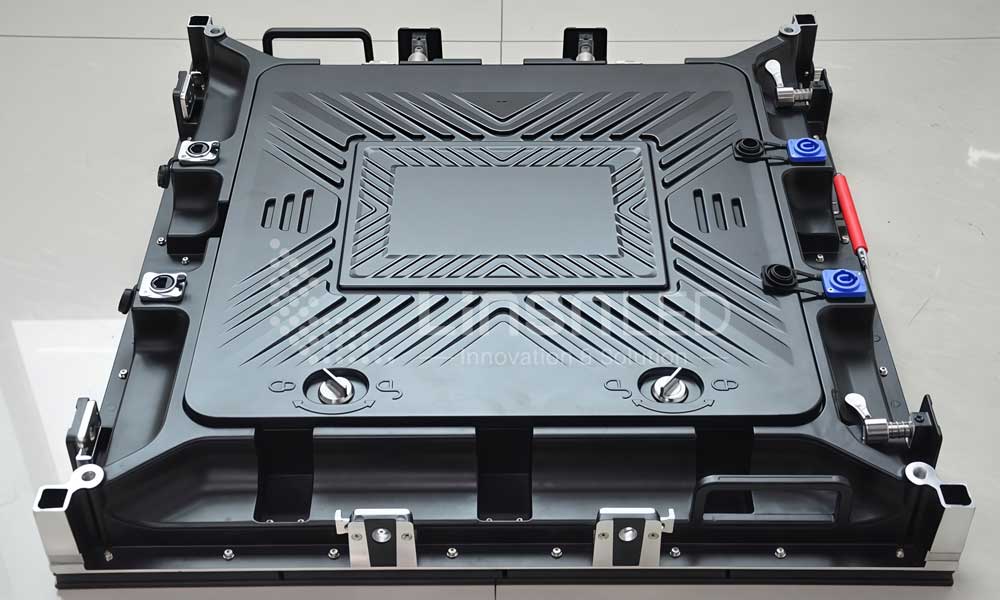
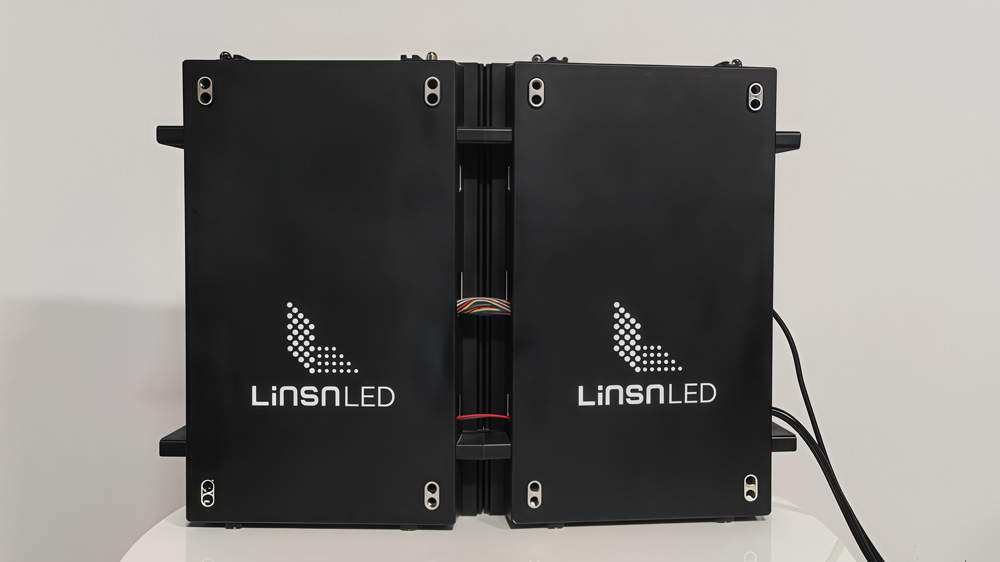
Die-cast aluminum is what most LED display cabinets are made from today.
The process works like this: high-purity aluminum — around 92% pure — is mixed with zinc and a few other metals to make it harder and stronger. That mixture gets melted down and forced into a mold under high pressure. One shot, one cabinet. The surface is then polished and finished. What comes out is a cabinet that sits flat, locks together cleanly with the next one, and holds its shape.
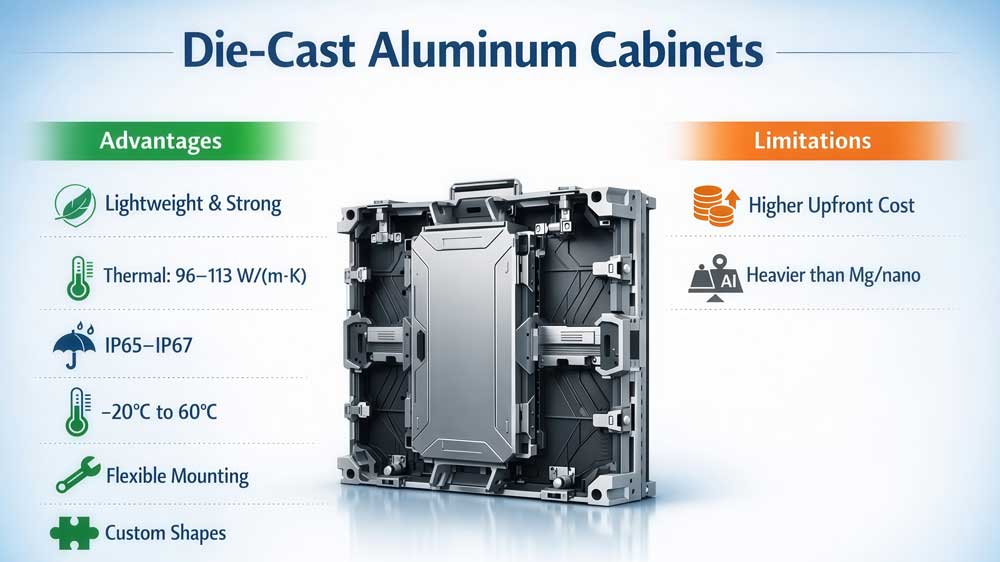
On a large video wall with dozens of panels side by side, that consistency is what stops you from seeing seams and gaps across the screen. It handles temperatures from -20°C to 60°C, reaches IP65 to IP67 for weather protection, and dissipates heat at 96–113 W/(m·K) — solid numbers across the board.
✔ Advantages
- Die-cast aluminum is lightweight and strong, making it easy to handle on site without heavy equipment.
- Thermal conductivity of 96–113 W/(m·K) keeps internal components cool during long operating hours.
- Weather protection reaches IP65 to IP67, making it suitable for both indoor and outdoor installations.
- The operating temperature range of -20°C to 60°C covers most real-world environments.
- It supports front-access, rear-access, and quick-lock rental designs, giving installers more flexibility.
- Die-cast aluminum is compatible with most LED module types currently on the market.
- It supports custom shapes and sizes, which is useful for non-standard installation layouts.
✘ Limitations
- Upfront cost is higher than iron cabinets.
- It is heavier than magnesium alloy and new material options, which can be a factor on very large installations.
2.3 Aluminum Profile LED Cabinets
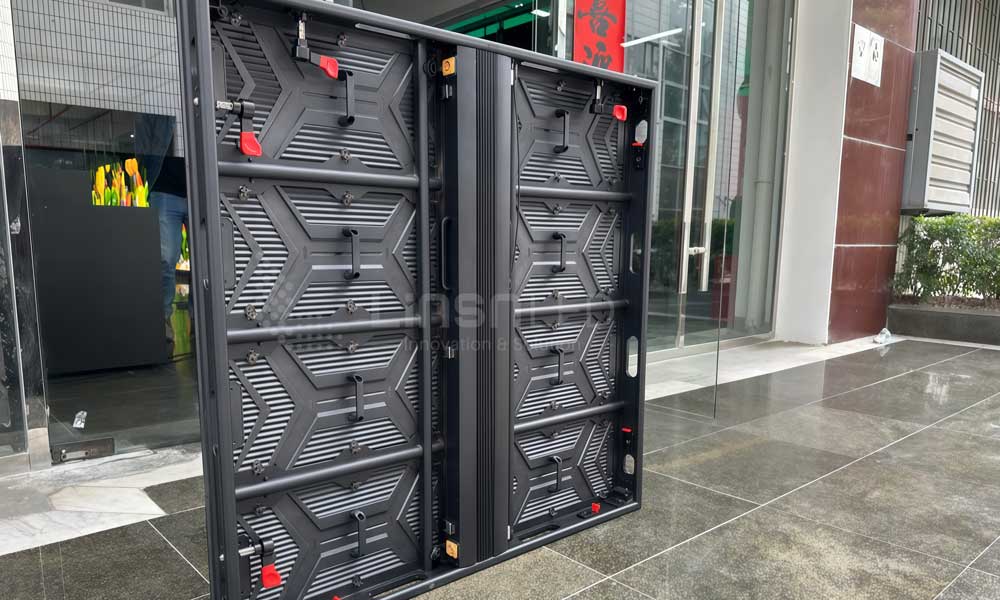
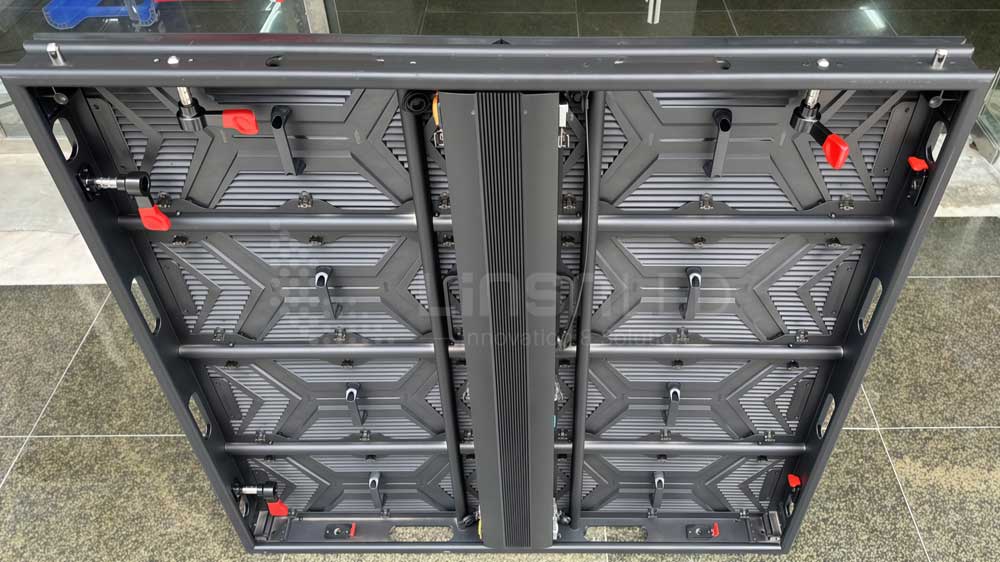
Aluminum profile cabinets use the same base material as die-cast aluminum, but they’re made differently. Instead of being cast in a mold, the aluminum is pushed through a shaped opening under pressure — a process called extrusion.
This produces long, uniform sections that are cut down and assembled into frames. Because the shape is fixed by the die, these cabinets only come in standard sizes. There’s no option to customize dimensions.
What they do well, though, is speed. The frames are designed for quick-lock connections, so they go up fast and come down just as fast. That makes them a practical choice for LED video wall rentals and event setups, where every hour of installation time counts.
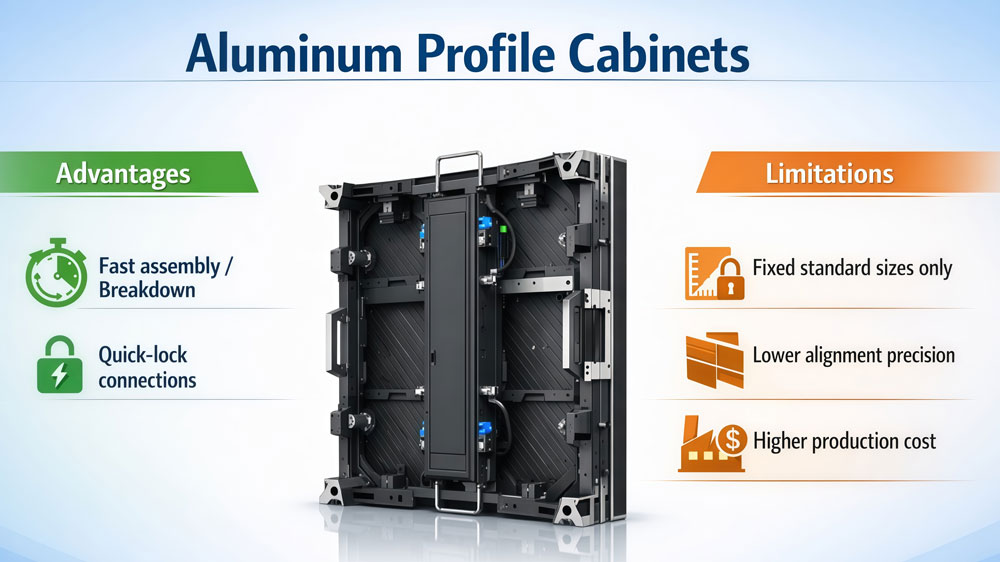
✔ Advantages
- Aluminum profile cabinets are fast to assemble and break down, which saves time on rental and event projects.
- Quick-lock connections make the setup process straightforward, even for large configurations.
✘ Limitations
- Profile cabinets come in fixed standard sizes only — custom dimensions are not available.
- Panel alignment precision is slightly lower than die-cast aluminum, which can affect visual quality on demanding installations.
- Production cost is higher than die-cast aluminum due to the more complex fabrication process.
2.4 Magnesium Alloy LED Cabinets
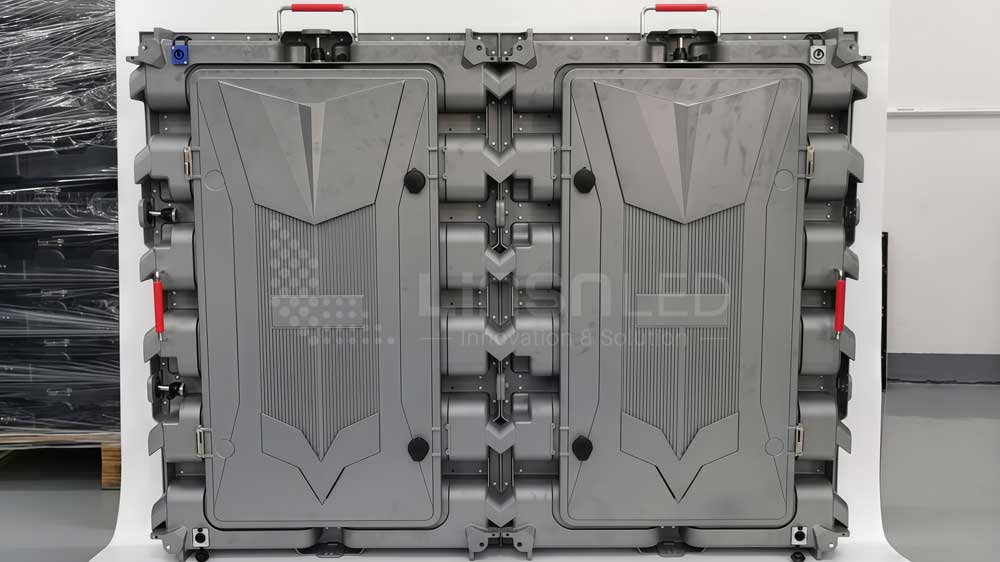
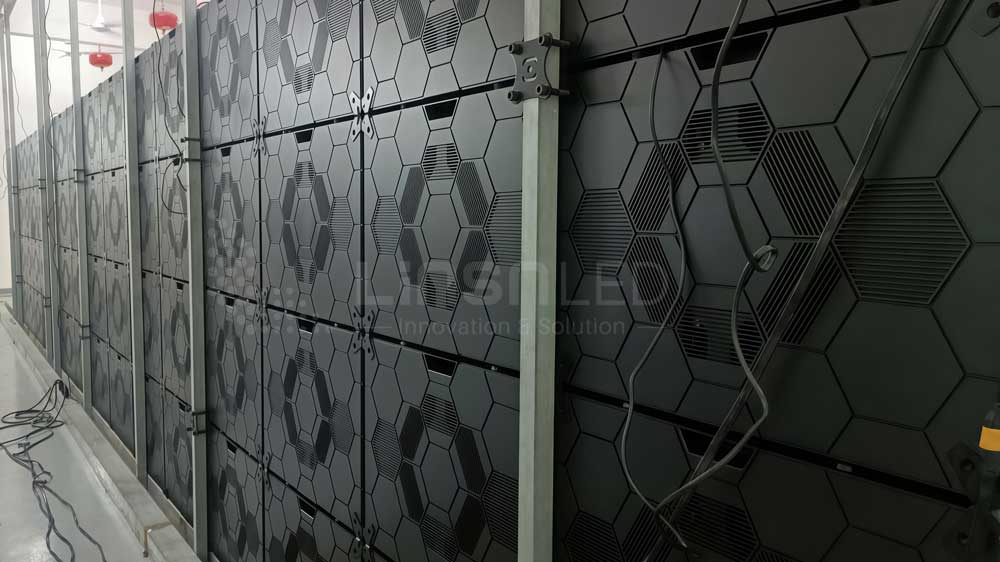
Magnesium alloy is lighter than aluminum and performs better in several areas — it’s just less well known in the LED display market.
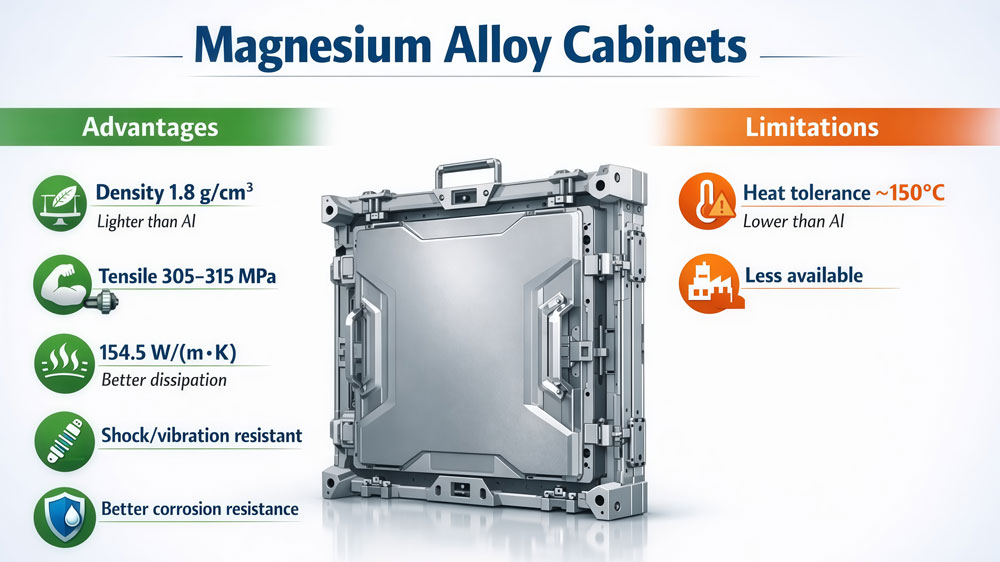
Pure magnesium is too reactive to use on its own, so it’s combined with zinc, aluminum, manganese, and small amounts of other metals to stabilize it. The result is a material with a density of just 1.8 g/cm³ — noticeably lower than die-cast aluminum’s 2.7–2.84 g/cm³. That difference in density translates directly into lighter cabinets. Thermal conductivity comes in at 154.5 W/(m·K), which means it moves heat away from internal components faster than aluminum.
Magnesium alloy has a long history in automotive and aerospace — it’s been trusted in demanding environments for decades. Its use in LED module cabinets is growing for the same reason: less weight, without giving up strength.
✔ Advantages
- At 1.8 g/cm³, magnesium alloy is less dense than aluminum, which means lighter cabinets at the same structural strength.
- Tensile strength reaches 305–315 MPa, which is higher than die-cast aluminum.
- Thermal conductivity of 154.5 W/(m·K) gives it better heat dissipation than aluminum.
- Stronger shock resistance and vibration damping make it a good fit for rental screens that get transported frequently.
- Corrosion resistance is better than die-cast aluminum, extending service life in outdoor environments.
✘ Limitations
- Heat tolerance maxes out at around 150°C, which is significantly lower than aluminum's 650°C.
- Magnesium alloy cabinets are less widely available than die-cast aluminum, with fewer manufacturers offering them.
2.5 Nano-Polymer LED Cabinets
Nano-polymer is a composite material — it combines nano-scale particles with a polymer base to get the best of both.
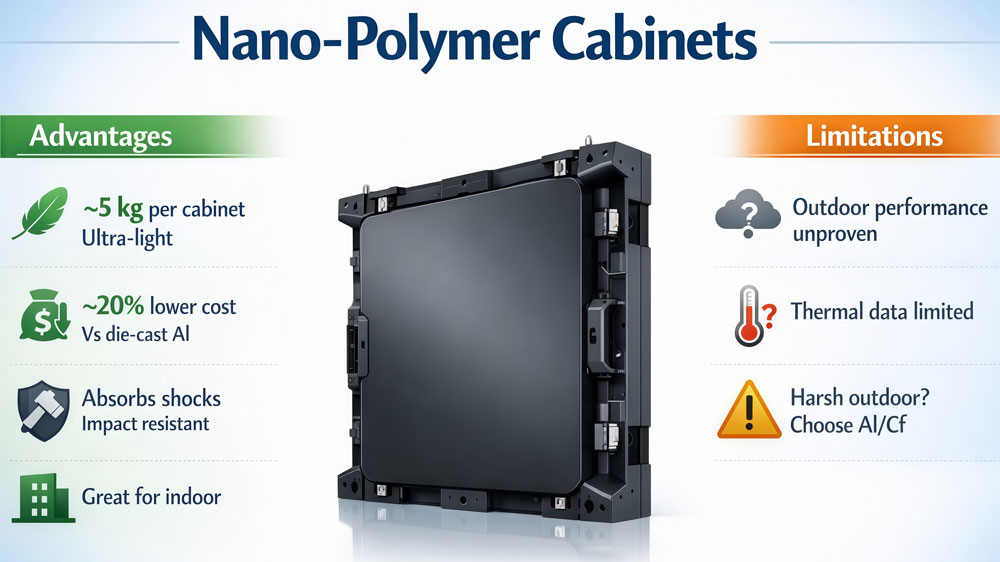
The nano particles add strength and impact resistance. The polymer base keeps the whole thing light and straightforward to manufacture. The end result is a cabinet that weighs around 5 kg per unit, which is lighter than most aluminum options. It also costs about 20% less to produce than die-cast aluminum.
One practical benefit of the material is how it handles bumps and drops — instead of transferring the impact straight to the internal components, it absorbs it. That matters on event sites where equipment gets moved around a lot. Nano-polymer is newer to the market than aluminum or iron, so it doesn’t yet have the same long track record in the field.
✔ Advantages
- A single cabinet weighs around 5 kg, making it one of the lighter options on the market.
- Production cost is about 20% lower than die-cast aluminum, which helps on tighter budgets.
- Strong impact and shock resistance reduces the risk of damage during transport and handling.
- It's a solid choice for indoor displays and projects where keeping costs down is a priority.
✘ Limitations
- Long-term outdoor performance in extreme climates is less proven than metal alternatives.
- Thermal conductivity data is not as well established as it is for metal cabinets.
- For heavy outdoor use in harsh conditions, aluminum or carbon fiber remains the more reliable choice.
2.6 Carbon Fiber LED Cabinets
Carbon fiber is the most advanced material used for LED wall cabinets right now. It’s made from fibers that are over 90% carbon, formed through a process of high-temperature oxidation and carbonization. The fibers are incredibly thin and run in the same direction, which is what gives carbon fiber its exceptional strength along that axis.
You’ll find it in aircraft, Formula 1 cars, and professional sports equipment — anywhere that needs to be both light and strong at the same time.
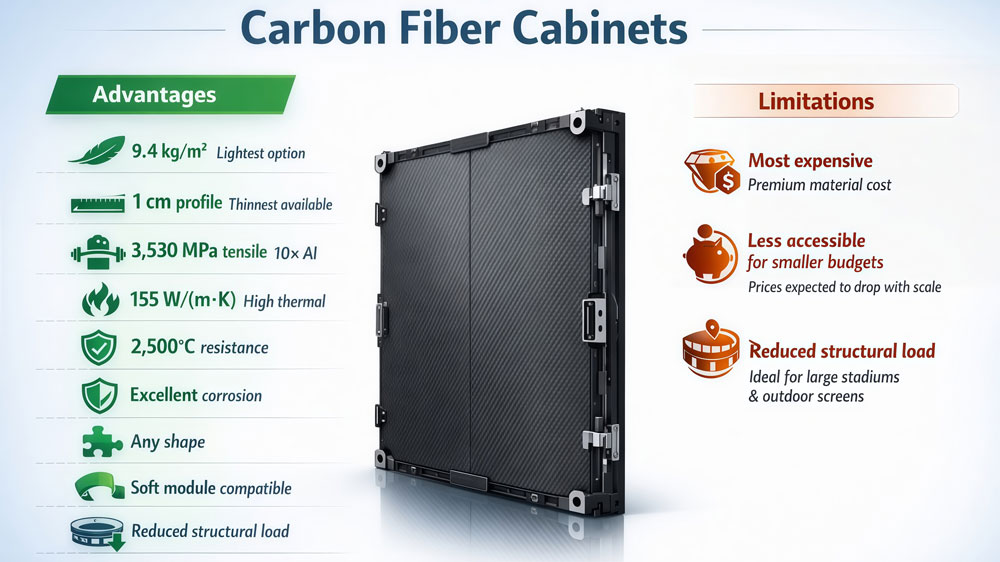
In LED displays, carbon fiber cabinets come out at just 9.4 kg per square meter, with a thickness of around 1 cm. That’s about 30% lighter than a die-cast aluminum cabinet of the same size. Tensile strength hits 3,530 MPa, thermal conductivity sits at 155 W/(m·K), and it stays stable up to 2,500°C. On a large stadium screen or a major outdoor installation, that kind of weight reduction makes a real difference — less load on the structure, faster to put up, and easier to take down.
✔ Advantages
- At 9.4 kg per square meter, carbon fiber is the lightest cabinet material on the market.
- The 1 cm profile makes it the thinnest option available, which helps in space-constrained installations.
- Tensile strength of 3,530 MPa is more than ten times that of die-cast aluminum.
- Thermal conductivity of 155 W/(m·K) keeps heat dissipation on par with magnesium alloy.
- Heat resistance up to 2,500°C far exceeds anything encountered in real-world display environments.
- Corrosion resistance is excellent across all conditions, indoors and outdoors.
- It supports flat, curved, angled, and other custom configurations.
- Compatible with soft LED modules, which opens up flexible and irregular display shapes.
- The reduced structural load makes it particularly well suited for large stadiums and outdoor screens.
✘ Limitations
- Carbon fiber is the most expensive LED panel cabinet material currently available.
- It is less accessible for smaller or lower-budget projects, though prices are expected to come down as production scales up.
3. Performance Comparison Table
The table below puts all six LED screen cabinet materials side by side on the metrics that matter most for a buying decision. Use it as a quick reference when comparing options for your project.
| Material | Density (g/cm³) | Thickness (cm) | Tensile Strength (MPa) | Thermal Conductivity W/(m·K) | Cost (RMB/set) | Corrosion Resistance |
| Iron | 7.8 | 8.5 | 170–270 | 81.1 | 155 | Poor |
| Die-Cast Aluminum | 2.7–2.84 | 6–8 | 265–370 | 96.2–113 | 238 | Moderate |
| Aluminum Profile | 2.8 | 6–8 | 241–310 | 160–201 | 250+ | Moderate |
| Magnesium Alloy | 1.8 | 7.5 | 305–315 | 154.5 | 215 | Good |
| Nano-Polymer | 0.8–2 | 2–7 | 1,200 | — | 190 | Good |
| Carbon Fiber | 1.7 | 1 | 3,530 | 155 | 285 | Excellent |
4. How to Choose the Right LED Display Cabinet Material?
The right material depends on what the screen is for, where it’s going, and what the budget looks like.
| Scenario | Recommended Material | Why |
| Rental and events | Die-cast aluminum / Magnesium alloy / Aluminum profile | Lightweight, strong, and designed for frequent transport and quick setup |
| Permanent outdoor installations | Die-cast aluminum | IP65–IP67 weather protection covers most outdoor environments |
| Large outdoor LED screen | Carbon fiber | 30% lighter than aluminum — reduces structural load on large mounting systems |
| Indoor fixed displays | Die-cast aluminum / Nano-polymer | Both work well indoors; nano-polymer is the more affordable option |
| Stadiums and large-scale installations | Carbon fiber | At 9.4 kg/m², it puts the least load on the structure of any material |
| Projects with tighter budgets | Nano-polymer | About 20% cheaper than die-cast aluminum with solid indoor performance |
Other Factors to Consider
Material is the starting point, but it’s not the only thing that matters. Before finalizing your choice, also check:
- IP rating — make sure it matches the installation environment
- Maintenance access — front-access designs are essential when rear access is blocked
- Module compatibility — not every cabinet works with every LED module type
- Flatness tolerance — tighter tolerances mean better panel alignment on large video walls
5. FAQs
Q1. What's the difference between die-cast aluminum and aluminum profile LED screen cabinets?
Die-cast aluminum cabinets are formed in a mold under high pressure, which allows for custom sizes and tighter dimensional tolerances. Aluminum profile cabinets are made through extrusion and come in fixed standard sizes only. Profile cabinets are faster to assemble, making them popular for rental and events. Die-cast aluminum is the more versatile choice for permanent installations.
Q2. Which LED screen cabinet material is the lightest?
Carbon fiber is the lightest LED screen cabinet material currently available, weighing just 9.4 kg per square meter with a thickness of around 1 cm. Magnesium alloy and nano-polymer are the next lightest options, both noticeably lighter than die-cast aluminum.
Q3. Is carbon fiber worth the extra cost?
For large-scale installations like stadiums or major outdoor screens, yes. The weight reduction simplifies the mounting structure and speeds up installation, which can offset the higher material cost on big projects. For smaller displays, die-cast aluminum or magnesium alloy delivers strong performance at a lower price point.
Q4. What is the best LED screen cabinet material for outdoor use?
Die-cast aluminum is the most widely used material for outdoor LED displays, with weather protection reaching IP65 to IP67 and an operating range of -20°C to 60°C. For very large outdoor installations where structural load is a concern, carbon fiber is the stronger option.
Q5. How does cabinet material affect LED display lifespan?
Cabinet material directly affects how well the display handles heat, moisture, and physical stress over time. Poor heat dissipation causes components to run hotter, which shortens their lifespan. Materials with low corrosion resistance — like iron — deteriorate faster in outdoor environments, increasing maintenance costs and reducing overall reliability.
6. Conclusion
LED screen cabinet material shapes how a display performs, how long it lasts, and how much it costs to maintain. There’s no single best option — it comes down to the project.
Die-cast aluminum is the safe default for most installations. Magnesium alloy is worth considering when weight matters. Carbon fiber is the top choice for large-scale projects where structural load is a real factor. Nano-polymer works well for indoor displays on tighter budgets. Aluminum profile fits rental and event setups where speed of assembly is the priority. Iron still has a place in lower-budget fixed outdoor projects, but the long-term maintenance costs are hard to ignore.
If you’re planning an LED display project and want advice on which cabinet material fits your specific requirements, contact LedinCloud – LED Screen Cloud Platform. We’re happy to help you work through the options.