
Rental LED Screen Guide: Cost, Specs & How to Choose
A rental LED screen lets you bring in a large, bright display for your event without buying one. That’s the short answer.
But the real questions usually come next: how much does it cost, what specs actually matter, and how do you pick a company you can trust?
This guide walks through all of it, from the basic information to the pricing ranges you should expect and the mistakes that trip up first-time renters. Whether you’re planning a conference, a wedding, or a concert, you’ll know exactly what to ask for by the end.
Table of Content
1. What Is a Rental LED Screen?
2. Why Rent Instead of Buy?
3. Types of Rental LED Screens
4. Key Specs to Check
5. LED Wall Rental Cost
6. Common Mistakes to Avoid When Rent a LED Screen
7. How to Choose a Reliable LED Wall Rental Company?
8. Information to Prepare Before You Request a Quote
9. FAQs
1. What Is a Rental LED Screen?
LED video wall rentals is a large LED display that you hire for a set period instead of buying outright. You pay for the panels, the setup, and often a technician, then send everything back once your event ends.
This is a temporary, large-format LED display built from smaller panels that lock together to form one seamless screen.
So how is this different from a regular big-screen TV? Size and build, mainly. A consumer TV tops out around 85 or 98 inches. A rental LED wall is modular, so it can scale to almost any size, from a 3×2 meter backdrop for a small conference room to a wall that spans an entire stage. Because it’s built from individual panels, a rental company can also reshape it into a curve, a column, or an unusual aspect ratio, which a fixed TV simply can’t do.
2. Why Rent Instead of Buy?
If you only need an LED wall for a few days, buying one rarely makes sense. Here’s why renting wins for most events:

Lower upfront cost.
A full LED display purchase is a big capital outlay, and that money sits in a warehouse for the other 360 days of the year when you’re not hosting an event. Renting turns that fixed cost into a line item you pay only when you actually need the screen.
No maintenance headache.
Owned LED panels need regular calibration, occasional module replacement, and somewhere dry to sit between uses. When you rent, all of that becomes the rental company’s problem, not yours. You show up, use the screen, and hand it back.
Newer technology, every time.
LED panels keep getting thinner, brighter, and easier to set up, and a rental company refreshes its inventory far more often than a one-time buyer ever would. So renting gives you access to newer panels without locking you into hardware that ages out in a couple of years.
That said, buying does make sense for some people. If you run events every week, or you’re a venue that uses the same wall for every show, ownership can work out cheaper over time. But for a single conference, a wedding, or a seasonal campaign, rental is almost always the more practical choice.
3. Types of Rental LED Screens
Not every LED wall is built the same way. Once you know what you’re actually looking at, choosing between quotes gets a lot easier.
There are really two different questions here, and people often mix them up. One is where the screen will be used. The other is how it gets built. Every rental LED screen is technically modular already, since it’s made of individual panels. The real split is in how those panels come together.
3.1 By environment
(1) Indoor LED screen rental
Built for controlled lighting, so it doesn’t need to be as bright as an outdoor unit. Panels are usually lighter and finer in pitch, which makes images look sharp up close. This is the type you’ll see at conferences, weddings, and trade show booths.
(1) Outdoor LED screen rental
Built to handle sun, wind, and rain. The panels are weatherproofed, run brighter to stay visible in daylight, and use tougher housing than indoor models. Festivals, sports events, and outdoor concerts rely on this type.

3.2 By build method
(1) Mobile LED screen rental (or hire)
The panels are pre-mounted on a trailer or truck at the factory, so the whole unit shows up ready to go and needs very little setup time. It’s a good fit for roadshows, pop-up activations, and events where you need a screen fast and don’t want a long build.
(2) Panel-built (assembled on-site)
The panels arrive separately and get locked together at the venue, panel by panel. It takes longer to build than a mobile unit, but it can be shaped into almost any size or configuration, including curves and unusual layouts, which makes it the choice for custom stage designs.

Some rental companies also offer transparent LED screen, which let light pass through the panel itself. These show up mostly in retail displays and stage backdrops where you want a screen that doesn’t block the view behind it.
Which type fits your event usually comes down to two questions: is it indoors or outdoors, and do you need it ready to roll straight off a truck or built on-site? Once you’ve answered those, you’ve already narrowed the field quite a bit.
4. Key Specs to Check
Once you know the type, the next thing to look at is the spec sheet. A few numbers matter a lot more than the rest.

(1) Pixel pitch
This is the distance between LED pixels, measured in millimeters. Smaller numbers mean sharper images up close, but they also cost more. For indoor screens viewed from a few meters away, 1.5mm to 2.5mm is a common range. Outdoor screens, where the audience usually stands farther back, can get away with 4mm to 10mm without losing clarity.
(2) Brightness
Measured in nits. Indoor venues with controlled lighting typically need 800 to 1,500 nits. Outdoor screens have to fight direct sunlight, so they usually run at 5,000 nits or higher. If a supplier quotes you an indoor-brightness panel for an outdoor event, that’s a sign something’s off.
(3) Refresh rate
This affects how smooth video looks, especially anything fast-moving. Standard events run fine at 1,920Hz to 3,840Hz. If you’re filming the screen on camera, or showing sports and other high-motion content, ask for something closer to 7,680Hz, since lower refresh rates can cause visible flickering on camera.
(4) IP rating
This tells you how well a panel resists dust and water. It matters most for outdoor use. IP65 or higher is the usual benchmark for screens that might face rain or dusty conditions.
(5) Sync vs. Async Control
A synchronous control system mirrors your computer screen in real time, so whatever’s on your laptop shows up on the wall at the same moment. That’s what you want for a live camera feed, a live presentation, or anything that changes on the fly.
An asynchronous system works differently. Content gets loaded onto a sending card ahead of time and plays on a schedule, without needing a computer connected the whole event. That’s fine for loops, slideshows, and ad content that stays the same throughout.
As a rough guideline, once a screen passes around 2.3 million pixels, async control starts to lose stability, and sync becomes the safer bet.
(6) Recommended Specs by Environment
| Spec | Indoor | Outdoor |
| Pixel pitch | 1.5mm – 2.5mm | 4mm – 10mm |
| Brightness | 800 – 1,500 nits | 5,000+ nits |
| Refresh rate | 1,920Hz – 3,840Hz (up to 7,680Hz for on-camera use) | 1,920Hz – 3,840Hz (up to 7,680Hz for on-camera use) |
| IP rating | Not usually required | IP65 or higher |
A quick way to think about it: pixel pitch and brightness decide how good the image looks, and IP rating decides whether the equipment survives the environment. Ask your supplier for all four numbers before you commit, not just the panel size.
5. How Much Does It Cost to Rent an LED Video Wall?
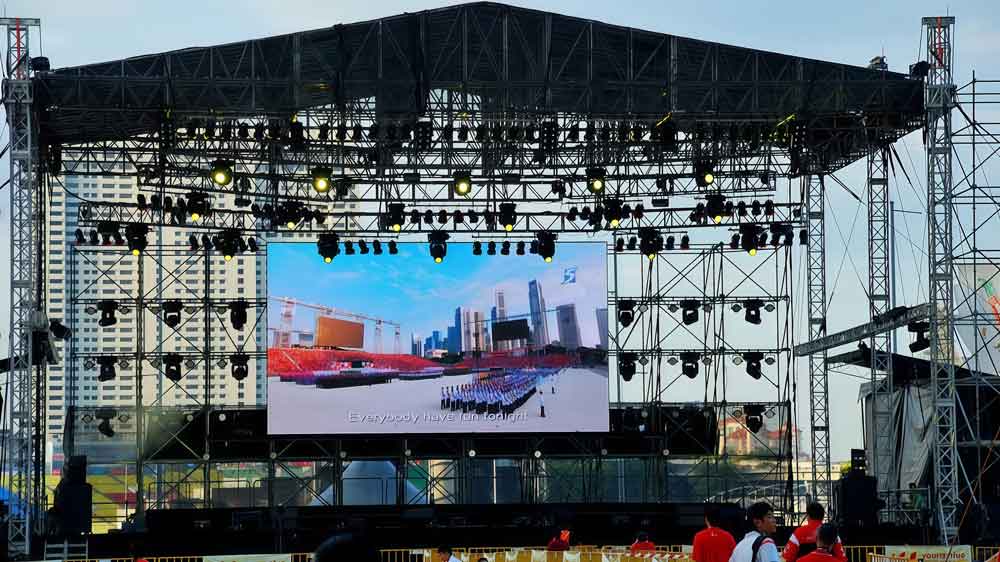
Ask ten suppliers this question and you’ll get ten different answers. That’s not a dodge, it’s just how rental pricing works. Too many variables feed into the final number for anyone to quote a flat rate before knowing your event. What actually helps is knowing which variables matter, so a quote makes sense the moment it lands in your inbox.
5.1 What Drives the Price Up or Down
Size and pixel pitch: A bigger screen needs more panels, and a finer pixel pitch costs more per panel than a coarser one. Put those two together and a small, low-resolution wall can end up nowhere near the price of a large, high-resolution one.
Indoor vs. outdoor: Outdoor panels need weatherproofing and extra brightness to fight sunlight, so they usually cost more than an indoor screen of the same size.
How long you need it: The first day tends to carry the highest rate. After that, extra days often cost less per day, so a week-long rental won’t scale up in a straight line from the one-day price.
Setup and labor: Rigging, installation, and teardown all add to the bill. Panels built up on-site generally take more hands and more hours than a mobile unit that rolls in ready to go.
What’s bundled in: A video processor, backup power, and an on-site technician sometimes come with the quote and sometimes get billed on top. Ask before you compare two suppliers side by side, or you’ll be comparing different things.
5.2 A Quick Way to Estimate Your Budget
You don’t need a final quote to get a rough number. Most people ballpark it one of two ways: by total screen area or by panel count. Ask a supplier for their day rate per square foot (or per square meter), or their day rate per panel, then multiply that by the size you’re planning. Neither method gives you an exact figure, since duration, labor, and extras all still move the total, but either one gets you close enough to start budgeting.
If you’d rather skip the math, register for LedInCloud’s LED Screen Cloud Platform to unlock the Price Calculator, which runs the numbers for our rental panels once you enter your screen dimensions.
6. Common Mistakes to Avoid When Rent a LED Screen
Most problems with LED rentals come from the same handful of mistakes, and almost all of them are avoidable if you know to ask about them upfront.

(1) Picking pixel pitch without checking viewing distance.
A tight pixel pitch looks stunning up close, but it’s wasted money on a screen your audience is watching from 30 feet away. Match the pitch to your farthest viewer, not the other way around.
(2) Missing the hidden costs in a quote.
The panel rental itself is often just one line on the invoice. Rigging and structural support can add real money, especially if the wall gets flown from a truss instead of stacked on the ground. Power upgrades, a video processor, and an on-site technician get quoted separately more often than not. Get an itemized breakdown before comparing two suppliers on price.
(3) Underestimating power needs.
Indoor LED walls usually draw somewhere between 300 and 500 watts per square meter. Outdoor screens pull more, closer to 600 to 800 watts per square meter, since they run brighter. A venue with limited power access turns into a real headache if nobody checked this in advance.
(4) Skipping the floor and rigging math.
Large screens are heavier than they look. As a rough guide, ground-supported walls need floor loading of at least 150kg per square meter, and any truss should be rated for at least 1.5 times the wall’s actual weight. This is the kind of thing a rental company should confirm before setup day, not scramble to figure out on it.
(5) Mixing up indoor and outdoor panels.
An indoor screen looks washed out the moment it hits direct sunlight, and an outdoor panel is often heavier and pricier than a typical indoor event needs.
(6) Choosing a supplier on price alone.
The cheapest quote sometimes comes with older equipment, thinner support, or no backup plan if a module fails mid-event. A slightly higher price that includes a tested spare module and a technician on standby is usually worth it.
(7) Not testing your content beforehand.
Video or images built for the wrong resolution or aspect ratio can look stretched, pixelated, or cropped once they’re actually on the screen. Send your files over early and ask for a test run, not a surprise on event day.
None of this takes much effort to avoid. It mostly comes down to one habit: get the specifics in writing before you sign, instead of assuming they’re included.
7. How to Choose a Reliable LED Wall Rental Company?
A great screen from a bad supplier still turns into a bad experience. Here’s what actually separates a reliable rental company from a risky one.
Relevant experience:
Ask for examples close to your event type and size, not a generic “years in business” answer. A company used to small conference rooms may struggle with a 20-foot outdoor stage wall.
Real certifications:
CE and UL marks point to basic electrical safety. IP65 or higher matters if there’s any chance of rain or dust.
Panel condition:
Ask when the panels were last calibrated. Two suppliers can quote the same specs, but one might send you dead pixels and inconsistent color.
Cabinet build quality:
Die-cast aluminum holds up better than sheet metal after repeated setup and teardown, especially for panels that have been through hundreds of events.
Panel weight:
Heavier panels need more labor and a stronger rigging setup, so ask for the per-panel weight before setup day, not during it.
Warranty and spare modules:
Ask what happens if a module fails mid-event. A supplier with spare panels on hand is in a very different position than one scrambling for a replacement.
An itemized quote:
Installation, transport, and backup equipment should be broken out upfront, not bundled in vaguely or tacked on later.
Support during the event:
Ask whether a technician stays on-site or reachable by phone for the full event, not just the setup.
Reviews from similar events:
A glowing wedding review doesn’t tell you much if you’re planning a trade show booth.
A simple test: call three suppliers with the same event details and compare their answers side by side. The gaps between their responses say more than any marketing page will.


8. Information to Prepare Before You Request a Quote
A quote comes back faster, and more accurate, if you walk in with a few details ready.
✔ Indoor or outdoor: This alone decides which type of panel you need.
✔ Screen size, or the space you have: Share exact dimensions if you know them, or just the available space and let the supplier recommend a size.
✔ Viewing distance: A rough number, like “20 meters at the back,” is enough to settle on the right pixel pitch.
✔ Event dates and duration: Give exact dates rather than “sometime next month,” since pricing shifts with how many days you need the screen.
✔ Setup and teardown windows: Let them know when the venue opens up for building and when it needs to be clear again.
✔ Content type: Static images, video, and a live feed all place different demands on the screen, so mention which one you’re running.
✔ Power access at the venue: Share what you already know, or ask the supplier to check it during a site visit.
You don’t need every box checked. The more you can answer upfront, the less back-and-forth it takes to turn a rough guess into an accurate quote.
9. FAQs
How long does it take to set up an LED rental screen?
A standard setup takes around 4 to 8 hours for a mid-size LED wall. Mobile LED trailers that arrive pre-assembled can often be ready in less than an hour. Larger suspended video walls may require 12 hours or more, depending on rigging, cabling, and system testing.
What's the minimum rental period for an LED wall?
Most rental companies have a one-day minimum rental period, although some offer half-day rentals for smaller events. Multi-day and weekly rentals are also common, with lower daily rates for longer rental periods.
How do you clean a rental LED screen?
Use a soft, dry cloth to remove dust. For stubborn dirt, use a slightly damp microfiber cloth. Never spray liquid directly onto the LED panels, and avoid abrasive cleaners that could damage the display surface.
How far in advance should you book an LED wall rental?
Booking two to four weeks in advance is recommended for most events. During busy seasons, such as festivals and holidays, reserving six to eight weeks ahead provides better availability and more equipment options.
Choosing the right rental LED screen starts with matching the display to your event requirements and working with a supplier that can provide clear technical guidance. If you're looking to purchase rental LED displays directly from the manufacturer instead of renting locally, LedInCloud offers rental-ready LED display solutions for events, exhibitions, concerts, and staging projects. Contact LedInCloud for a quote.
- LedInCloud Client Success Stories:
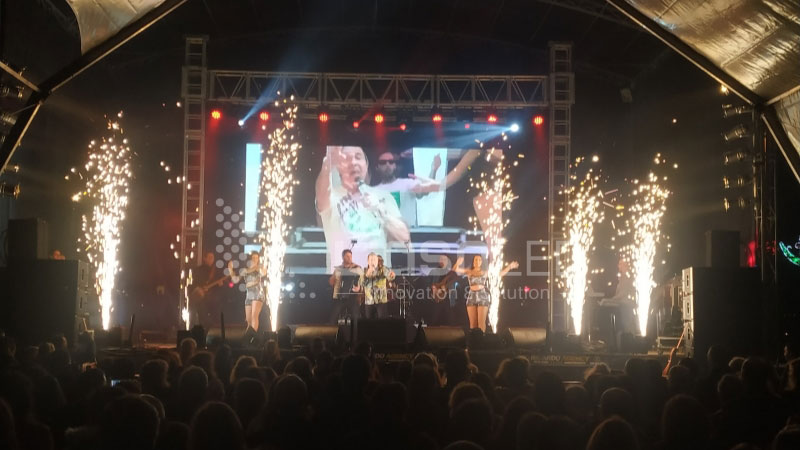
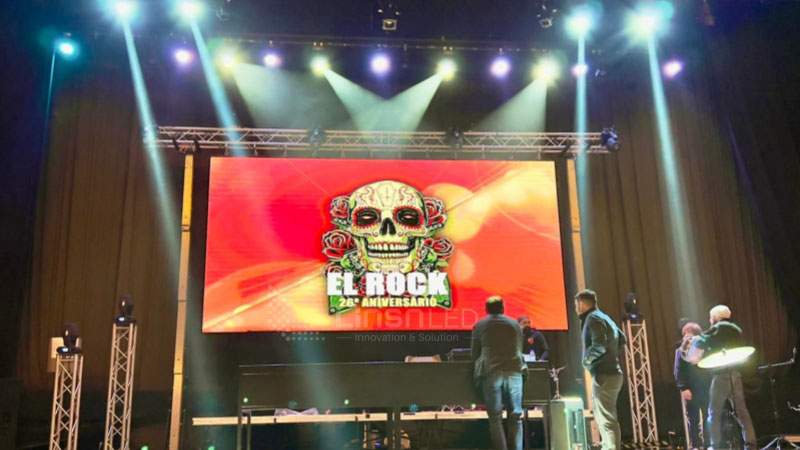
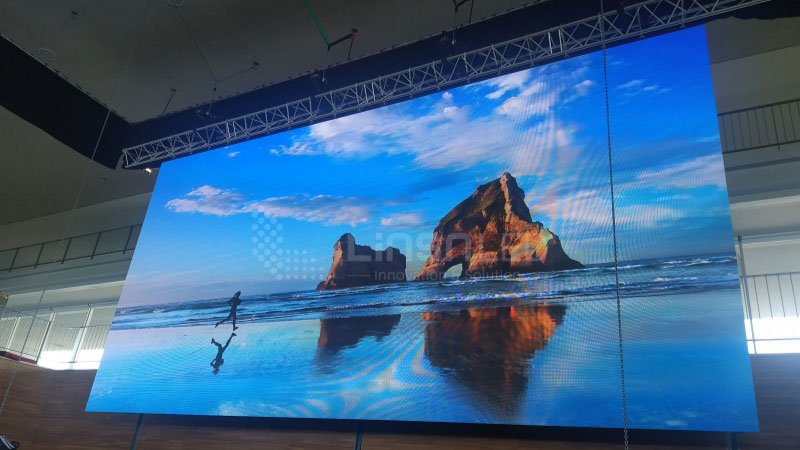
Portugal-Indoor Rental- MA960 Series
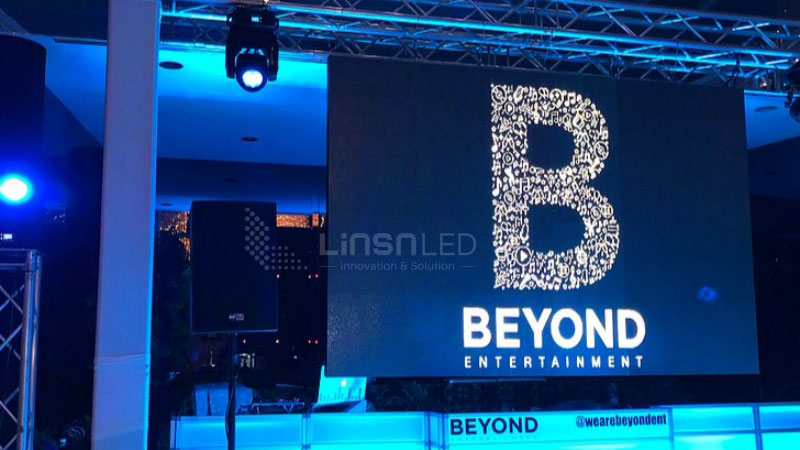
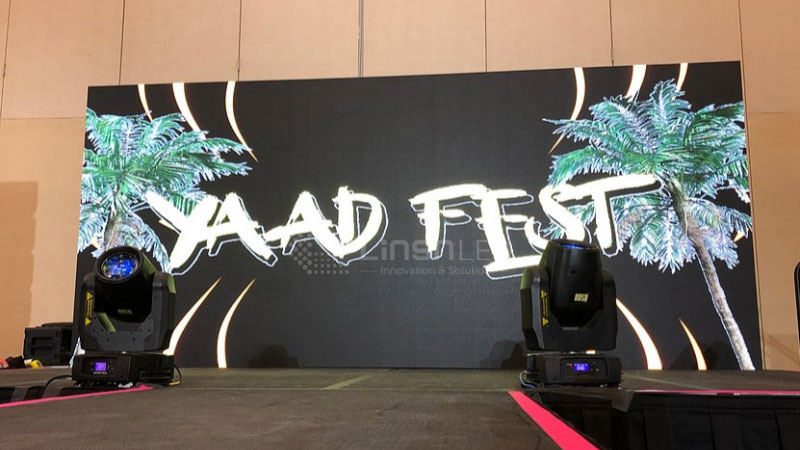
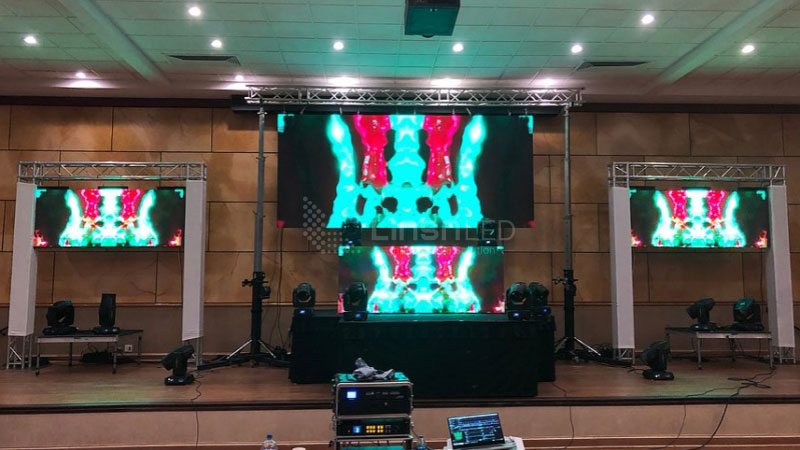
USA-Outdoor Rental-MA500 Series
Chinese Agricultural Expo Project
Austria Expo 2023 Project