
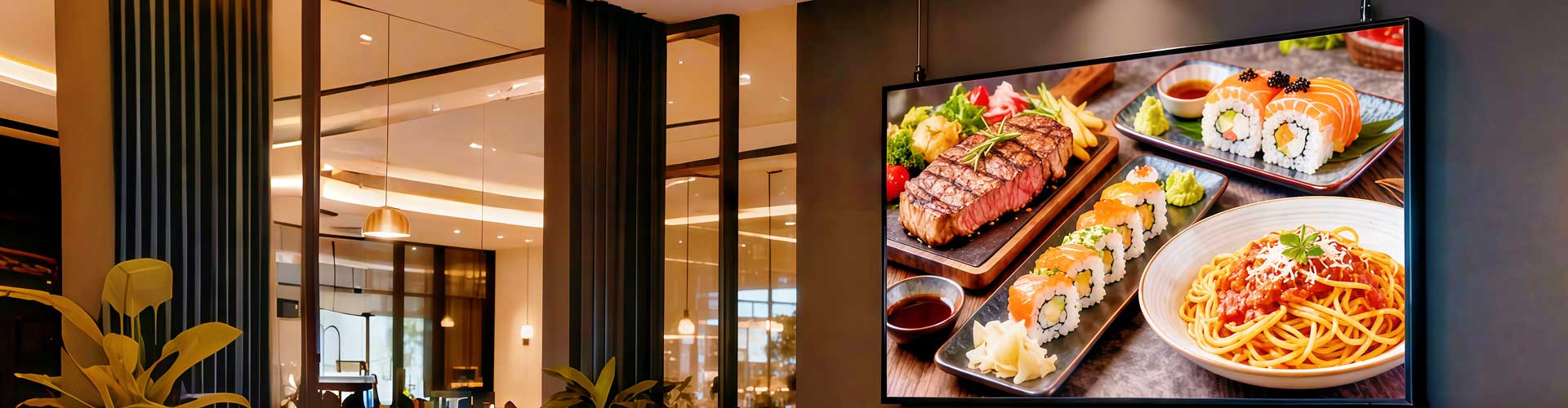
Restaurant LED Screen
A restaurant LED screen gives you a clean and flexible way to display menus, promotions, and brand visuals. It helps the space look modern, keeps information easy to update, and supports both daily operations and customer engagement.
✓ Clear Display — Bright and readable in different lighting
✓ Easy Content Updates — Change menus or promotions anytime
✓ Multiple Formats — Photos, videos, price lists, or seasonal messages
✓ Space-Saving — Wall-mounted or integrated into your layout
✓ Professional Appearance — A cleaner look than posters or printed boards
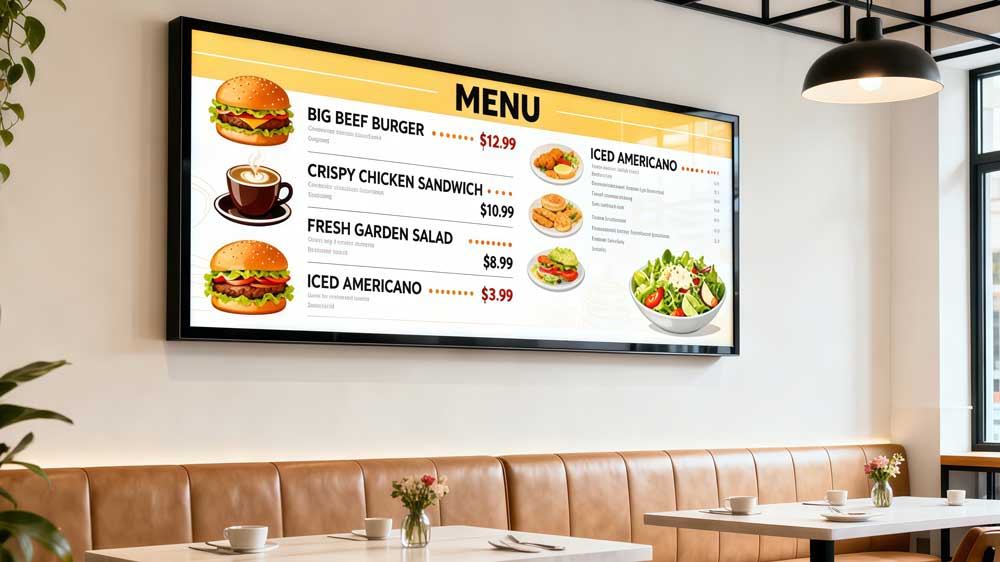
Best Display Products for Restaurants
Different restaurant spaces need different types of displays. Below are three options that work well in most dining environments, from the storefront to the ordering counter.
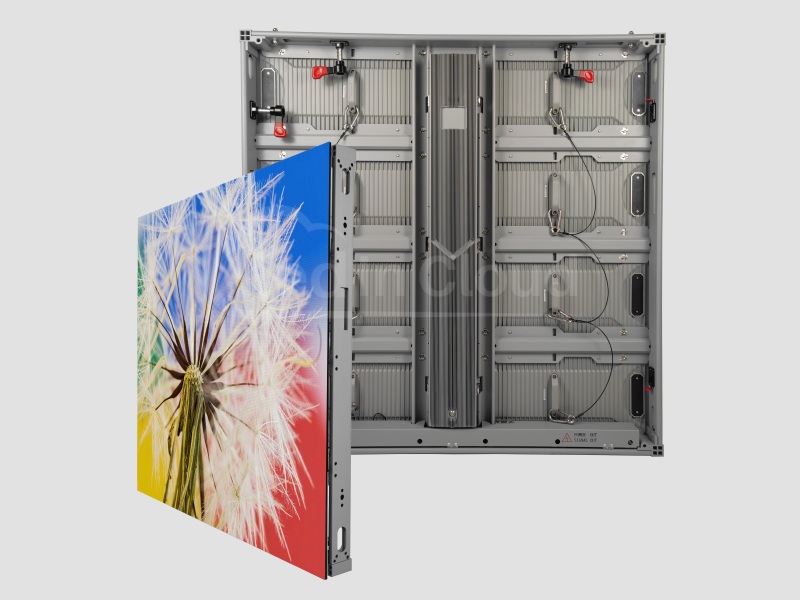
- Storefront branding
- Outdoor menus or daily promos
- Visibility in daylight
- Attracting foot traffic
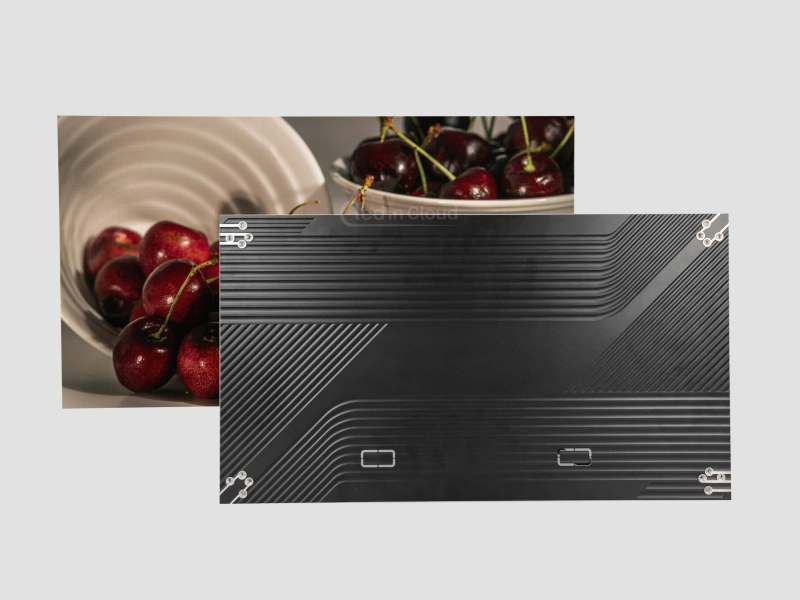
- Digital menu walls
- Ordering counters
- Dining room ambience visuals
- Promotional content and upselling
LED Display Price Calculator
Just fill the sizes, and get your LED screen budget right now !
Why Restaurants Choose LED Screens Today?
Restaurants use LED screens today for reasons that go beyond menus or promotions. LED displays have become part of how modern dining spaces communicate, attract customers, and shape the overall experience.
Modern First Impression
An LED display at the entrance gives customers a clear idea of the restaurant’s style before they walk in. LED screens make the storefront look more current, which helps the restaurant stand out on a crowded street. Many owners also notice that customers perceive the brand as more reliable when the presentation looks neat and updated.
More Engaging Atmosphere
Short clips, slow-motion shots of dishes, or ambient visuals help build the tone of the dining space. LED screens support smooth motion and rich colors, making the interior feel more lively. This creates a stronger emotional connection with customers—something printed boards cannot achieve.
Strong Visual Storytelling
Restaurants often want to tell their story—ingredients, preparation, uniqueness. Video content delivers these messages quickly and clearly. LED screens allow restaurants to communicate their brand story without interrupting the dining flow.
Easy Seasonal Updates
Holiday menus, festival decorations, limited-time campaigns—restaurants change themes frequently. LED displays help refresh the entire atmosphere without changing physical decorations. A few updated visuals can shift the mood of the space right away.
Consistency for Chain Stores
Printed materials vary from store to store. LED screens maintain a unified style, menu layout, and brand presentation across all locations, making the brand appear well-managed and consistent.
Highlight High-Margin Items
LED screens allow restaurants to highlight dishes that bring higher profit. Good visuals make these items more attractive, which can improve order patterns. This is one of the reasons many fast-casual and café chains use digital displays today.
Popular LED Display Types for Restaurants
Restaurants use LED displays in different parts of their space—from the storefront to the dining area. Among all options, the following three types are the most widely used because they fit the majority of restaurant layouts and business needs.
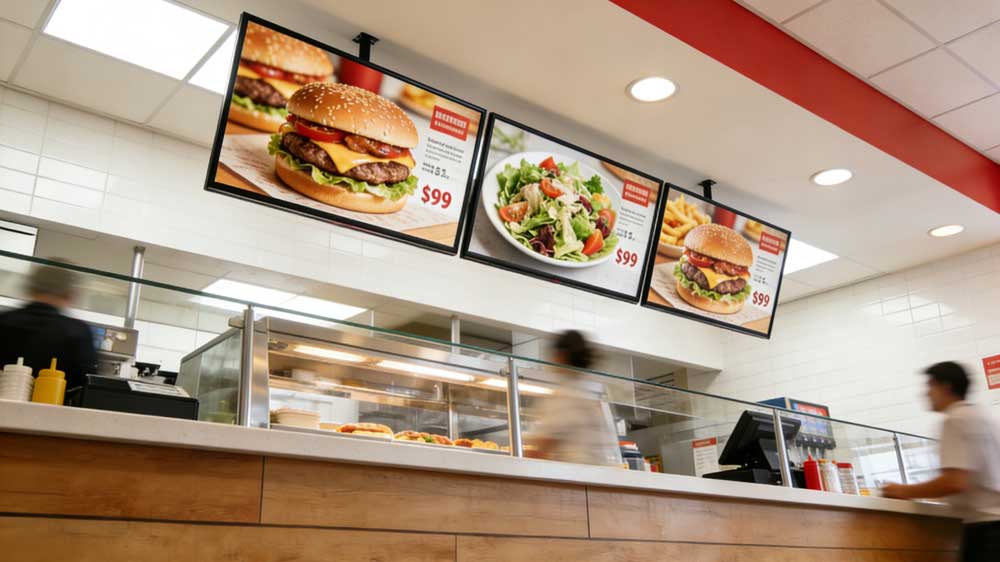
Fixed Menu LED Display
Restaurants use it to present clear digital menus, dynamic food visuals, and brand storytelling where customer viewing distance is short.
With fine pixel pitch options and customizable screen sizes, it provides sharper text, richer colors, and a more polished look compared to printed boards or TVs.
Best used for:
- Counter-area digital menus
- Feature walls and dining-area visuals
- Brand videos or motion food content
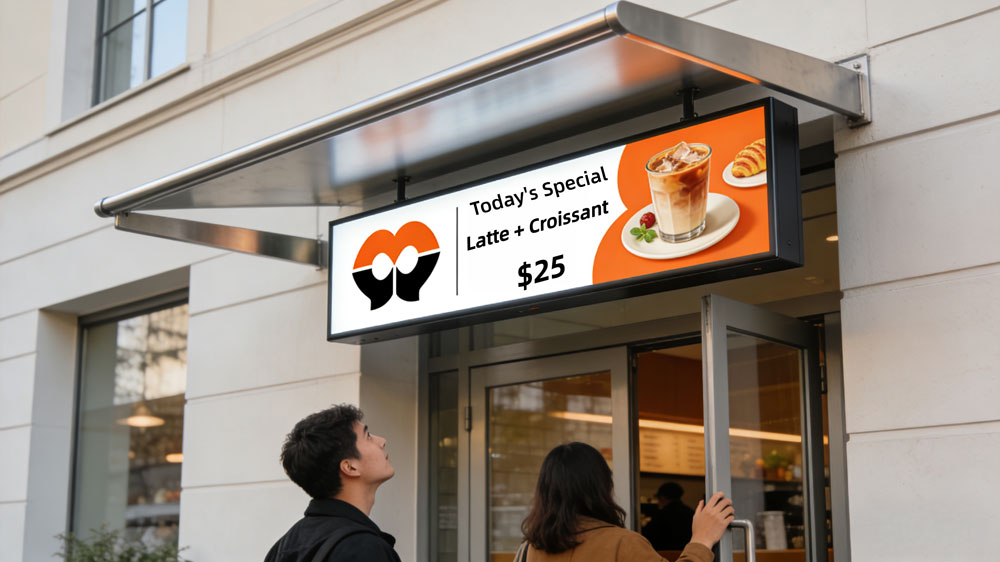
Storefront & Window Facing LED Display
These LED displays are engineered for high visibility from the street. They deliver strong brightness, clear contrast, and messaging that stays readable even in daylight.
Restaurants use them to attract walk-in traffic, highlight daily specials, and enhance brand presence from a distance.
Best used for:
- Shopfront signage and business name displays
- Street-facing promotions and new-item highlights
- Exterior branding for high-traffic locations
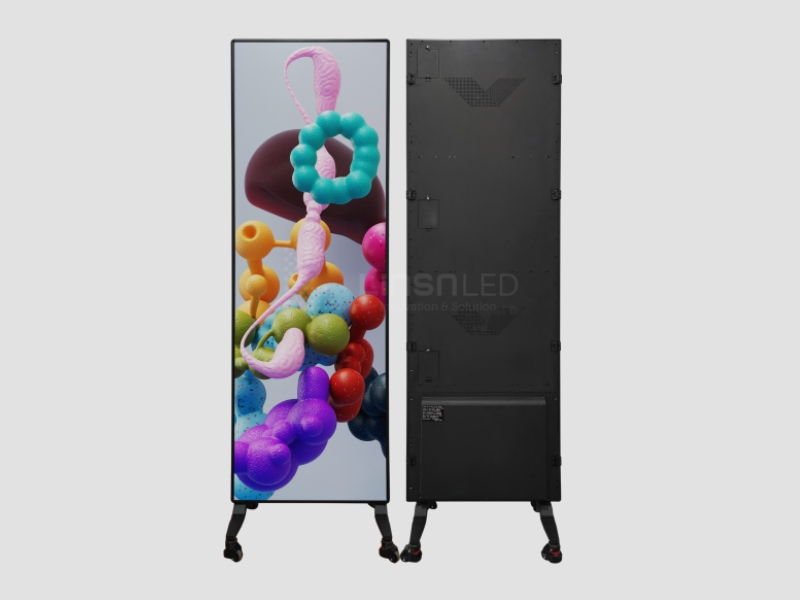
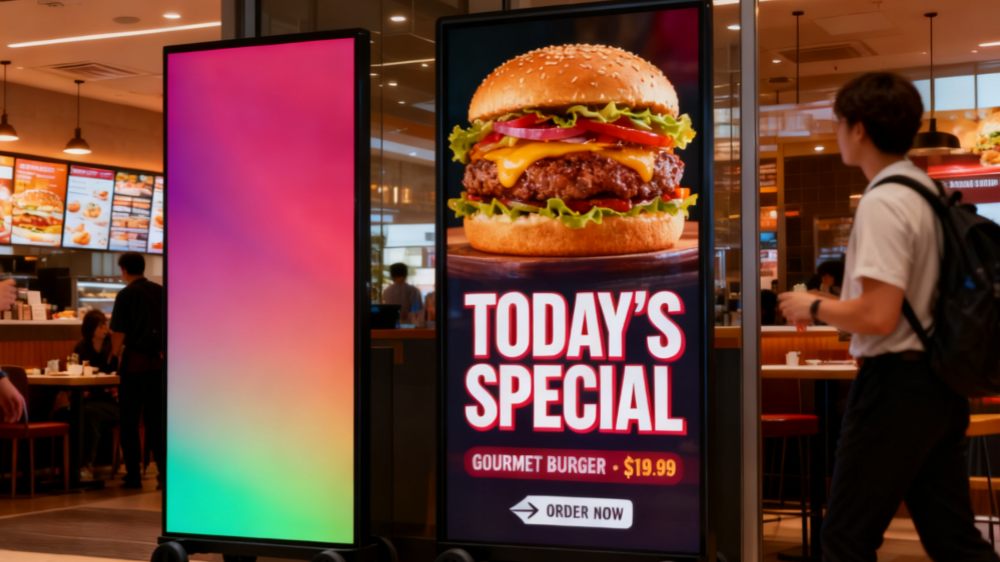
Vertical Freestanding LED Displays
A vertical LED poster is a slim, movable digital display ideal for entrances and indoor promotional zones.
It sets up quickly, works with plug-and-play content updates, and offers strong visual impact without permanent installation work.
Restaurants use LED posters for limited-time campaigns, featured items, and high-margin add-on promotions.
Best used for:
- Entrance areas and waiting lines
- Seasonal deals or combo promotions
- Pop-up events and flexible in-store marketing
Is Your Restaurant Ready for LED Screens?
Not every restaurant needs to switch to digital displays right away. The decision depends on how the business operates, how often content changes, and how the restaurant wants customers to experience the space. The points below help determine whether the timing is right.
You Update Menus or Prices Frequently
If you change items, adjust pricing, or introduce seasonal dishes often, LED screens can simplify your workflow. Restaurants that still rely on printed boards may find that repeated redesigns and reprints slow down operations. If menu changes have started to feel repetitive or costly, an LED display system may be a more practical fit.
You Need Clearer Information
In restaurants where lines move slowly because customers cannot read the menu easily, LED displays offer a clearer layout and better visibility. If your staff spends time explaining basic information—such as missing items or unclear pricing—this is a sign that visual communication could be improved.
You Want a More Defined Brand Style
Some restaurants already have a strong brand identity, but the visuals inside the store may not fully reflect it. LED screens make it easier to present consistent layouts, colors, and imagery. If you’re working on improving brand presence or refreshing your interior style, this could be a good time to adopt LED displays.
You Run Promotions Regularly
If your restaurant frequently launches new combos, holiday menus, or limited-time offers, LED screens help you introduce them without redesigning physical posters. Restaurants that depend on regular campaigns—cafés, fast-casual chains, bubble tea shops—often benefit the most from this flexibility.
You Want a More Organized Look
Some restaurants rely on many separate printed pieces: posters, tabletop signs, light boxes, menu boards. LED displays consolidate these elements into a single, clean presentation. If improving the interior layout and removing visual noise is part of your plan, LED screens can support that transition.
You’re Preparing for a Brand Upgrade
Restaurants updating their interior design often use this moment to introduce LED menu boards or storefront screens. When a renovation is already happening, adding LED displays becomes simpler and more cost-effective.
Why Choose Us?
LedInCloud delivers not just hardware, but a full-service, curated experience tailored for cultural and educational environments.
Professional Expertise
With 15+ years in LED display manufacturing, we bring deep technical knowledge and hands-on project experience.
Advanced Quality Control
Every display goes through strict aging tests, color calibration, and vibration checks.
Full-Service Support
LedInCloud provides end-to-end assistance: layout planning, structural integration, controller setup, calibration, and installation guidance.
Trusted by Worldwide
With extensive experience in exhibition-grade LED solutions, LedInCloud is the partner of choice for institutions.
Is Your Restaurant Ready for LED Screens?
Not every restaurant needs to switch to digital displays right away. The decision depends on how the business operates, how often content changes, and how the restaurant wants customers to experience the space. The points below help determine whether the timing is right.
Minimalist Premium
Clean compositions, soft gradients, and high-contrast typography create a refined atmosphere suited for cafés, bakeries, and modern dining spaces. Use ample negative space and slow-motion transitions to highlight food details without visual noise.
Warm & Comfort-Focused
Warm tones, wooden textures, and close-up food photography work well for family restaurants and casual dining. This style builds trust and familiarity, especially when combined with gentle loop animations around combo meals or seasonal dishes.
High-Energy Urban
For fast-food, kiosks, and grab-and-go shops, adopt bold colors, punchy fonts, and fast-paced animation. Dynamic pricing blocks, countdowns, and flash-offer templates help stimulate quick decisions during peak hours.
Social Media-Led Aesthetic
Square-format visuals, TikTok-style cuts, and vertical storytelling make content feel fresh and relatable. This approach leverages UGC-inspired framing and works particularly well in trendy restaurants targeting younger demographics.
Gourmet Cinematic
Use macro shots, steam effects, dark backgrounds, and dramatic lighting to create a luxury dining image. Slow cinematic pans across signature dishes elevate perceived value and support premium pricing.
Seasonal & Theme-Driven
Rotate LED screen visuals to match holidays, events, and local culture. Color palettes, icons, and themed animations generate excitement, keep content feeling new, and boost repeat guest engagement.
Send Us Message
If you have any LED display projects or technical problems regarding our LED display products. Please send us a message, we will reply to you in 24 hours.
ATTENTION: lf you bought LED Display & LED Module from other suppliers, Please get help from them directly.
Restaurant LED Screen Guide: Attract Customers and Sell More
A restaurant LED screen is becoming a common sight in modern dining spaces. Many owners use it to show menus, daily specials, or short videos that make the place feel more alive. More restaurants want a simple way to update content without printing new boards each time.
Table of Contents
1. What is a Restaurant LED Screen?
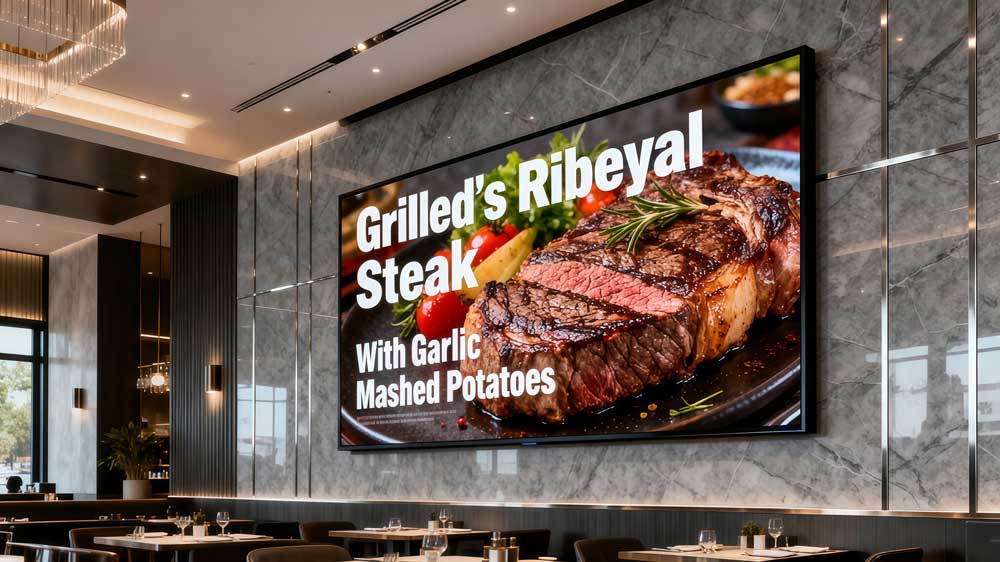
A restaurant LED screen is a digital display made of LED modules that show images, text, or video. It can work as an LED menu board, an advertising screen, or a simple visual element inside the dining area.
The screen is bright enough to stay readable in different lighting conditions, even when sunlight comes through the windows. This is one of the reasons restaurants prefer LED screens over printed boards or standard consumer TVs.
Most restaurant LED screens are built for long hours of operation. They use LED pixels that produce their own light, so the image stays stable and clear throughout the day.
2. What Problems Can a Restaurant LED Display Solve?
Many restaurants deal with the same set of issues when presenting menus or running promotions. A restaurant LED display helps reduce these problems by offering a more flexible and reliable way to show information.
① Frequent Menu Changes
Menus change often. Sometimes it’s a price adjustment, sometimes a new dish, and sometimes an ingredient runs out.
Printed boards slow everything down because each change requires redesigning, reprinting, and replacing physical materials.
With an LED display, updates happen through software. A manager can edit a price or remove an item in minutes. This keeps the menu accurate and avoids situations where staff must explain missing dishes repeatedly.
② Hard-to-Read Menu Boards
Many restaurants have windows, reflective surfaces, and mixed lighting throughout the day.
Traditional menu boards and consumer TVs lose clarity in these conditions. Text becomes hard to read, and food photos lose detail.
A restaurant LED menu board handles brightness much better because each pixel generates light directly. The content remains sharp whether the screen faces sunlight, indoor spotlights, or a dim dinner setting.
③ Limited Space for Promotions
Restaurants often struggle to show more than a few items at a time. Printed signs only present one layout, so owners must choose between showing the full menu or highlighting special deals.
An LED display for restaurant rotates content, giving more freedom. It can show the main menu, shift to a combo promotion, then display a short video—without taking additional wall space. This helps restaurants communicate more without crowding the interior.
④ Outdated or Inconsistent Branding
Over time, printed materials fade or use different colors, fonts, and layouts. This creates a mixed look across the dining area.
An LED display for restaurant replaces these separate elements with a single digital format. Once the design template is set, every update follows the same style. The restaurant looks cleaner, more organized, and more modern.
⑤ Slow Response to Peak Hours
Ordering slows down when customers cannot see the menu clearly or when they need to ask staff questions.
LED displays present information in a clearer way, reducing hesitation and helping customers decide earlier in the line.
⑥ Wear and Tear from Daily Use
Printed boards scratch, bend, fade, or collect grease over time. Light boxes discolor after long hours.
An LED display for restaurant is built for continuous daily operation. They run for long hours without losing brightness or clarity, making them a longer-term solution for busy restaurants.
3. Restaurant LED Display vs TV
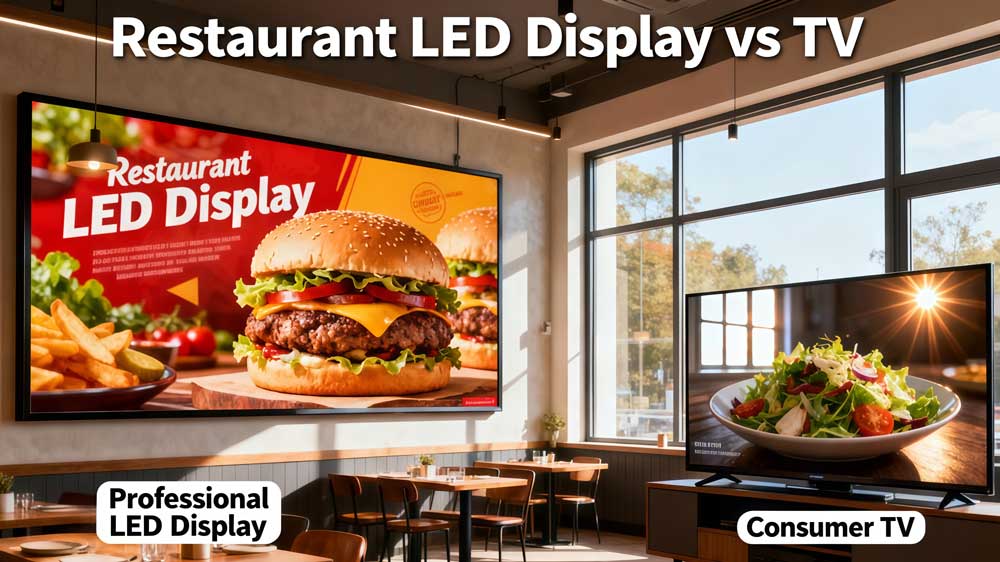
A restaurant LED display and a consumer TV may look similar from far away, but they are built for different environments. Once you compare how each one handles brightness, daily operation, and flexibility, the differences become easier to notice.
- How Each Technology Forms an Image
A restaurant LED display uses tiny LED diodes as individual pixels. Each pixel gives off its own light, so the image is formed by direct emission.
A TV uses an LCD panel with a backlight behind it. The backlight passes through filters to create the picture you see. Because of this structure, TVs lose brightness faster in bright rooms.
- Brightness and Readability Indoors
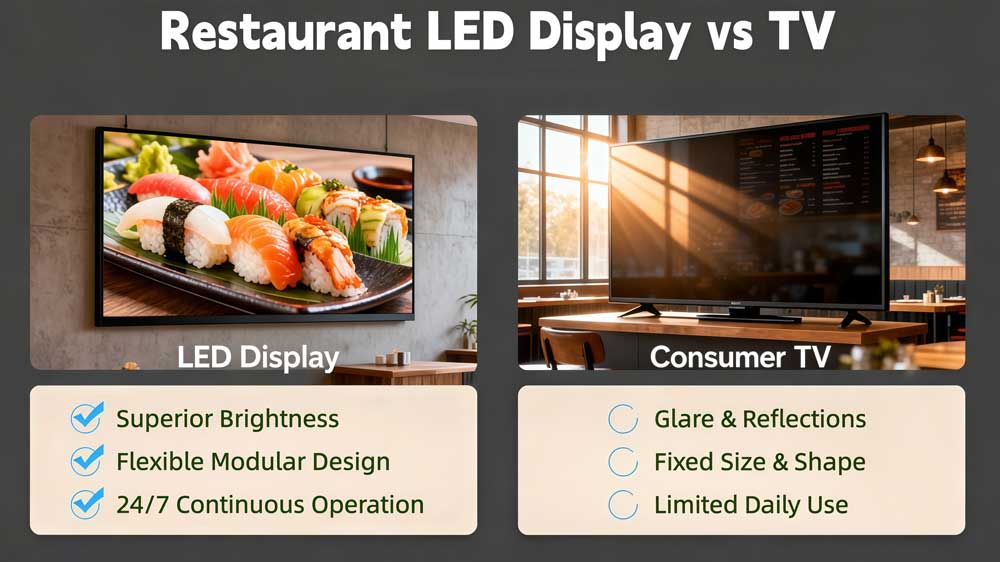
A restaurant LED display board reach much higher brightness levels than consumer TVs. This helps the content stay clear even when sunlight enters the restaurant or when the ceiling lights are strong. Colors stay vivid, and text stays sharp from more angles.
A TV is designed for a living room, not a commercial dining space. Reflections on the screen or bright light from nearby windows can make the picture harder to read.
- Size and Installation Flexibility
LED displays are modular. They are built with panels or cabinets that can be arranged into wide menu bars, tall vertical displays, or square video walls. This gives restaurants more freedom to fit the screen into the layout they already have.
A TV is locked to a fixed size. If the layout changes or the restaurant wants a longer menu board, the only option is to replace the unit.
- Daily Operating Time
Most restaurants keep screens on from opening to closing. LED displays are built for this kind of workload. They handle long hours without color shifting or dimming.
A consumer TV is not made for continuous commercial use. Running it all day can shorten its lifespan, and the panel may heat up faster in a busy environment.
- Maintenance and Service Access
Many restaurant LED displays support front-service designs. This makes it easier to replace a module or adjust something without removing the whole structure from the wall.
A TV has a single enclosed body. If something goes wrong, the entire unit usually needs to be taken down for inspection or repair.
- Quick Comparison Table
| Feature / Aspect | Restaurant LED Display | TV |
| Brightness | Very high; designed for bright restaurants | Moderate; dims under strong lighting |
| Viewing Angle | Wide and uniform | Good but less consistent across large areas |
| Designed For | Commercial use, long hours | Home entertainment |
| Lifespan Under Daily Use | Long (sustains brightness for years) | Shorter (color fade, overheating) |
| Repairability | Modular – replace one LED module | Whole TV needs replacement |
| Screen Size Options | 110″ to 200″+ seamless | Usually ≤ 85″, limited |
| Content Control | Advanced CMS, multi-zone menus | Basic playback only |
| Total Cost Over 3 Years | Lower (commercial durability) | Higher (frequent replacements) |
4. Common Use Cases in Restaurants
Restaurant LED screens can appear in many parts of a dining space, and each placement serves a different purpose. Below are the most practical and widely used scenarios.
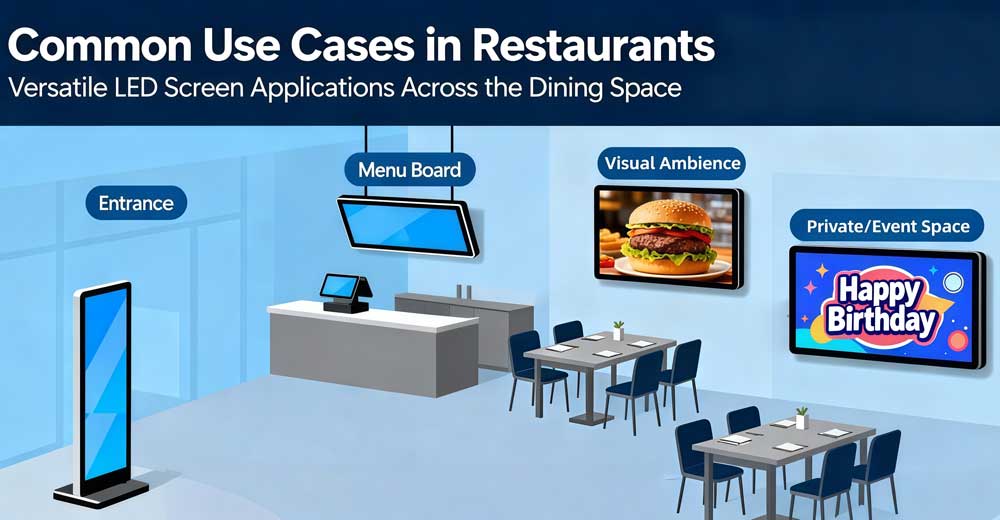
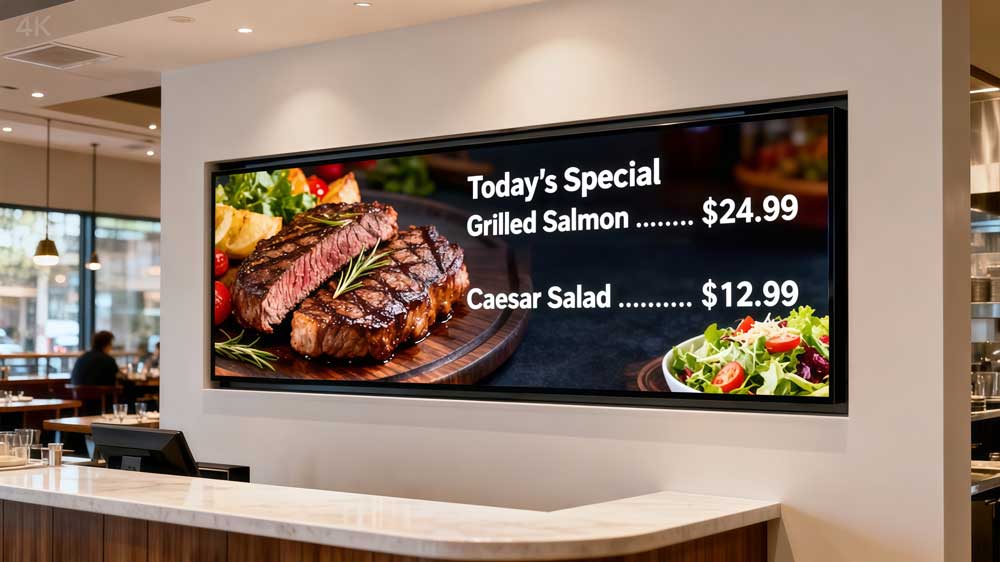
1) LED Display Menu Board at the Ordering Counter
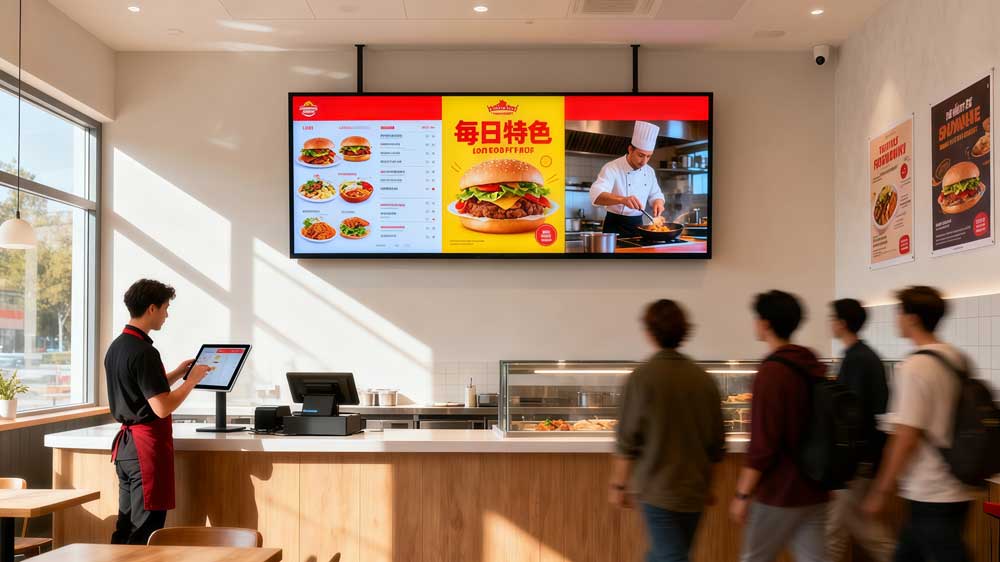
This is the most common setup. LED screens are placed above the cashier or service counter and work as the main menu display.
They can show:
- The core menu
- Prices that may change from time to time
- Limited-time offers
- Short food videos or cooking clips
Because the brightness is consistent throughout the day, customers can read the menu clearly even when sunlight hits the counter area.
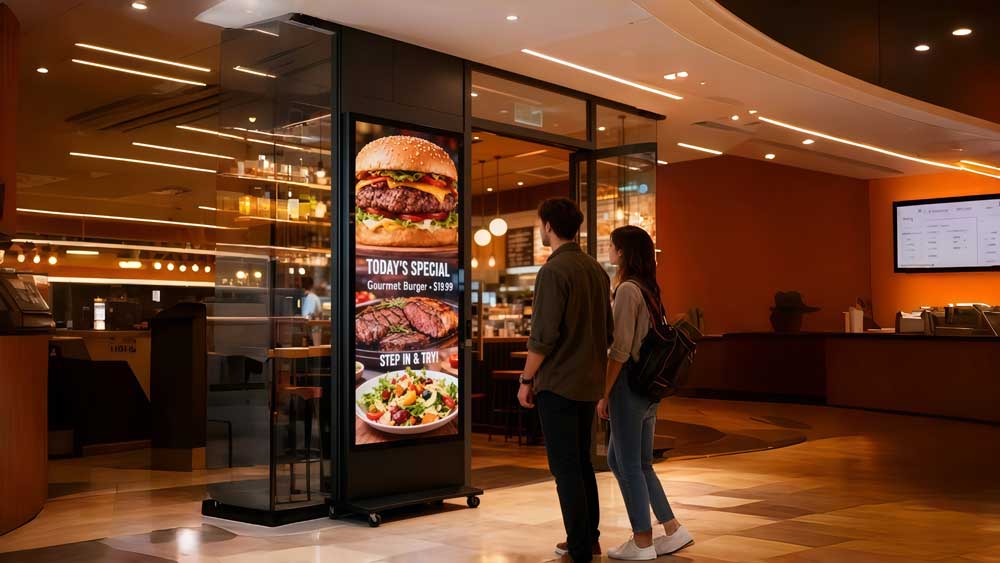
2) Promotional Screens Near the Entrance
Some restaurants use a single LED screen near the entrance to attract foot traffic.
Typical content includes:
- Today's special
- New dishes
- Seasonal promotions
- Brand visuals or short intro videos
The goal is simple: let passersby get a quick idea of what the restaurant offers before they walk past.
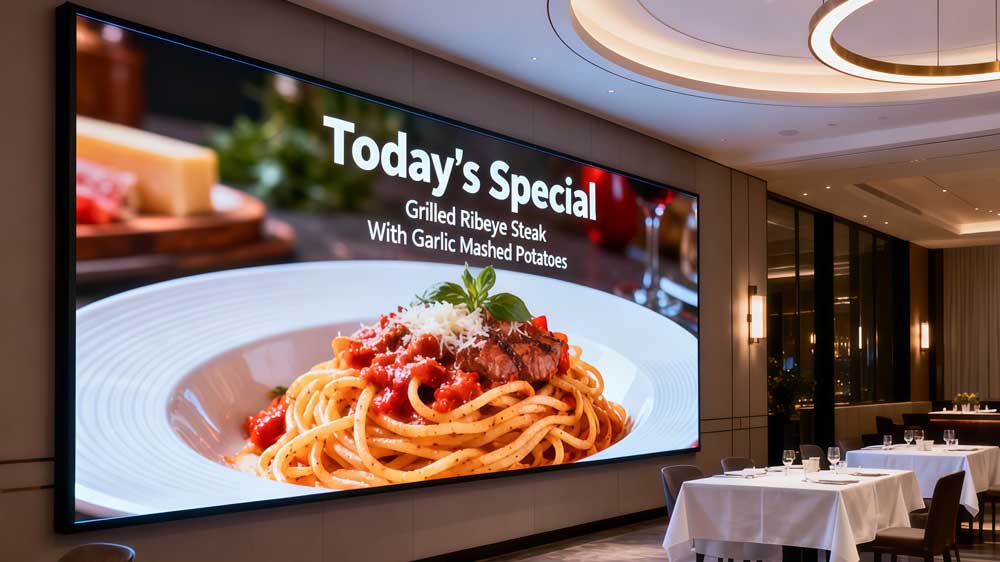
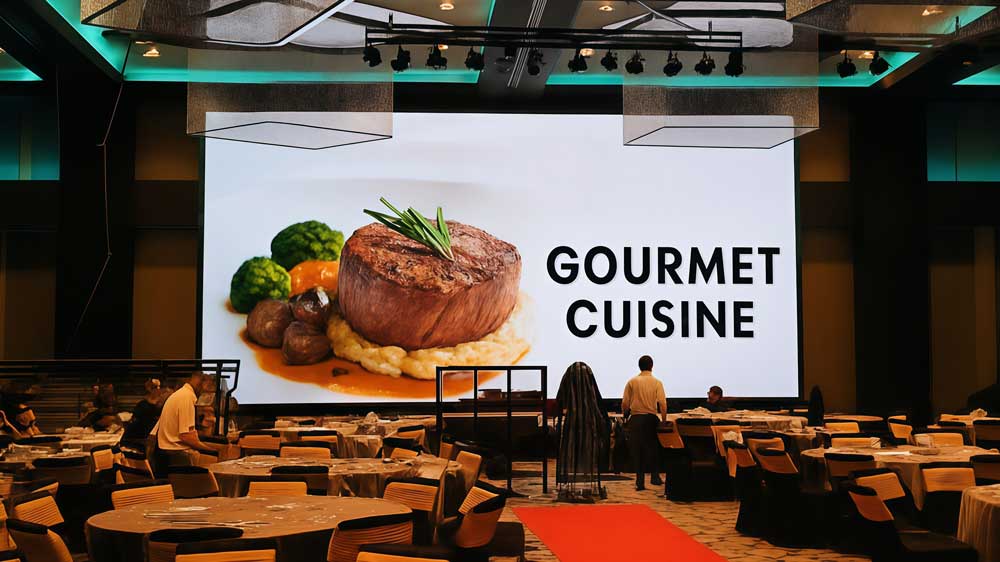
3) Visual Ambience Screens in the Dining Area
Inside the dining area, LED screens are usually not used to show menus. Instead, they act as visual decoration.
Restaurants often display:
- High-quality food images
- Slow-paced background videos
- Scenic visuals
- Soft animation loops
These visuals help build the restaurant’s atmosphere without distracting customers while they eat.
4) Kitchen or Staff-Only Display Screens
Larger restaurants, cafes, or chain stores may place LED screens in the kitchen or staff area.
These screens are often used to display:
- Order status
- Pickup timing
- Internal notices
- Delivery platform orders
Even though customers don’t see them, these screens support smoother operations during busy hours.
5) Private Rooms, Event Spaces, and Multi-Purpose Areas
Restaurants that host events often use LED screens for group dining, celebrations, or corporate gatherings.
They may display:
- Welcome messages
- Slideshows
- Videos or event backgrounds
- Custom visuals for weddings or birthdays
The seamless surface and large size of LED displays make the experience feel more polished compared with regular TVs or projectors.
5. How to Choose the Right LED Screen for Restaurant?
Finding the right LED screen for restaurant is not as simple as picking a size and placing an order. A restaurant has its own lighting conditions, space layout, viewing distance, and operating hours. Below are the key points owners usually consider before making a purchase.
1) Pixel Pitch and Viewing Distance
Pixel pitch is the first thing you should check. It determines how sharp the screen looks from a certain distance.
- P1.5–P2.0: Good for close viewing, such as a menu led display behind the counter.
- P2.0–P2.5: Works well for mid-distance viewing in dining areas.
- P2.5–P3.0+: Suitable for larger screens viewed from several meters away.
2) Brightness Level and Ambient Light
Restaurant lighting varies a lot. Some have big windows with sunlight, while others stay dim for a cozy look.
- Bright, open restaurants: Choose a higher brightness level so the menu stays readable during the day.
- Warm, low-light restaurants: A moderate brightness level works better and feels more comfortable.
A screen that fits the environment reduces glare and keeps the visuals clean.
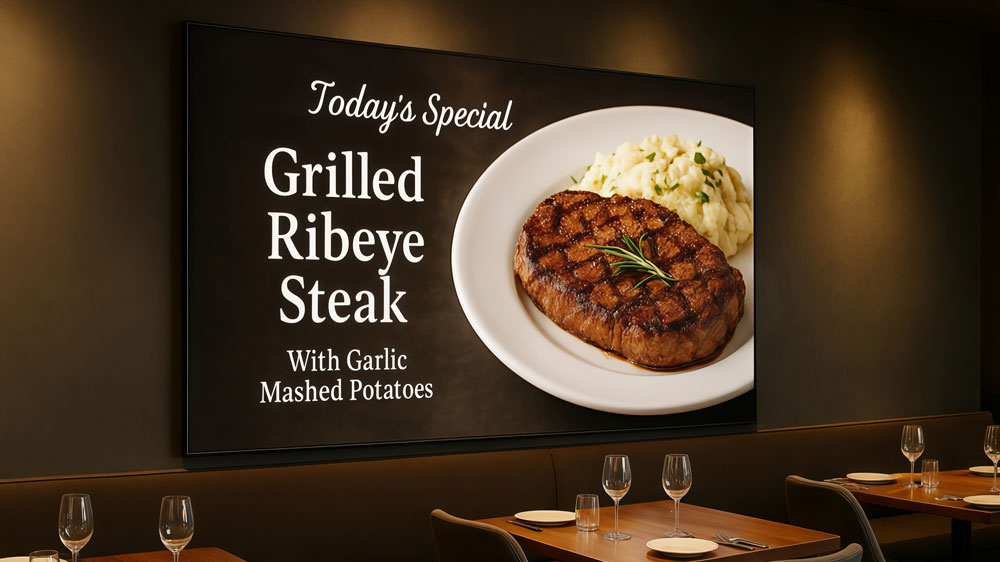
3) Screen Size and Layout
Different restaurants need different shapes and sizes.
- A counter LED menu screen often uses long horizontal screens or multiple screens lined up.
- Entrance displays usually use a single vertical screen.
- Dining-area ambience screens can be wide-format or even custom-shaped.
It’s best to match the screen size to the wall so it feels like part of the interior, not an afterthought.
4) Installation Method (Front or Rear Service)
Restaurants often have limited space behind the display.
This is why many choose front-service LED displays — modules can be removed from the front for maintenance. This saves time and avoids the need for a large gap behind the screen.
5) Daily Operating Hours and Heat Control
Some restaurants keep screens running all day, from morning to late at night.
For long operating hours, pick a display with stable heat control and reliable power modules. This helps the screen stay consistent even after years of daily use.
6) Indoor vs. Semi-Outdoor Conditions
If the screen faces a window or gets direct sunlight, you may need a model designed for semi-outdoor brightness.
If it’s deep inside the restaurant, a standard indoor panel is enough.
7) Content Updating Method
Ask yourself how you want to update content:
- From a computer
- From a mobile app
- Through cloud management
- By scheduling playback in advance
For restaurants with frequent menu changes, cloud or app-based control is the easiest.
Before selection, you can explore more LED display solutions on LedInCloud – LED Screen Cloud Platform, to understand which option fits your environment best.
6. Recommended LED Display Options for Restaurants
When choosing LED display for restaurant, two types from LedInCloud make particular sense. Each serves a different purpose, depending on where you want to install the screen and what content you plan to show.
👉 Indoor LED Screen
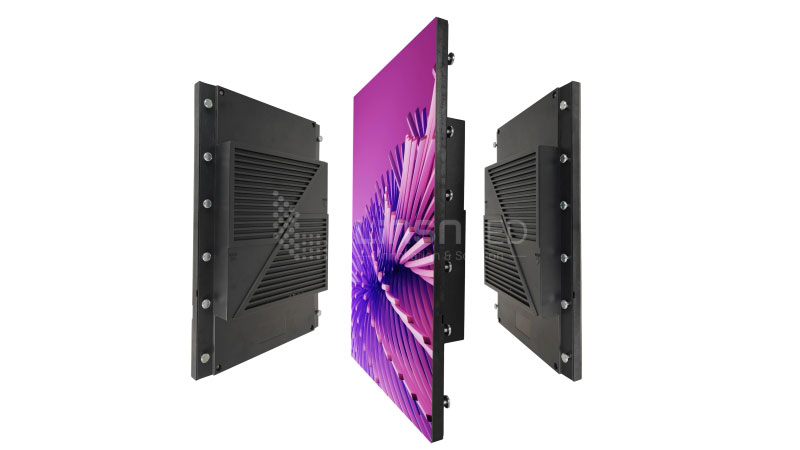
For restaurants that want a larger display area or a more permanent setup, an indoor modular LED screen offers better flexibility. It can be built to any size and fits menu walls, dining areas, or brand-focused feature walls where you need a clean, seamless surface.
- Flexible Pixel Pitch Options
- 3840Hz High Refresh Rate
- Seamless Cabinet Design
- Easy Content Control
- Low Power Consumption
- Frontal Service Design
👉 Poster LED Screen
Restaurants that need a slim, eye-catching display for entrances or counter zones often go with a poster-style LED screen. This type of screen works well in places where a full wall-mounted installation may not be practical, but you still want strong visuals and smooth content updates.
- Ultra-Thin and Lightweight
- High-resolution Options
- Seamless Multi-screen Splicing
- Smart Cloud Control Management
- Multiple Connectivity Options
- Flexible Installation Methods
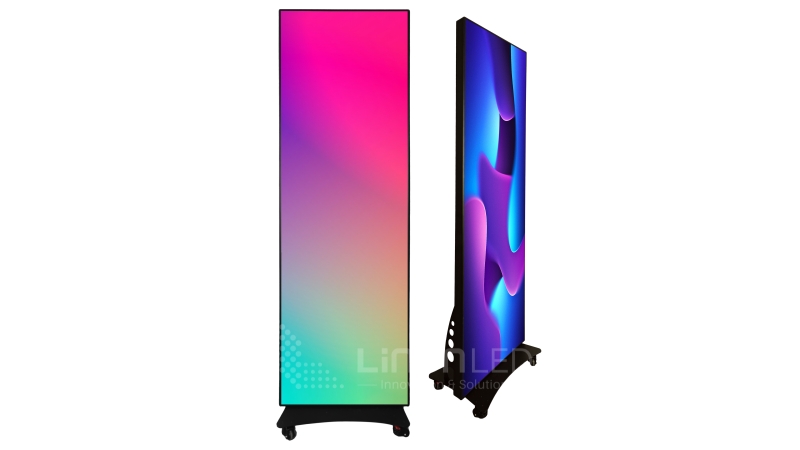
For a restaurant owner, LedInCloud Poster LED Screen is a smart choice when space is limited and you want a high-impact, vertical display. If you need a more traditional menu board or visual wall, LedInCloud’s Indoor LED Screen provides high brightness, excellent resolution, and flexibility to build custom sizes.
7. FAQs
How long can a restaurant LED screen run each day?
Most LED screens designed for commercial spaces can run many hours a day without issues. They use components meant for frequent use, so the picture stays stable even after long operating hours. Good heat design also helps the screen stay consistent throughout the day.
Is a restaurant LED display hard to install?
Installation depends on the size and location. A poster-style screen is simple and usually only needs power and basic mounting. A modular indoor LED screen takes more planning, but a professional team of LedInCloud can finish it cleanly. Once it’s in place, you only manage the content.
Can I update the screen from my phone or computer?
Yes. Most systems include software for uploading images, updating menus, or setting schedules. You can manage content from a phone, tablet, or desktop, so staff do not need technical skills to keep the screen updated.
How bright should the screen be for a restaurant?
Indoor areas usually need screens around 600–1,000 nits. If the display faces a window or strong daylight, a brighter model works better. Outdoor-facing screens or window displays often use higher brightness.
8. Conclusion
A restaurant LED screen helps owners present menus and visuals in a clearer, more flexible way. It replaces printed boards that take time and money to update, and it works well in many parts of the restaurant—from entrances and windows to bar areas and dining walls.
With a well-planned setup, the screen becomes a tool that supports daily operations and adds value to the space.
More Solutions
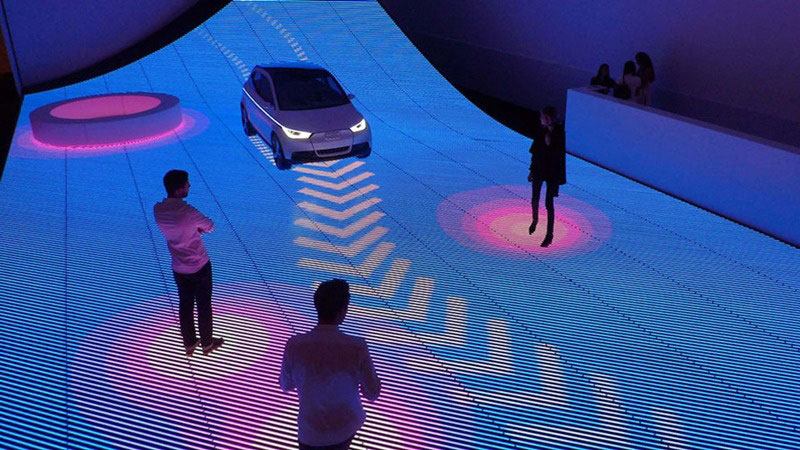
Floor LED Screen
Transform any space into an interactive experience with vivid visuals and smooth motion.
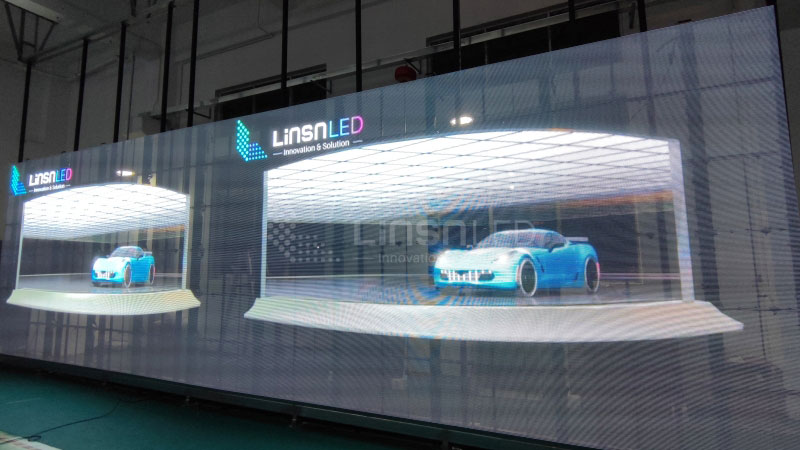
Tranparent LED Screen
Blend digital content with the real world through stunning, see-through visuals.
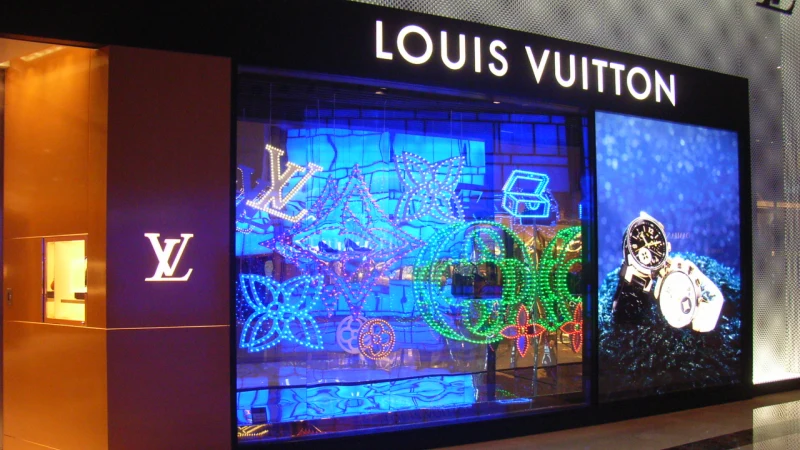
Retail LED Screen
Vibrant digital signage for stores and restaurants to showcase products, menus, and promotions effectively.
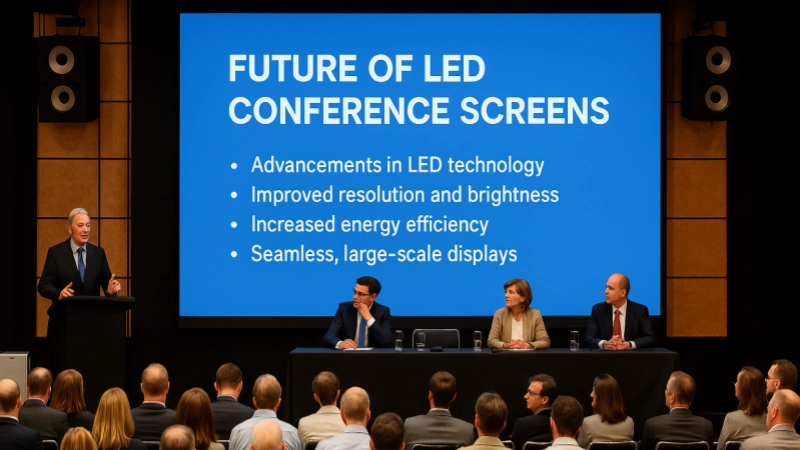
Conference LED Screen
High-resolution display for meetings, events, and presentations with clear visuals and easy setup.