
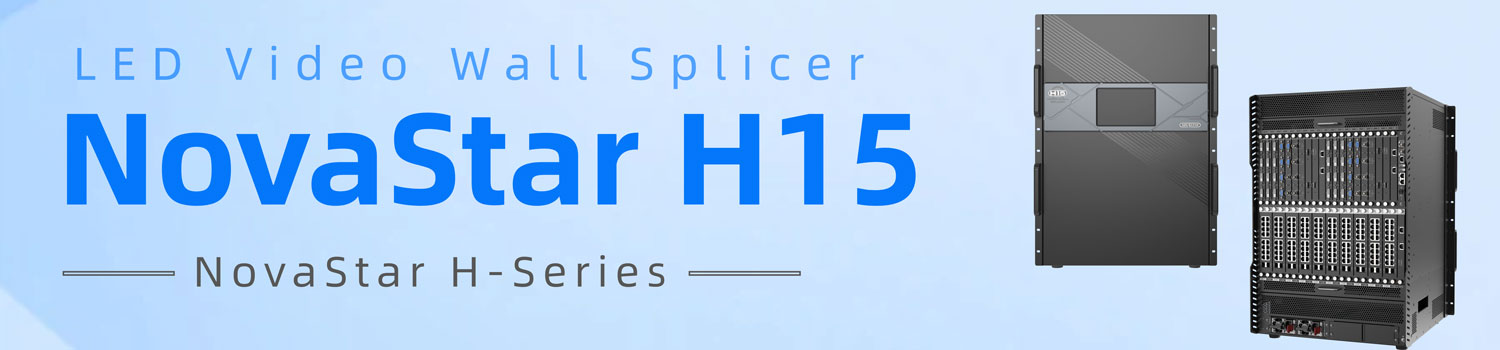
NovaStar H15 Video Wall Splicer for Large-Scale LED Displays
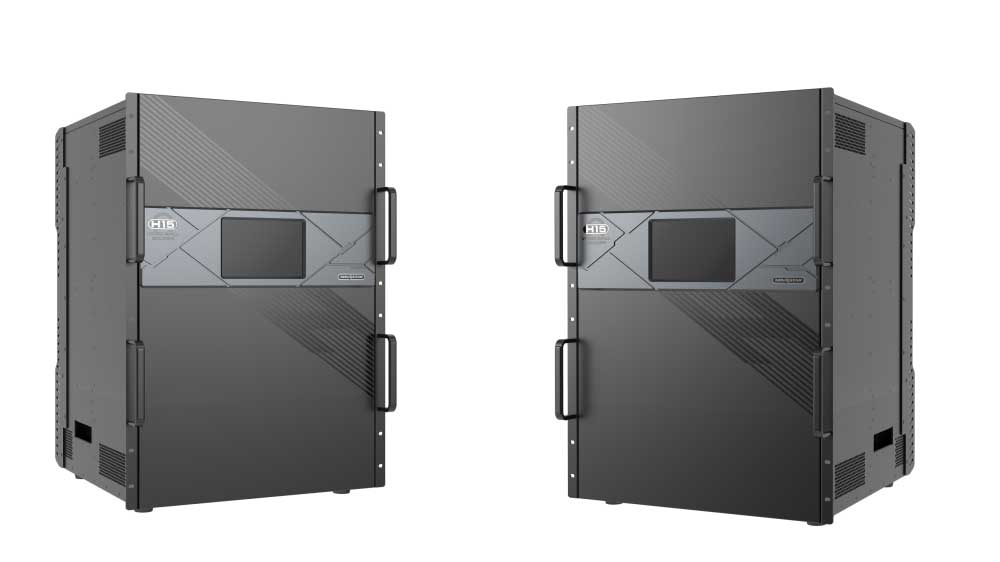
NovaStar H15 is the name of a high-end video wall splicer developed by NovaStar Technology for professional LED display systems.
This article focuses on the NovaStar H15 itself. It introduces what this device is, why it exists as a separate product category, and how it is typically used in professional LED display projects.
Table of Contents
1. Introduction to NovaStar H15
NovaStar H15 belongs to NovaStar H-series video wall splicers, which are designed for advanced LED display systems. Compared with entry-level controllers, devices in this category are built to handle more complex video processing tasks and larger screen configurations.
The H15 is positioned for professional environments rather than simple installations. It is usually considered when a project requires centralized video management, flexible configuration, and stable operation over long periods of time. Because of this positioning, the NovaStar H15 is typically evaluated as part of a complete LED video wall solution, not as a standalone accessory.
2. What Makes H15 Different?
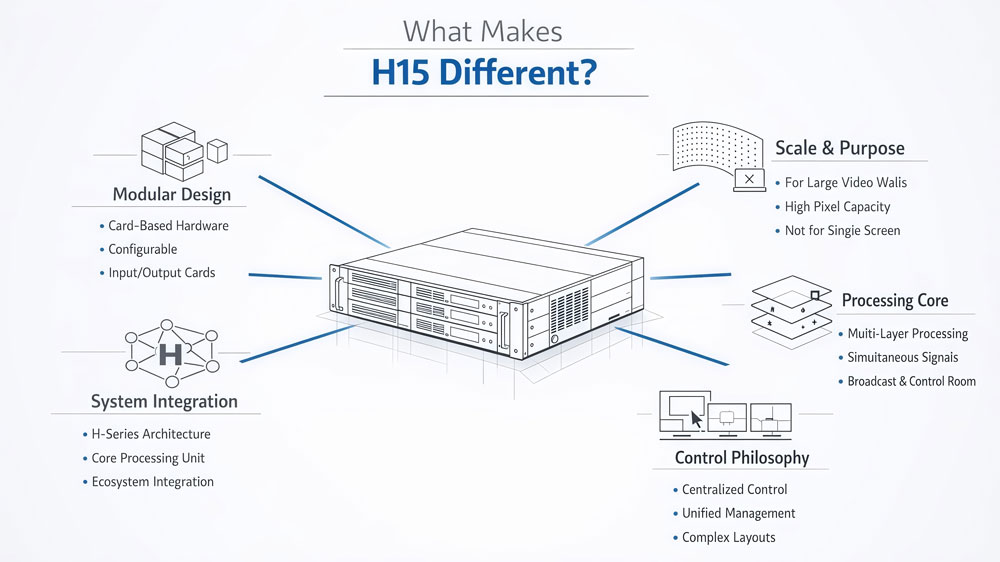
The NovaStar H15 is positioned as a high-end video wall splicer within NovaStar H-Series. Its differences are mainly reflected in hardware structure, processing capability, and system design philosophy.
- Modular, card-based hardware design
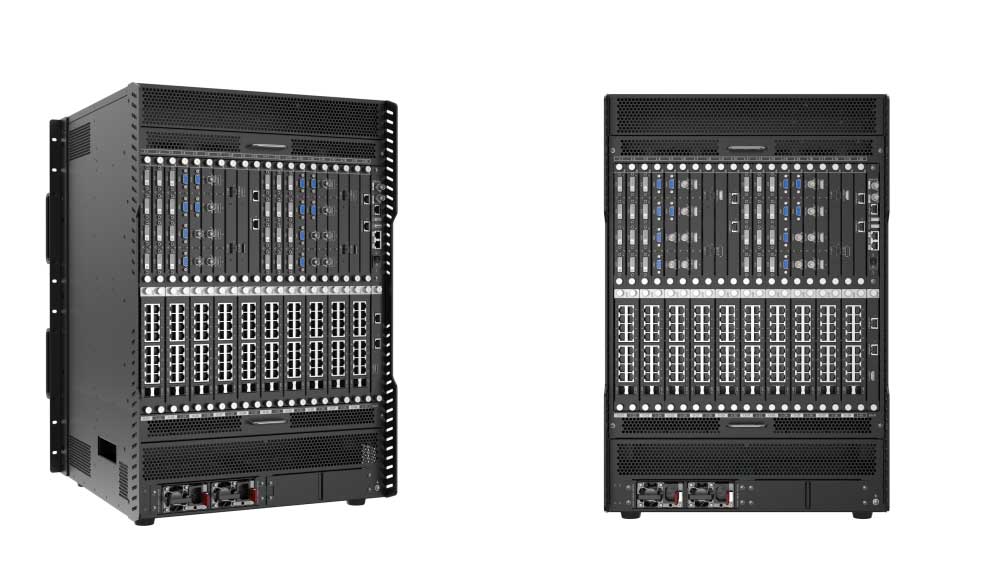
The NovaStar H15 uses a modular structure built around interchangeable cards. Input, output, and sending functions are handled by different card types. This design allows the system to be configured according to project needs instead of relying on a fixed interface layout.
- Designed for large LED video wall systems
According to its product positioning, the H15 is intended for large and complex LED display systems. It is not designed for small single-screen setups. Instead, it targets projects with high pixel capacity and multi-screen layouts.
- Multi-layer video processing capability
The H15 supports multi-layer video processing, which allows multiple content layers to be managed within the same system. This capability is essential in control rooms, broadcast environments, and other professional applications where different signals must be displayed simultaneously.
- Part of NovaStar H-Series architecture
As a member of the H-Series, the H15 follows NovaStar system-level design approach for professional video wall splicers. It is meant to work as a core processing unit within a complete LED control system, rather than as a standalone device.
- Built for centralized control scenarios
The NovaStar H15 is designed to support centralized management of complex display layouts. This makes it suitable for environments where multiple screens and signal sources need to be controlled from a unified system.
Taken together, these characteristics define the NovaStar H15 as a professional video wall splicer focused on scalability, flexibility, and system integration, rather than basic video switching or simple display control.
3. How the NovaStar H15 Works in a Video Wall System?
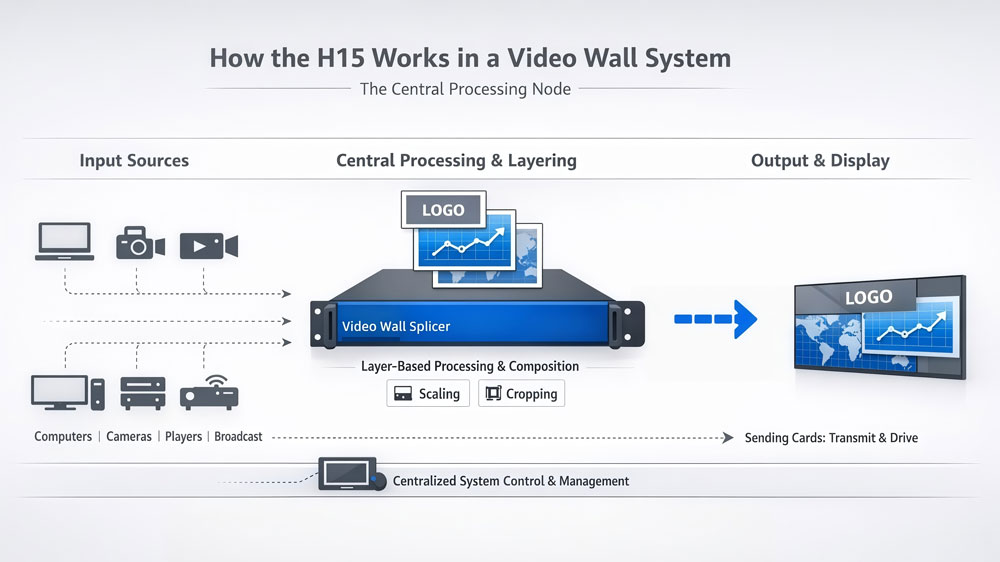
In a complete LED video wall system, the H15 acts as the central processing node that connects video sources, system control, and LED sending devices.
3.1 From input signals to processed video
In a typical setup, video signals come from different sources. These may include computers, media players, cameras, or broadcast equipment. The NovaStar H15 receives these signals through its input cards. At this stage, the signals are not yet tied to any specific screen or layout.
Once the signals enter the system, the H15 handles video processing tasks such as scaling, cropping, and layer composition. This processing is done inside the splicer, allowing different content sources to be combined or arranged before they are sent to the LED displays.
3.2 Layer-based content management
A key part of how the H15 works is its use of layers. Layers allow different video sources to exist within the same output space. For example, one layer may display a background signal, while other layers show additional content on top.
This layer-based approach makes it possible to manage complex layouts without physically changing signal connections. Adjustments are made at the system level, which is more practical in large installations where screens and content often change.
3.3 Output and connection to LED sending cards
After video processing and layout configuration, the processed video data is sent from the H15 to LED sending cards through its output and sending architecture. At this point, the video content is already organized according to the screen layout defined in the system.
The sending cards then handle the final step of transmitting data to the LED cabinets. In this workflow, the NovaStar H15 focuses on processing and control, while the sending cards focus on data transmission to the display hardware.
3.4 Centralized system operation
Because the H15 sits between input sources and LED sending devices, it allows the entire video wall to be managed from a centralized point. Screen layouts, content layers, and signal routing can be adjusted without changing physical connections across the system.
In practical terms, this working model is what makes the NovaStar H15 suitable for large and complex LED video wall projects. It simplifies system control while keeping video processing at a dedicated, professional level.
4. Typical Applications
The NovaStar H15 is typically chosen in LED projects where system complexity becomes a limiting factor. In these cases, basic controllers may still function, but they often struggle with layout flexibility, centralized management, or long-term stability.

- Large control rooms with complex screen layouts
In control rooms, LED walls are often divided into multiple visual areas showing different types of information. While simpler controllers can display content, they become difficult to manage when layouts change frequently. The NovaStar H15 is used in these environments because it allows screen layouts and content layers to be adjusted at the system level.
- Broadcast and production environments with layered content
In broadcast-related applications, multiple video sources often need to appear on the same screen at the same time. This includes background feeds combined with overlays or auxiliary windows. The H15 is applied here because its multi-layer processing model is designed for this type of content management.
- Large-scale presentation and command centers
In command centers and large presentation spaces, LED walls are expected to act as a unified display system rather than separate screens. The NovaStar H15 is used to centralize video processing and control, reducing the need for multiple independent processors.
- Permanent LED installations requiring long-term stability
For installations that operate continuously, system structure and reliability become more important than basic playback capability. The NovaStar H15 is commonly considered in these projects as part of a system-level design rather than a simple display controller.
In these scenarios, the NovaStar H15 is selected not because other devices cannot work at all, but because system complexity demands a more structured and centralized video wall solution.
5. NovaStar H15 Price
The NovaStar H15 price is generally positioned in the high-end range of LED video wall splicers. Based on typical market references, the cost is usually around USD 4,500, depending on configuration and project requirements. This figure should be seen as a rough reference rather than a fixed price.
For users comparing different video wall solutions, price alone is not always the most useful metric. A more practical approach is to evaluate how the H15 fits into a complete system, including hardware configuration and long-term operation needs.
To make comparison easier, users can register LedInCloud to check current pricing, configuration options, and availability. This allows you to review different setups side by side and choose a solution that matches your project rather than relying on a single quoted number.
6. NovaStar H15 Manual and Specs Download
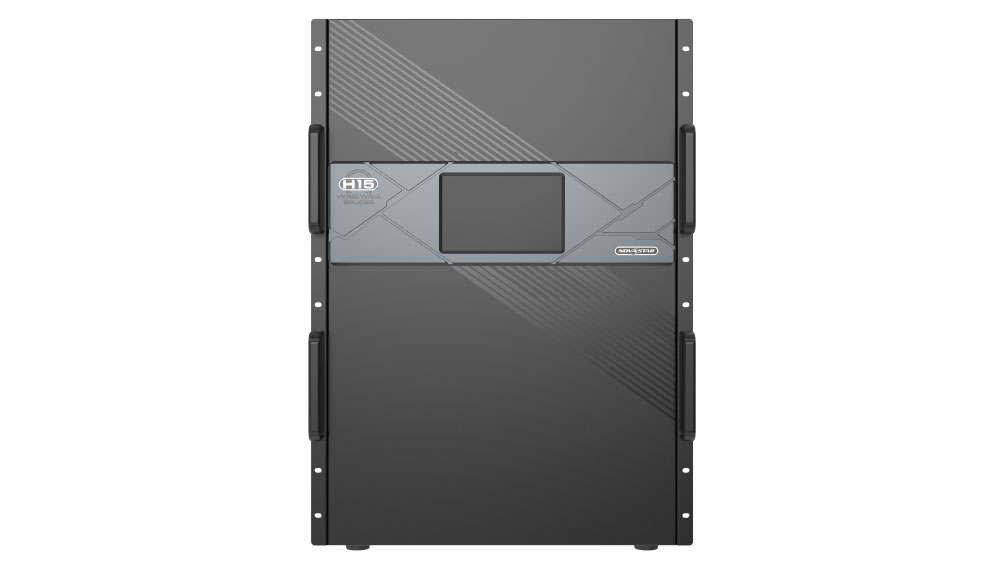
For users who need technical reference materials, the NovaStar H15 manual and specification documents are available in this section.
If you are looking for additional tools or software-related resources, such as configuration software or system management utilities. In that case, you can visit our NovaStar Software page, where we organize software downloads and related support materials in one place.
7. Conclusion
In real LED projects, the NovaStar H15 is usually discussed when standard controllers are no longer enough. It is used in systems where video sources, screen layouts, and control requirements all become more demanding.
For users researching this model, the key is not to treat it as a general-purpose controller, but to understand it within the context of a full LED video wall system. With that perspective, it becomes easier to decide whether the H15 matches the needs of a specific project.